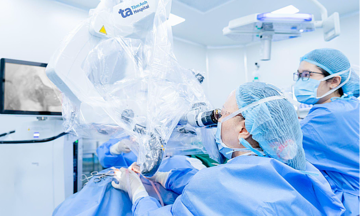
Mr. Huynh, who has end-stage renal failure, hypertension, and atrial fibrillation, was undergoing regular dialysis three times per week at a medical facility. After a recent dialysis session, he felt tired, had a headache, and experienced dizziness. Attributing these to usual side effects, he went home to rest. Two hours later, his symptoms worsened, prompting an emergency visit to Tam Anh General Hospital Ho Chi Minh City.
Dr. Dang Khac Giap, a first-degree specialist in the Department of Neurology at the Neuroscience Center, stated that Mr. Huynh was admitted unable to speak, with right-sided paralysis, central facial paralysis, and an NIHSS score of 15. This high score indicated severe neurological damage. The hospital immediately activated its "stroke code" protocol. A CT scan revealed a widespread acute infarction in the patient's left cerebral hemisphere and a complete occlusion of the M1 segment of the left middle cerebral artery. This is a typical sign of an embolism caused by a blood clot originating from the heart, a common occurrence in patients with atrial fibrillation.
Dr. Giap explained that after hemodialysis, changes in blood pressure and body fluid volume can alter blood flow to the brain. For individuals with atrial fibrillation, blood clots in the heart chambers are more prone to dislodging and traveling with the bloodstream to the brain, causing sudden cerebral artery occlusion.
According to Dr. Giap, a stroke in the context of end-stage chronic renal failure presents a complex emergency requiring urgent brain revascularization. Mr. Huynh's severe underlying conditions, however, posed a significant risk of complications during anesthesia and intervention, such as heart failure, arrhythmia, or expansion of the infarction area.
Following a multidisciplinary consultation, doctors performed a thrombectomy to remove the blood clot. Guided by a digital subtraction angiography (DSA) system, the team accessed blood vessels in the groin, threaded a microcatheter and a specialized device through the vessel lumen to the occlusion in the brain, and successfully extracted the entire clot.
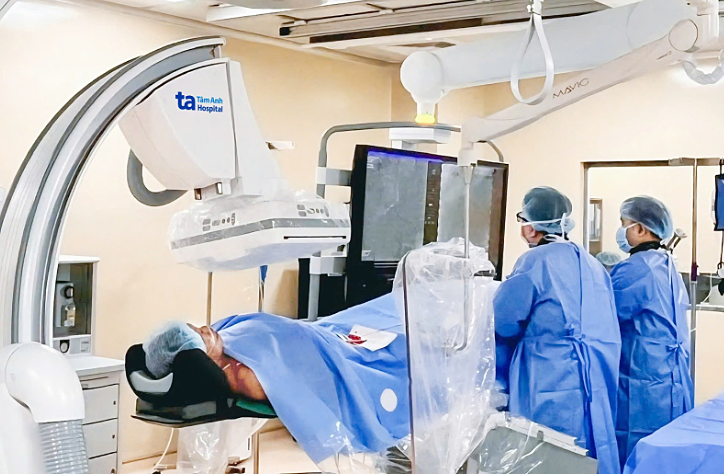 |
Doctors performing a thrombectomy in Mr. Huynh's brain using the DSA system. Photo: Tam Anh General Hospital |
Doctors performing a thrombectomy in Mr. Huynh's brain using the DSA system. Photo: Tam Anh General Hospital
Thanks to timely intervention, Mr. Huynh's cerebral artery was completely revascularized, preserving brain tissue and improving his recovery potential. After the procedure, he was conscious, spoke clearly, and showed improved movement in his right limbs, with muscle strength rated 4/5. Two days later, he only had slight facial drooping and could walk independently around his room. He was monitored for blood pressure, heart rate, electrolytes, and received blood transfusions—parameters that often fluctuate after dialysis and can directly impact blood flow to the brain. Doctors managed his atrial fibrillation and end-stage renal failure to minimize the risk of recurrent blood clots.
 |
Dr. Giap checking muscle strength and assessing Mr. Huynh's post-stroke recovery. Photo: Tam Anh General Hospital |
Dr. Giap checking muscle strength and assessing Mr. Huynh's post-stroke recovery. Photo: Tam Anh General Hospital
If unusual symptoms such as facial drooping, weakness, speech difficulty, or vomiting occur after dialysis, patients should seek immediate medical attention for monitoring and diagnosis.
Patients with underlying cardiovascular diseases, atrial fibrillation, hypertension, or chronic renal failure typically have a high risk of stroke. They should monitor their blood pressure daily, attend regular check-ups, and adhere to prescribed medications. High-risk patients should also undergo stroke screening every 6-12 months for early detection of abnormalities.
Trong Nghia - Nhat Thanh
*Patient's name has been changed
| Readers can ask questions about neurological diseases here for doctors to answer |