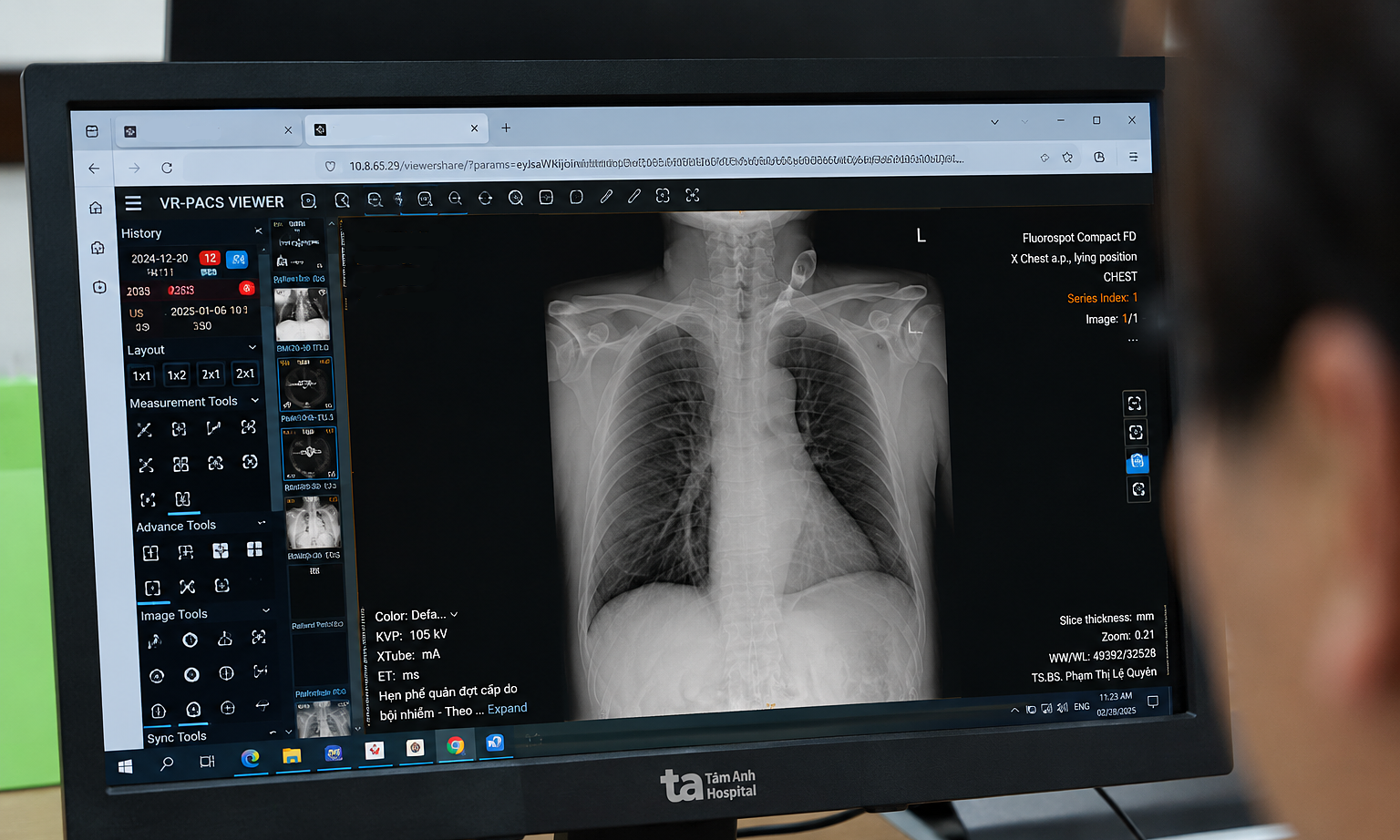
Hung, a daily smoker of 5-7 cigarettes, had never undergone a general health check-up. Recently, he developed a headache that did not respond to medication. A home blood pressure reading showed 220/110 mmHg, prompting an emergency visit to Tam Anh General Hospital in TP HCM. An MRI scan revealed a hematoma in his right cerebellar hemisphere, a result of a brain hemorrhage. This condition, a form of stroke, occurs when blood leaks into brain tissue, causing severe damage.
Master of Science, Doctor of Medicine II Mai Hoang Vu, from the Department of Neurosurgery - Spine, Neuroscience Center, stated that brain hemorrhage can stem from various causes, including hypertension, head trauma, vascular malformations, or brain tumors. Hung's case presented multiple risk factors concurrently: hypertension, smoking, and an arteriovenous malformation in the brain.
With the aid of a microsurgical microscope, doctors opened the cerebral cortex near the hematoma, carefully avoiding damage to nerves and blood vessels. They then used a suction device to remove the blood clot and an electrocautery knife to control bleeding.
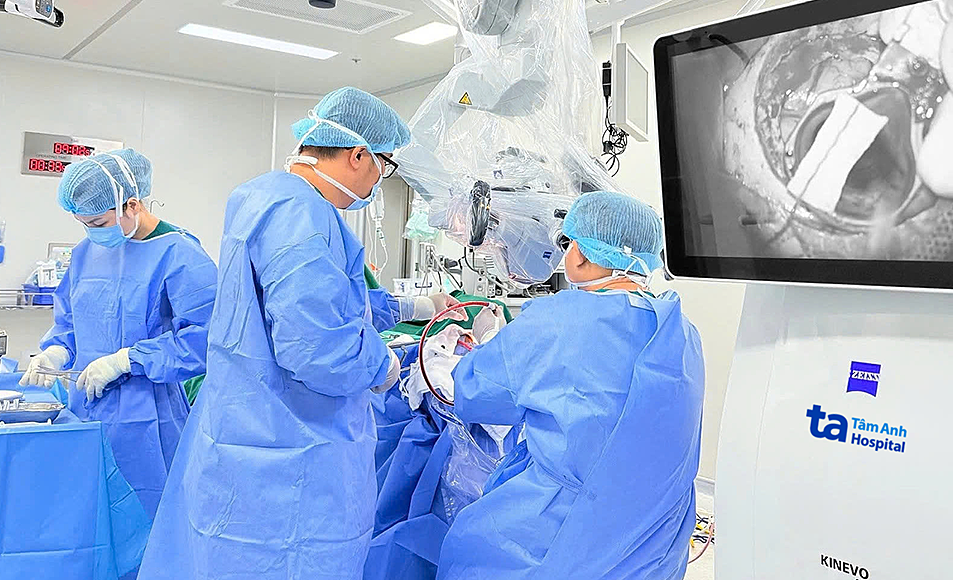 |
Doctors surgically remove a hematoma using an AI K.Zeiss Kinevo 900 microsurgical microscope. Photo: Tam Anh General Hospital. |
Following surgery, the patient's blood pressure remained elevated, necessitating continued treatment at the Cardiovascular Center.
Master of Science, Doctor of Medicine II Huynh Thanh Kieu, Head of Cardiology Department 1 at the Cardiovascular Center, Tam Anh General Hospital in TP HCM, reported that Hung suffered from severe hypertension with target organ damage. This included the heart (left ventricular hypertrophy) and eyes (retinal hemorrhage and exudates), indicating that his hypertension had progressed silently for many years without his knowledge. Hypertension in individuals under 45 often stems from secondary causes such as kidney disease, thyroid issues, or adrenal gland tumors. However, Hung's ultrasound, CT, and lab test results were all normal, leading doctors to diagnose primary hypertension, meaning its cause is unknown.
Following intensive medication treatment, Hung's blood pressure stabilized at a safe 120-130/80 mmHg, and his dizziness and headaches resolved. He was discharged after 10 days, with instructions to monitor his blood pressure at home, take medication regularly, quit smoking, and attend follow-up appointments.
According to 2020 statistics from the Vietnam National Heart Institute, over 12 million people in Vietnam suffer from hypertension. Approximately 9,7 million of these individuals are unaware of their condition or receive ineffective treatment. While the disease traditionally affects those aged 50 and above, its prevalence is now decreasing in age. The rate of hypertension among individuals under 30 years old accounts for 10-15%.
Doctor Kieu warned that hypertension is a "silent killer" because it often progresses asymptomatically for many years. The disease is increasingly prevalent among younger individuals due to work pressure, stress, overweight, sedentary lifestyles, and unhealthy habits. Many cases are only discovered after severe complications such as stroke, myocardial infarction, or kidney failure have already occurred.
Doctors recommend that everyone should have their blood pressure checked regularly, even when feeling healthy. A balanced diet, limiting salt and alcohol, avoiding smoking, managing weight, and regular exercise can help reduce the risk of developing the disease.
Thu Ha
*Patient's name has been changed.
| Readers can submit questions about cardiovascular disease here for doctors to answer. |