Upon arrival at Tam Anh General Hospital, Ho Chi Minh City (TP HCM), the patient was in hemorrhagic shock, with low blood pressure and pale skin and mucous membranes. A CT scan of the abdomen revealed a ruptured angiomyolipoma in the right kidney, measuring 40x90 mm. This had formed a hematoma in the retroperitoneal space, compressing the ureter and inferior vena cava.
A branch of the artery supplying the tumor in Ba Hoa's right kidney had a pseudoaneurysm, a condition where blood leaks out of the arterial wall and forms a hematoma, encased by surrounding tissues. Doctor Do Anh Tuan, from the Cardiology Center, stated this was the main cause of blood loss and carried a high risk of vessel rupture, requiring immediate treatment.
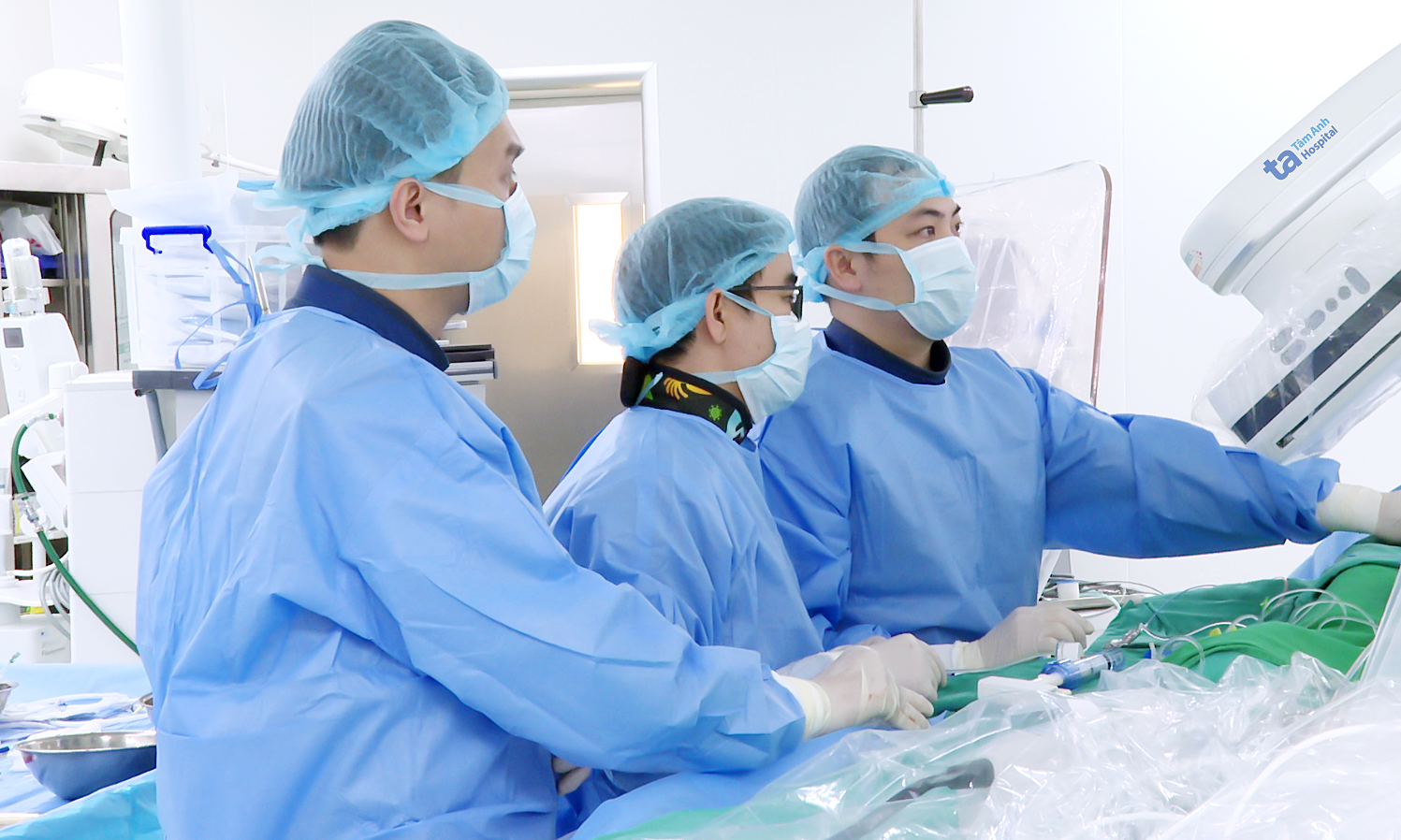
Ba Hoa had several underlying conditions: chronic ischemic heart disease, hypertension, type 2 diabetes, and stomach ulcers. Due to her current hemorrhagic shock, immediate surgery was not possible. Doctors performed selective arterial embolization to quickly control the bleeding. After two hours of intervention, which was one and a half times the usual duration due to the complex injury and the patient's advanced age, the bleeding was controlled, and kidney removal was avoided.
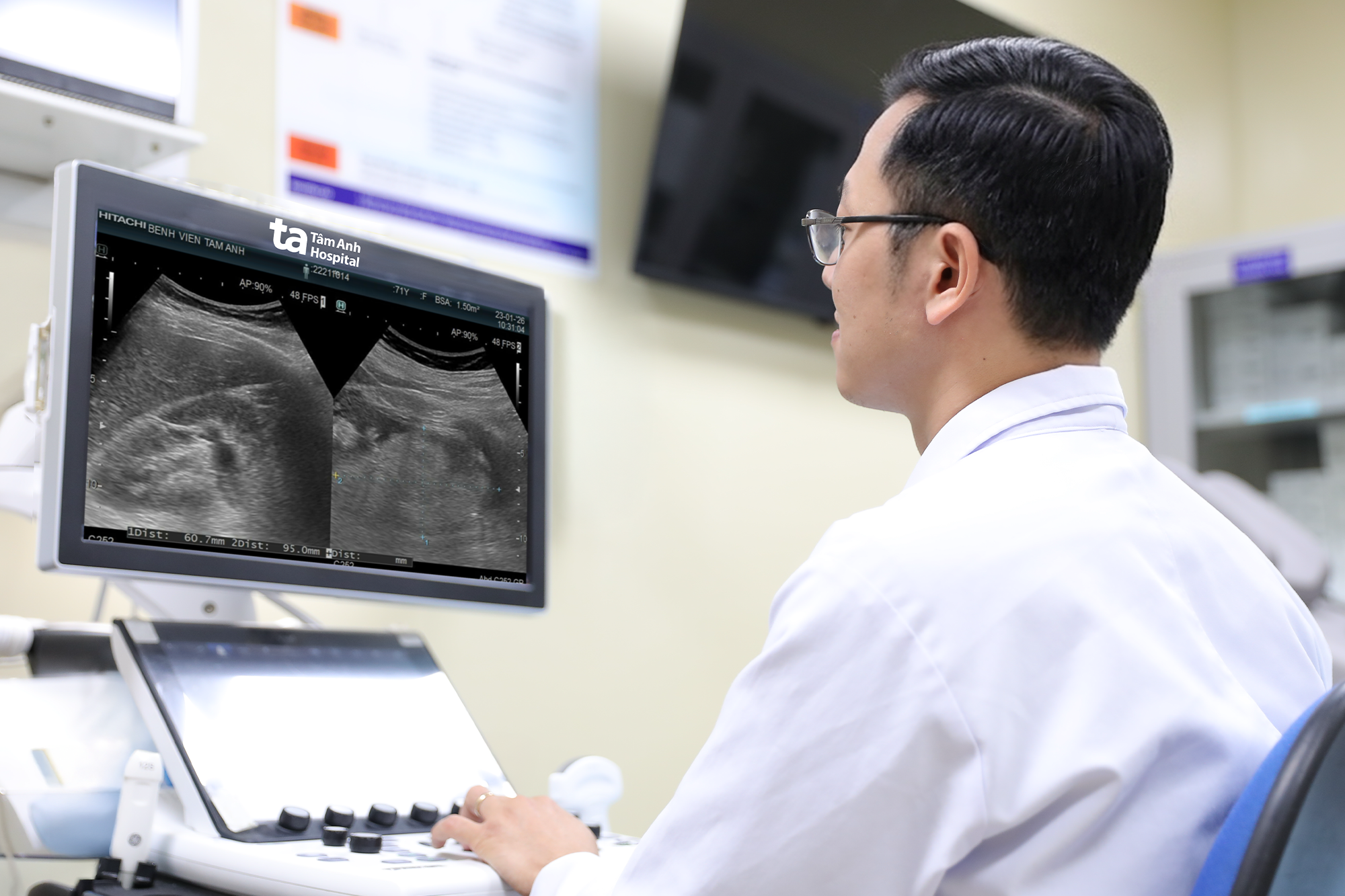 |
Doctor Tuan performs an echocardiogram for the patient. Photo: Tam Anh General Hospital |
Due to significant blood loss, with her Hb level dropping from 11.9 to 8.3 g/dL, Ba Hoa required blood transfusions after the intervention. She also developed complications including pneumonia, wheezing, green phlegm cough, and a urinary tract infection. This necessitated high-dose broad-spectrum antibiotics, cardiovascular support, and blood sugar stabilization.
After two weeks of intensive treatment, Ba Hoa's health recovered, and her pneumonia was controlled. The hematoma had stabilized, not increasing in size, and was expected to fully dissolve after three months.
One month later, Ba Hoa returned for a follow-up. Doctors performed robotic kidney tumor surgery using the Da Vinci Xi system. Doctors skillfully controlled the flexible robotic arms, guided by a 3D camera system, to access the lesion in the abdominal cavity, dissect the tumor from the kidney, and remove necrotic tissue.
According to Doctor Tuan, renal angiomyolipomas are usually benign. However, if the tumor is large, over 4 cm, and contains an intra-tumoral pseudoaneurysm, it can easily rupture and cause internal bleeding, leading to rapid death from blood loss.
Doctors recommend that individuals with kidney tumors undergo regular check-ups every six to 12 months. If sudden flank pain, blood in urine, or dizziness occurs, they should seek hospital screening and treatment.
Bao Anh
*The patient's name has been changed.