Dry eyes can affect individuals of all ages, not solely the elderly. For those in the working age group, the causes of dry eyes often stem from environmental factors and daily habits.
Doctor Nguyen Duc Huy, a first-degree specialist at the Center for High-Tech Ophthalmology, Tam Anh General Hospital, Ho Chi Minh City, explained that prolonged use of computers and phones, working in air-conditioned rooms, infrequent blinking, and chronic stress all contribute to a reduction in tear film quality. Furthermore, the natural aging process after 40 years of age gradually diminishes lacrimal gland function, exacerbating dry eyes if not detected early.
Dry eyes occur when one of the three layers of the tear film—mucus, aqueous, or lipid—functions poorly, resulting in insufficient quality and quantity of tears to protect the ocular surface. This tear film is crucial for precisely focusing light onto the retina. When it becomes dry and unstable, light scatters, causing blurred vision and glare, especially at night. In severe cases, dry eyes can significantly impair vision, particularly in low-light conditions, where the eyes strain more, leading to fatigue, irritation, and reduced visual acuity.
Ms. Van suffered from chronic dry eyes but did not have refractive errors like nearsightedness, farsightedness, or other eye conditions such as retinal diseases or cataracts. The doctor prescribed treatment including eye drops to supplement and stabilize the tear film, anti-inflammatory medication for the ocular surface, and anti-glare glasses for nighttime use.
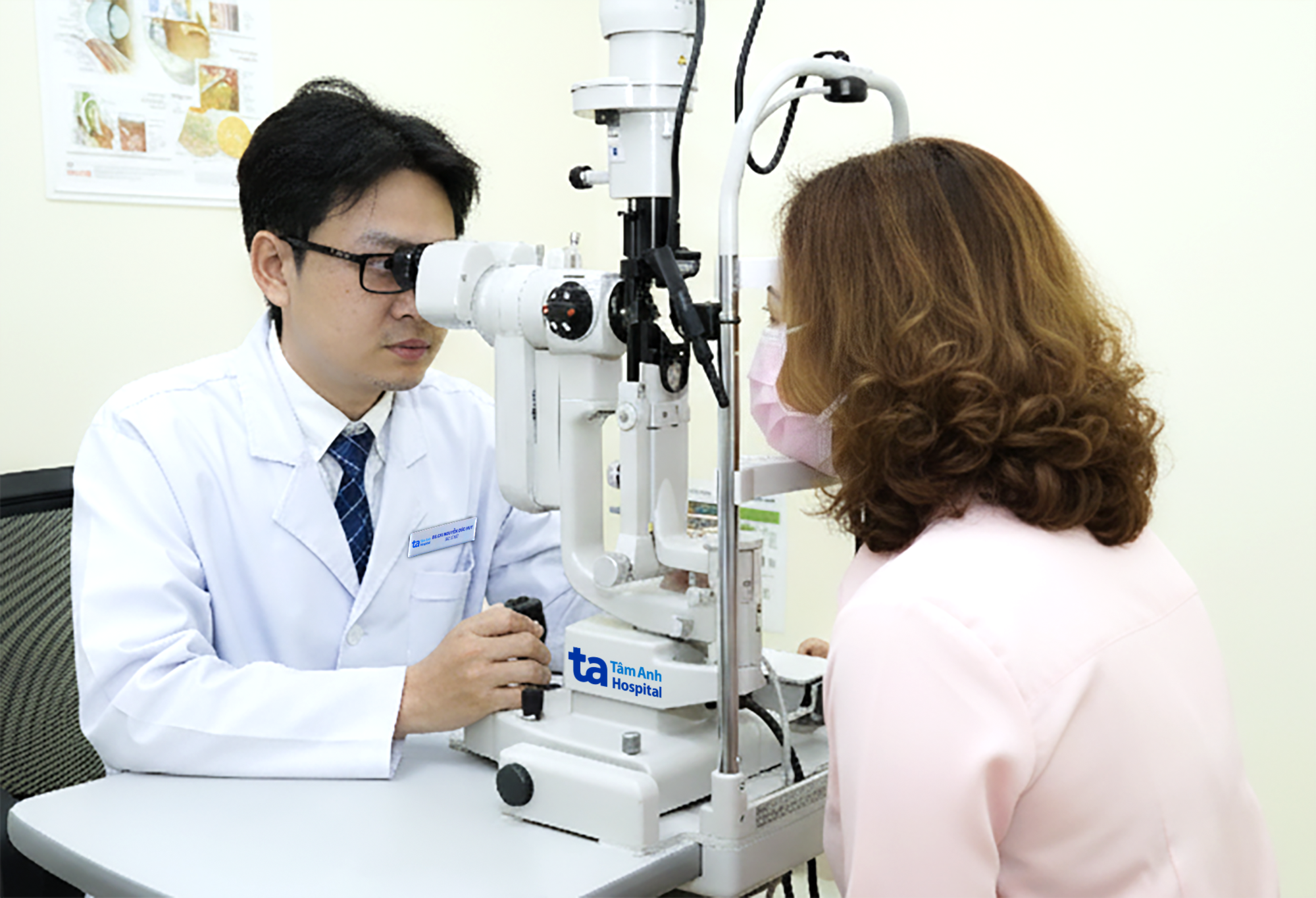 |
Doctor Huy observes Ms. Van's internal eye structure using a slit lamp biomicroscope. *Photo: Tam Anh General Hospital* |
Patients are also advised to modify their daily habits to aid recovery. Ms. Van needs to limit prolonged screen time, apply the 20-20-20 rule—looking at something 20 feet (6 meters) away for 20 seconds every 20 minutes—and blink frequently when working on a computer. She should avoid direct exposure to wind or air conditioning. Additionally, maintaining adequate hydration, a balanced diet, and supplementing with omega-3 rich foods are recommended.
Individuals experiencing abnormal symptoms such as blurred vision, night glare, fatigue, or a gritty sensation in their eyes should consult an ophthalmologist.
Nhat Minh
*Patient's name has been changed
| Readers can submit questions about ophthalmological conditions here for doctors to answer |