Long's recovery has been swift, with Doctor Nguyen Thanh Do, acting head of the Department of Neurosurgery, noting the boy's alertness, brighter eyes, and clearer speech. His mother expressed profound relief, stating, "This is the first time in many years I've seen my child like a real kid," free from the sudden, disorienting seizures.
Long was diagnosed with epilepsy at two years old, receiving regular medication and long-term monitoring. An MRI at four years old did not reveal any tumors. Subsequent electroencephalogram (EEG) tests indicated "abnormalities causing epilepsy," but imaging did not show clear lesions. His family initially took him to a specialized mental health hospital for medication before returning to Children's Hospital 2 for continued treatment.
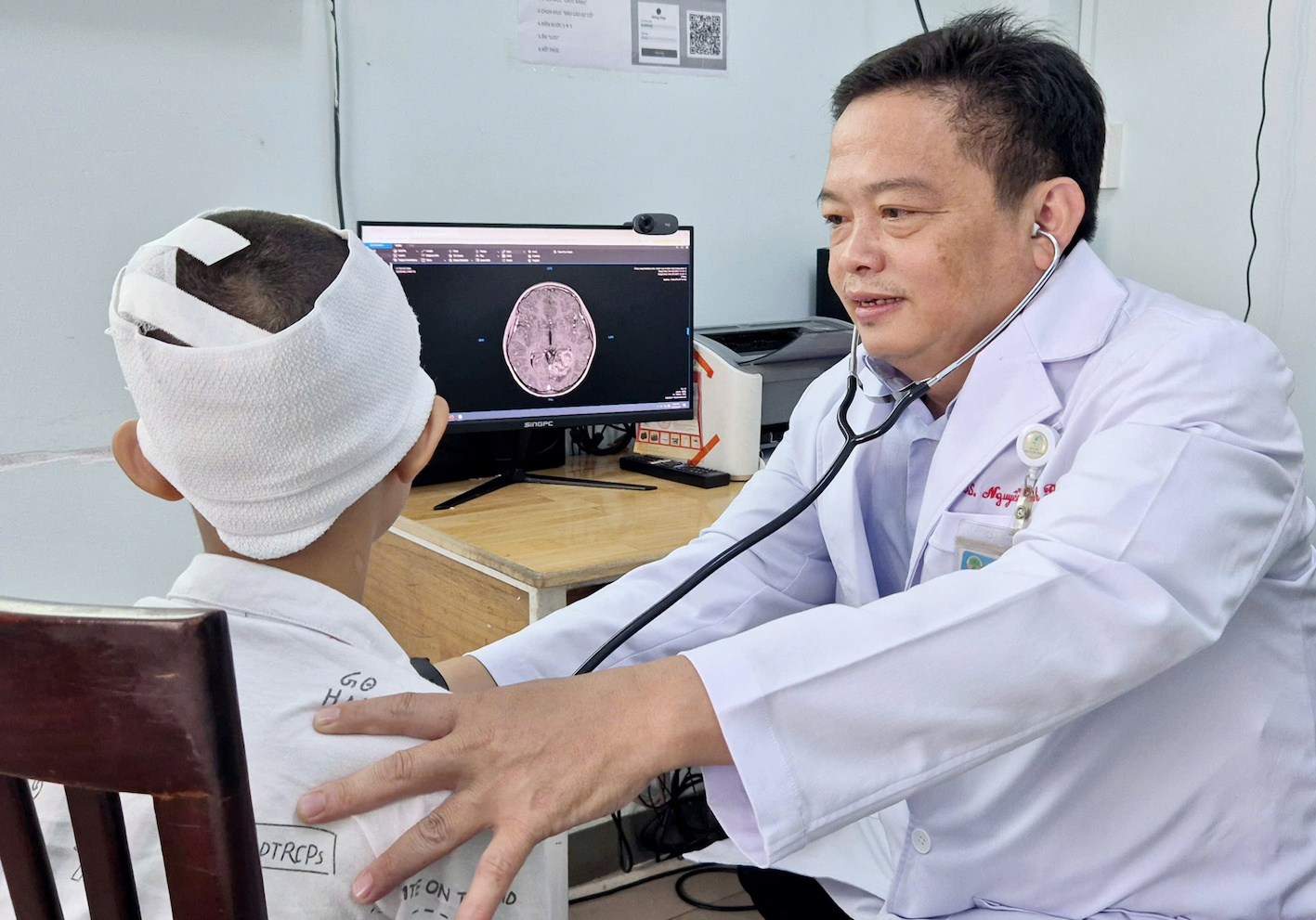 |
Doctor Nguyen Thanh Do examines Long after surgery. Photo: Le Phuong |
By the age of 10, Long's response to medication decreased, and his seizures became more frequent. An MRI then detected a temporal lobe tumor. One year later, the tumor grew, leading doctors to recommend surgery. Having witnessed complications from neurosurgery in another case, the family initially declined, seeking multiple opinions. All consultations advised them to return to the children's hospital for the intervention.
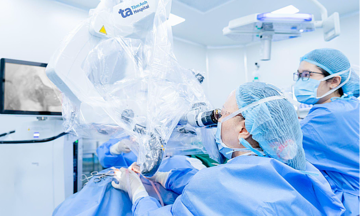
Doctor Do identified the patient's condition as refractory epilepsy caused by a temporal region tumor. This brain area controls vital functions like memory, language, and the recognition of images and sounds. To ensure maximum safety, the surgical team consulted with foreign experts and employed electrocorticography (ECoG), a technique that records brain activity directly from the cortical surface. This method precisely identified the seizure-generating focus, overcoming the limitations of previous "blind surgeries" based solely on MRI, thereby preventing excessive tissue removal that could impair neurological function. After an 8-hour procedure, doctors successfully removed the tumor and the epileptogenic zone, fully preserving the boy's brain function.
Currently, Long has no reported seizures and is undergoing postoperative monitoring. The family awaits pathology results to determine the tumor's nature. Based on imaging and growth rate, doctors predict an 85% chance the tumor is benign. For Long's parents, their son's remarkable recovery after surgery is already a "10-point" outcome.
Statistics indicate that about 0,5-1% of Vietnam's population, equivalent to 500,000-1,000,000 people, suffer from epilepsy. Nearly 30% of these cases are drug-resistant, necessitating specialized interventions like surgery to improve quality of life.
Le Phuong