According to Chu Quoc Thinh, Acting Director General of the Food Safety Department, these inspections are unannounced and will last 15 days from their announcement date of 1/4. The inspection period covers from 1/1/2026 until the time of inspection and any related periods.
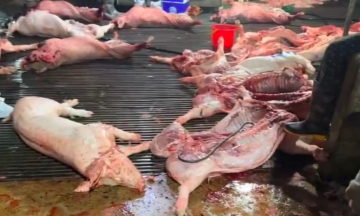
The Hanoi Food Safety and Hygiene Sub-department and the Ninh Binh Provincial Food Safety Sub-department selected the establishments for inspection. Thinh stated that Hanoi and Ninh Binh are two locations linked to a network involved in slaughtering and distributing 3,600 pigs infected with African swine fever, totaling 300 tons, recently uncovered by Hanoi Police.
The inspection teams will focus on compliance with current food safety laws at food service establishments and collective kitchens. The Food Safety Department established two inspection teams, comprising representatives from the department, the National Institute for Food Control, and local sub-departments.
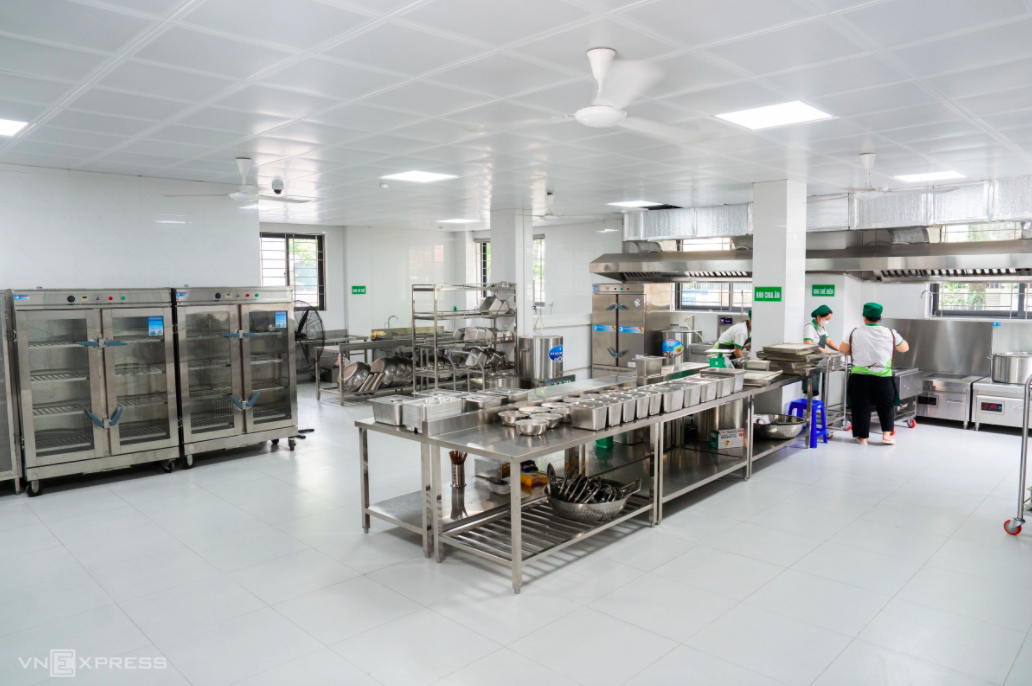 |
A semi-boarding kitchen at a school in Hanoi. *Illustration: Tung Dinh* |
These inspections follow Hanoi Police identifying Cuong Phat Company as a key player in distributing and supplying meat to several schools. The list of schools using food from Cuong Phat Company has not yet been released.
The Ministry of Health views this incident as increasing the risk of disease spread, threatening food safety, and posing long-term health risks to the public, particularly children, students, and workers. Yesterday, the Ministry of Health also instructed the People's Committees of provinces and cities to improve management of collective kitchens after the incident and to increase unannounced inspections.
For schools with boarding kitchens, semi-boarding kitchens, and canteens, the Ministry of Health urged schools to heighten their responsibility and enhance food safety education for teachers and students. Additionally, it called for engaging parents and school organizations in monitoring kitchen operations.
African swine fever (ASF) is a highly contagious disease affecting only pigs, including domestic and wild swine. The disease-causing virus (ASFV) spreads rapidly and causes a nearly 100% mortality rate in infected pigs. The virus persists long in the environment and easily spreads via respiratory and digestive routes among pigs. People in contact with infected pens, transport vehicles, or food from diseased pigs can spread the virus.
Pigs with African swine fever are also susceptible to other diseases like porcine reproductive and respiratory syndrome (PRRS), influenza, and typhoid. Even after cooking, toxins can remain in the meat. Consumption can lead to diarrhea, vomiting, or even septic shock, potentially fatal. Furthermore, meat from sick or dead pigs may be contaminated with other bacteria and parasites (such as worms, Salmonella, E. coli), causing food poisoning or severe digestive illnesses in humans.
By Le Nga