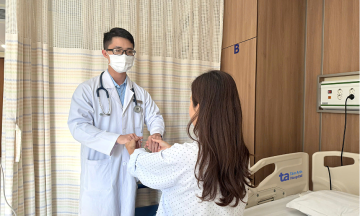
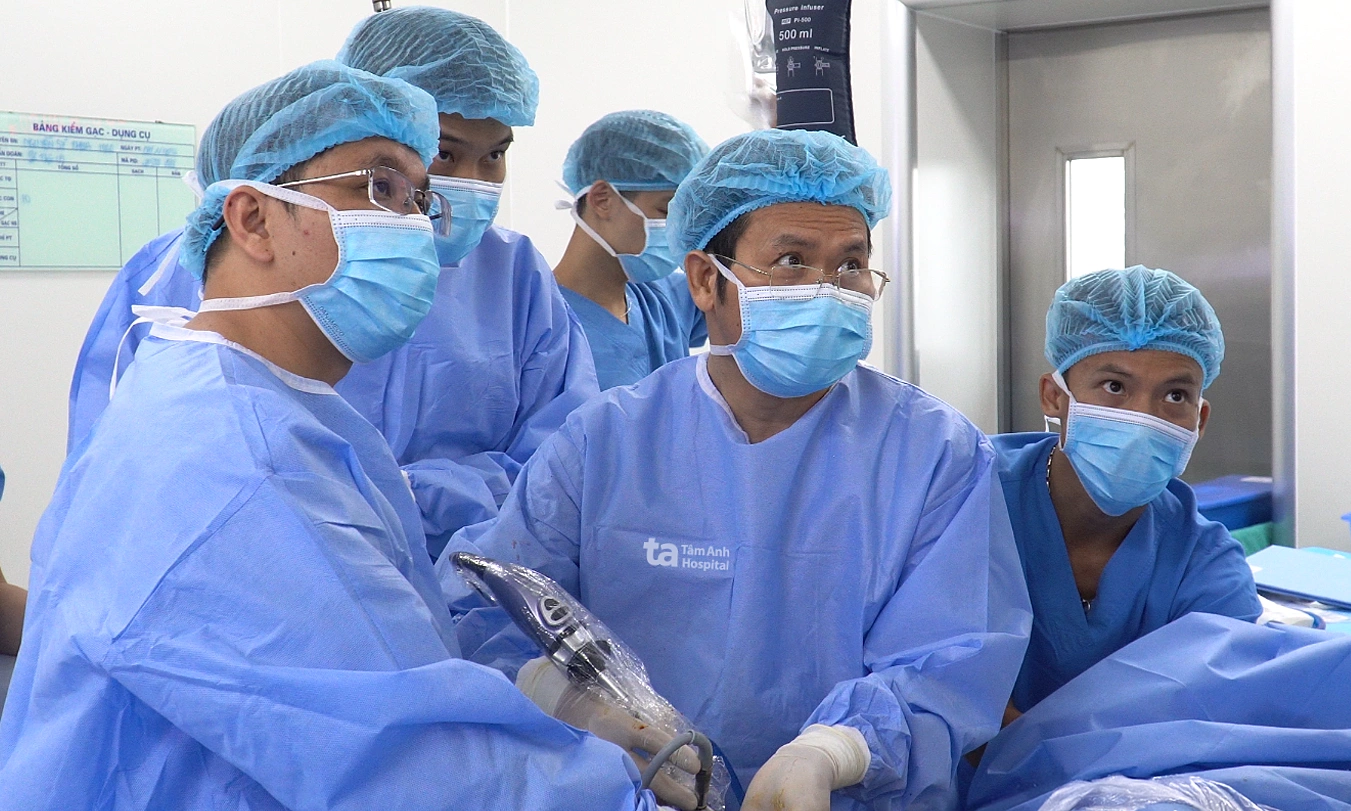
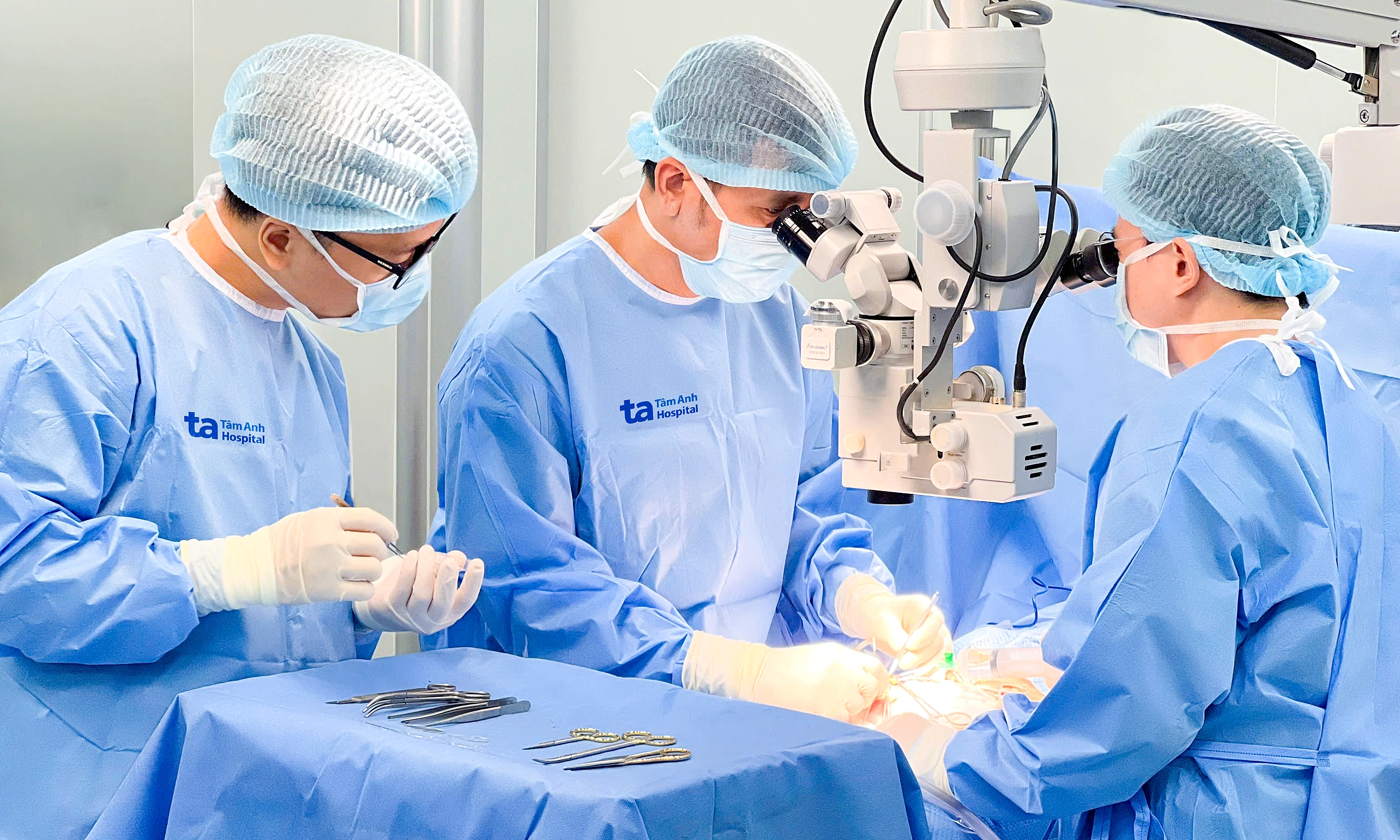
Mr. Tuan sought care at the High-Tech Eye Center, Tam Anh General Hospital Hanoi. Doctors observed that the lens was no longer in its proper position, having fallen into the vitreous cavity. Vitreous fluid was present in the anterior chamber, and the iris showed slight trembling due to loss of posterior support. Mr. Tuan's right eye vision was only 1/10, while his other eye could count fingers at a distance of 3 meters—a very low level compared to normal.
According to Doctor Bui Viet Hung, Head of the Vitreoretinal Department at the High-Tech Eye Center, trauma to the eye area can sever the suspensory ligaments of the lens, causing this structure to lose its position and fall into the vitreous cavity. This is a severe injury that cannot heal on its own. Without timely intervention, patients risk endophthalmitis, glaucoma, retinal damage, and permanent vision loss.
Before surgery, Mr. Tuan underwent specialized diagnostic tests, including eye ultrasound, posterior segment optical coherence tomography (OCT), artificial intraocular lens (IOL) power calculation, general examinations, and a pre-anesthesia assessment. This comprehensive evaluation helped accurately determine the extent of the injury and select the appropriate surgical approach, ensuring safety during the procedure.
The surgical team removed the dislocated lens from the vitreous cavity, then implanted and secured an artificial lens to restore the light pathway and improve vision.
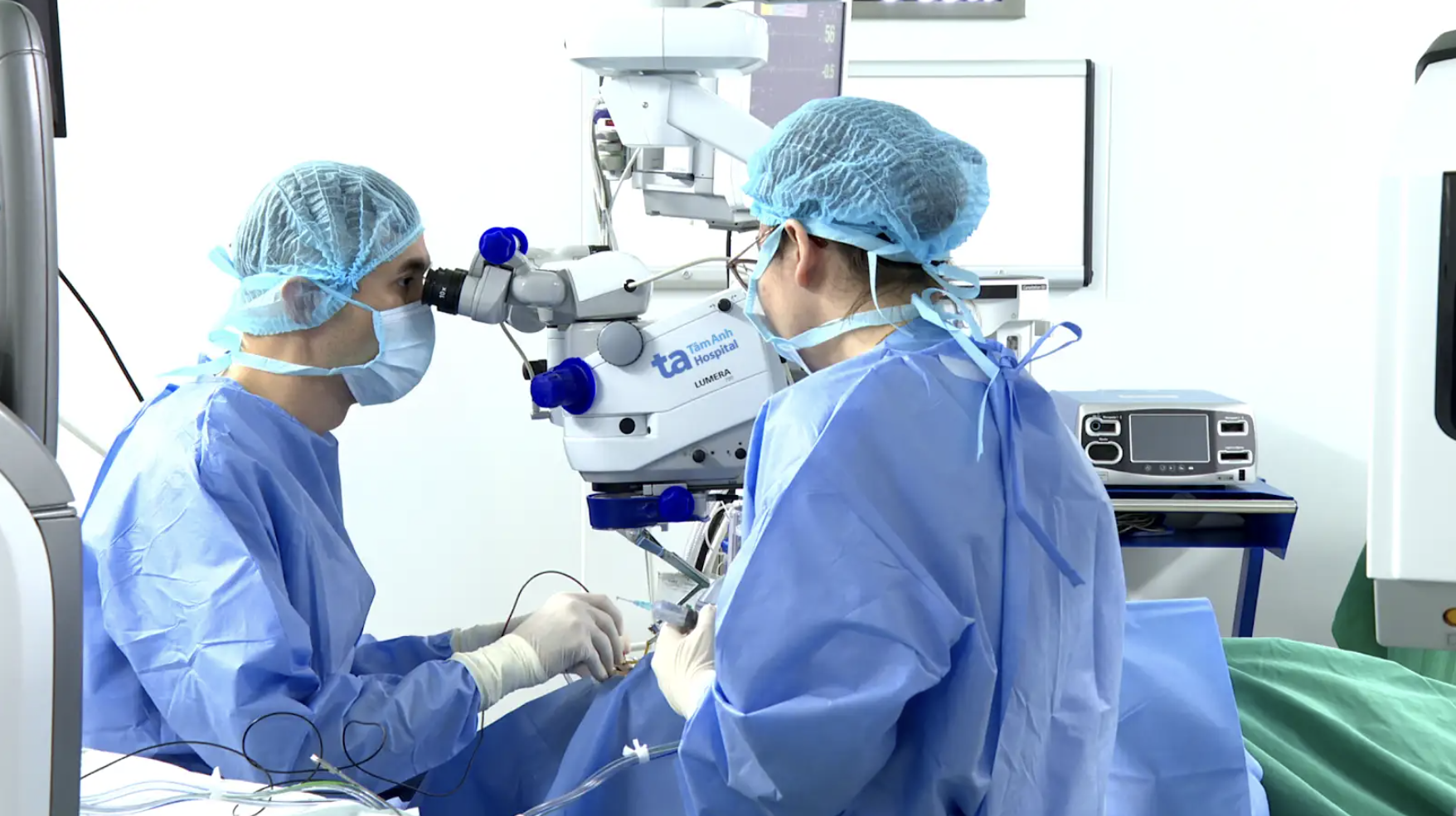 |
Doctor Hung performs vitrectomy and artificial lens suspension for the patient. *Photo: Tam Anh General Hospital*
Post-surgery, the artificial lens was stably fixed. Intraocular parameters remained within monitoring limits, and no early complications were observed. Vision improved significantly, allowing the patient to read medium-sized text, use a phone, and perform daily activities more conveniently.
Doctor Hung emphasized that post-operative care is crucial for recovery and maintaining treatment effectiveness. Patients must take medication as directed, maintain eye hygiene, and avoid rubbing or impacts. In the initial days, patients should maintain the prescribed posture to support the stability of intraocular structures and attend follow-up appointments to monitor progress and detect any abnormalities early.
Thu Giang
*Patient's name has been changed*
| Readers can submit ophthalmology questions here for doctors to answer |