Kien, a 17-year-old, experienced sudden, sharp pain in his left scrotum that radiated to his abdomen two weeks prior to his most recent hospitalization. Doctors diagnosed testicular torsion, a condition where the spermatic cord twists, cutting off blood supply to the testicle and causing severe pain and swelling. After 30 minutes of observation at the hospital, the condition resolved itself.
Kien was admitted to Tam Anh General Hospital, Ho Chi Minh City (TP HCM), for the third time in mid-December. An ultrasound revealed a lack of blood flow to his left testicle, which again improved spontaneously after 30 minutes. Dr. Doan Ngoc Thien, from the Andrology Department at the Center for Urology - Nephrology - Andrology, noted that Kien is among a small number of cases where a twisted testicle can spontaneously return to its original position. However, this self-correction does not resolve the underlying issue and can indicate dangerous recurrent "torsion-detorsion" episodes. Without timely treatment, prolonged lack of blood supply can lead to necrosis, requiring surgical removal and causing permanent damage.
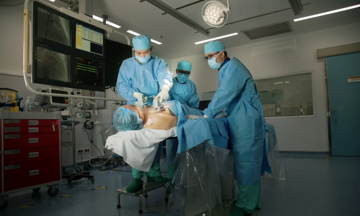
Dr. Thien and his team performed surgery on Kien. They used three non-absorbable sutures to secure each testicle to the scrotal muscle, preventing future twisting. The surgical incision was cosmetically closed with biological glue, allowing Kien to resume normal activities immediately after the procedure. Kien recovered well and was discharged the following day.
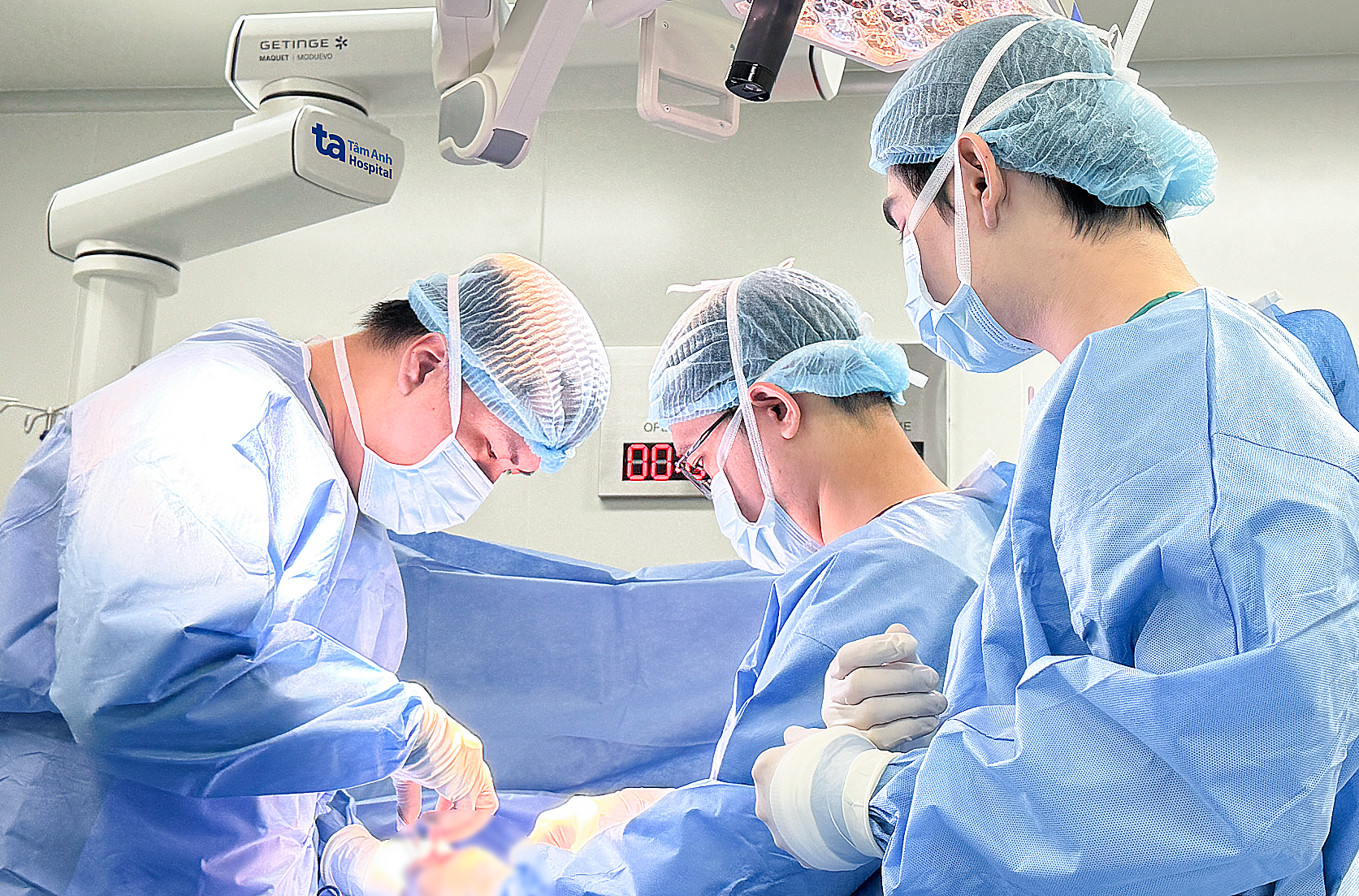 |
Dr. Thien (far left) and his team operate on Kien. Photo: Hoai Thuong |
According to Dr. Thien, testicular torsion often occurs in infants, children aged six to 12, and adolescents. While the exact cause remains unclear, risk factors include genetics, rapid development of the reproductive organs during puberty, vigorous physical activity, or minor trauma. The scrotal muscle's contractile function, particularly in cold weather or during sleep at night, can also increase the risk of torsion.
The optimal time for surgical detorsion is typically within four to six hours of symptom onset. Dr. Thien advises boys and adolescents experiencing sudden, sharp pain in the groin area that does not subside after one to two hours, or if one testicle appears higher than the other, to seek emergency medical attention immediately. Individuals with a history of testicular pain that improved on its own should not be complacent and should consider appropriate preventative treatment.
Hoai Thuong
*Patient's name has been changed