The VNVC Vaccination System has expanded its administration of Nirsevimab, a monoclonal antibody designed to prevent respiratory syncytial virus (RSV) in children up to two years old, with rollout commencing on 23/12.
Dr. Bach Thi Chinh, Medical Director at VNVC, stated that this addition for infants and young children, alongside existing RSV vaccines for pregnant women and the elderly, completes the unit's comprehensive suite of RSV prevention solutions. VNVC is among the first non-hospital medical facilities to administer RSV monoclonal antibodies to children, following Ministry of Health guidelines. Previously, in November, Tam Anh General Hospital System and Nutrihome Clinic had initiated similar programs.
 |
Children are screened by doctors before receiving RSV monoclonal antibody injections at VNVC. Photo: Tuan Anh.
Monoclonal antibodies and vaccines operate through distinct protective mechanisms, a VNVC representative explained. Vaccines introduce harmless components or genetic material to stimulate the immune system to produce its own antibodies, a process that typically takes several weeks to develop immunity. In contrast, monoclonal antibodies like Nirsevimab contain ready-made antibodies produced in a laboratory. Administered directly, they provide immediate protection without requiring the body to generate its own immune response. These two approaches are complementary, offering enhanced options for RSV disease prevention.
Nirsevimab, introduced to Vietnam by Sanofi Group, France, offers 5-6 months of protection and has been shown to reduce the risk of hospitalization due to RSV-induced pneumonia and bronchiolitis by over 82%. Infants from one day old to 12 months old receive one dose. High-risk children aged over 12 to 24 months can also benefit, with dosage determined by weight and health. The new monoclonal antibody is more accessible than its predecessors, extending protection to all children, not just those in high-risk categories.
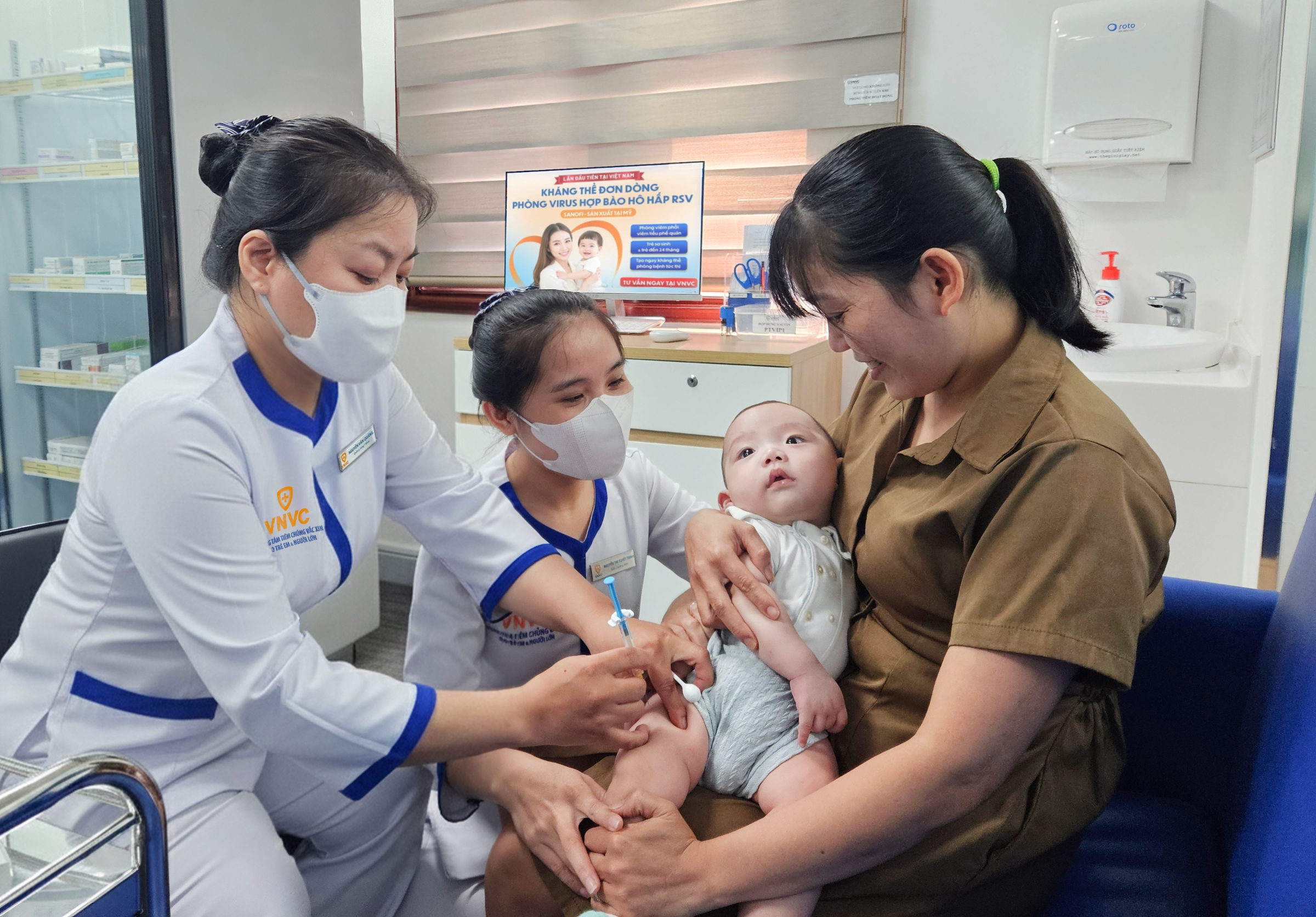 |
Le Khanh Linh, 34, from Ho Chi Minh City, brought her 5-month-old son to VNVC Hoang Van Thu for an RSV monoclonal antibody injection on 23/12. Photo: Diem Chinh.
RSV is a primary cause of bronchiolitis and pneumonia in children. The World Health Organization (WHO) reports over 3,6 million child hospitalizations and 100,000 deaths annually worldwide, with nearly half of these fatalities occurring in children under 6 months old. The virus spreads via the respiratory tract, circulating year-round, with increased prevalence during seasonal transitions, cold weather, and periods of air pollution. Currently, there is no specific treatment for RSV disease. Affected children often experience cold-like symptoms, fever, and prolonged wheezing, with conditions capable of rapid deterioration.
Dr. Cam Ngoc Phuong, Director of the Neonatal Center at Tam Anh General Hospital Ho Chi Minh City, highlighted that young children's immature immune systems and narrow airways make them vulnerable to severe RSV progression. The disease can lead to serious complications such as respiratory failure, lung collapse, superinfection, and pneumothorax, potentially leaving lasting sequelae. RSV is also prone to multiple reinfections within a year due to the body's inability to develop lasting immunity. Dr. Phuong emphasized: "Children should receive early protection against RSV, which will reduce treatment costs, hospitalizations, and the overall burden on the healthcare system."
Established in 2017, VNVC currently operates over 250 vaccination centers, having successfully introduced numerous new vaccines and significantly contributing to increased vaccination rates among children and adults. The organization is also constructing a Vaccine Factory in Tay Ninh, with an investment exceeding 2,500 billion VND. This facility, spanning 26,000 m2 and projected to produce up to 100 million doses annually, is expected to commence operations by late 2027. Its goal is to achieve self-sufficiency in vaccine supply and enhance national health security.
Gia Nghi