Dr. Dao Van Tu, head of the Quan Su On-Demand Treatment Department at Hospital K, stated that cancer is becoming a notable socioeconomic issue due to escalating treatment costs and the limited financial capacity of many patients.
In 2023, the Health Insurance Fund spent over 7,500 billion VND on cancer drugs, making it one of the highest expenditure categories within the fund's total drug spending. In 2024, cancer and immune-modulating drugs continued to lead in expenditure, accounting for 16.2% of total HIF drug costs and 41.3% of spending on patented drugs.
The burden of cancer treatment costs is not unique to Vietnam. According to IQVIA data, the global oncology drug market reached approximately 223 billion USD in 2023 and is projected to exceed 400 billion USD by 2028, with a compound annual growth rate of about 11.5-14.5%.
In Vietnam, the cancer drug market size is also expected to continue growing. Statista forecasts that this market could reach around 530.2 million USD by 2029, with a compound annual growth rate of approximately 7.43% for the 2025-2029 period.
Lung, liver, breast, and colon cancers are among the most common diseases, accounting for about one-half of new cases. Smoking, environmental pollution, and lifestyle factors are considered significant contributors to the increasing disease burden. Each year, Vietnam records approximately 180,000 new cancer cases and 120,000 deaths.
In major cities, patients have greater access to specialized hospitals, diagnostic tests, and new treatment therapies. However, patients in rural areas often face long travel distances for treatment, incurring costs for transportation, accommodation, and time off work.
For low-income families, these additional expenses beyond medication and hospital fees become a significant burden. This creates a vicious cycle: late detection leads to more complex treatment needs, higher costs, and a reduced ability for patients to pursue long-term treatment.
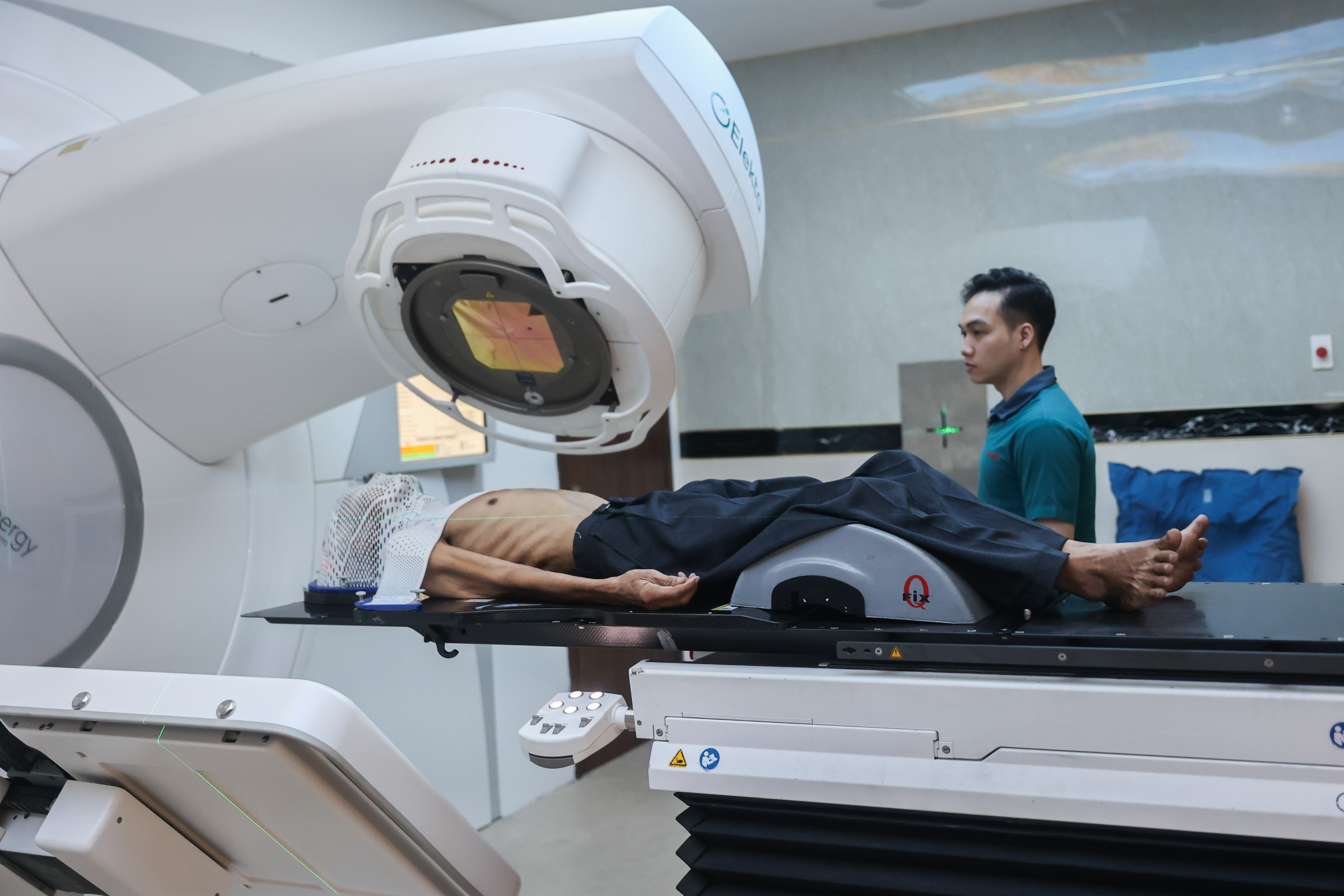 |
Bac si xa tri cho benh nhan ung thu tai Benh vien Ung Buou TP HCM co so 2, TP Thu Duc. Anh: Quynh Tran
In treatment, traditional chemotherapy drugs are relatively common, and most are covered by the Health Insurance Fund according to the patient's scope and benefit level. However, the situation differs significantly for targeted therapies and immunotherapies. While these therapies offer opportunities to extend survival and improve quality of life, they often come with high treatment costs. Many advanced drugs are expensive; in some cases, the cost can be equivalent to 40-50 times the average per capita income. This makes access heavily dependent on insurance coverage, treatment indications, and the financial capacity of each family.
"When patients are not covered by HIF or face high co-payments, drug costs can become a barrier, forcing them to delay, interrupt, or choose less expensive treatment options," Dr. Tu said.
According to reports, 125 new cancer drugs have been introduced to the global market in the last five years, nearly one-half of all cancer drugs developed in the past two decades. This explosion of new drugs means more treatment options, but it also raises questions about accessibility and the sustainability of healthcare costs.
Without solutions for price control, cost-effectiveness evaluation, and expanding risk-sharing mechanisms, the increase in new treatment drugs could further elevate overall cancer care costs. Consequently, cancer is becoming an issue that extends beyond the hospital setting.
An individual suffering from cancer not only incurs examination and treatment costs but may also lose their ability to work, experience reduced income, and require family members to take time off to provide care. At a societal level, these impacts decrease labor productivity and increase welfare costs, while resources allocated to healthcare must continuously expand.
The challenge of controlling the cancer burden therefore requires a two-pronged approach: reducing preventable cases through control of tobacco, pollution, and risk factors; and enhancing early detection capabilities while ensuring patients have access to effective treatments at reasonable costs.
Le Nga