Acne scars form when inflammation damages collagen and elastin structures in the dermis. Prolonged inflammatory acne, self-extraction, or improper treatment often leads to pitted scars, depressed scars, and persistent hyperpigmentation for many years.
Doctor of First Degree Specialization Tran Thi My Linh, a dermatologist and aesthetician at Tam Anh General Hospital, TP HCM, states that scar treatment not only improves the skin surface but also needs to target the scar base to stimulate collagen restructuring. Doctors develop suitable protocols based on the extent of damage, scar type, and individual skin characteristics. Currently, many modern technologies are applied in treating post-acne scars, with radiofrequency microneedling, 6D laser, and TriFill Pro being the three popular methods.
Radiofrequency microneedling is a technology that combines a microneedle system with radiofrequency energy. As the needles penetrate the dermis, energy is delivered directly into the skin tissue, creating controlled micro-injuries that stimulate the production of new collagen and elastin.
This method targets the scar base while minimizing impact on the skin surface, making it suitable for mild to moderate pitted scars. Beyond scar improvement, the technology can also help reduce pore size, increase skin firmness, and address signs of skin aging.
Through tissue regeneration and collagen production, the skin surface becomes more even, and depressed scar areas diminish over time. Most cases require a course of multiple sessions, spaced several weeks apart, to achieve optimal results.
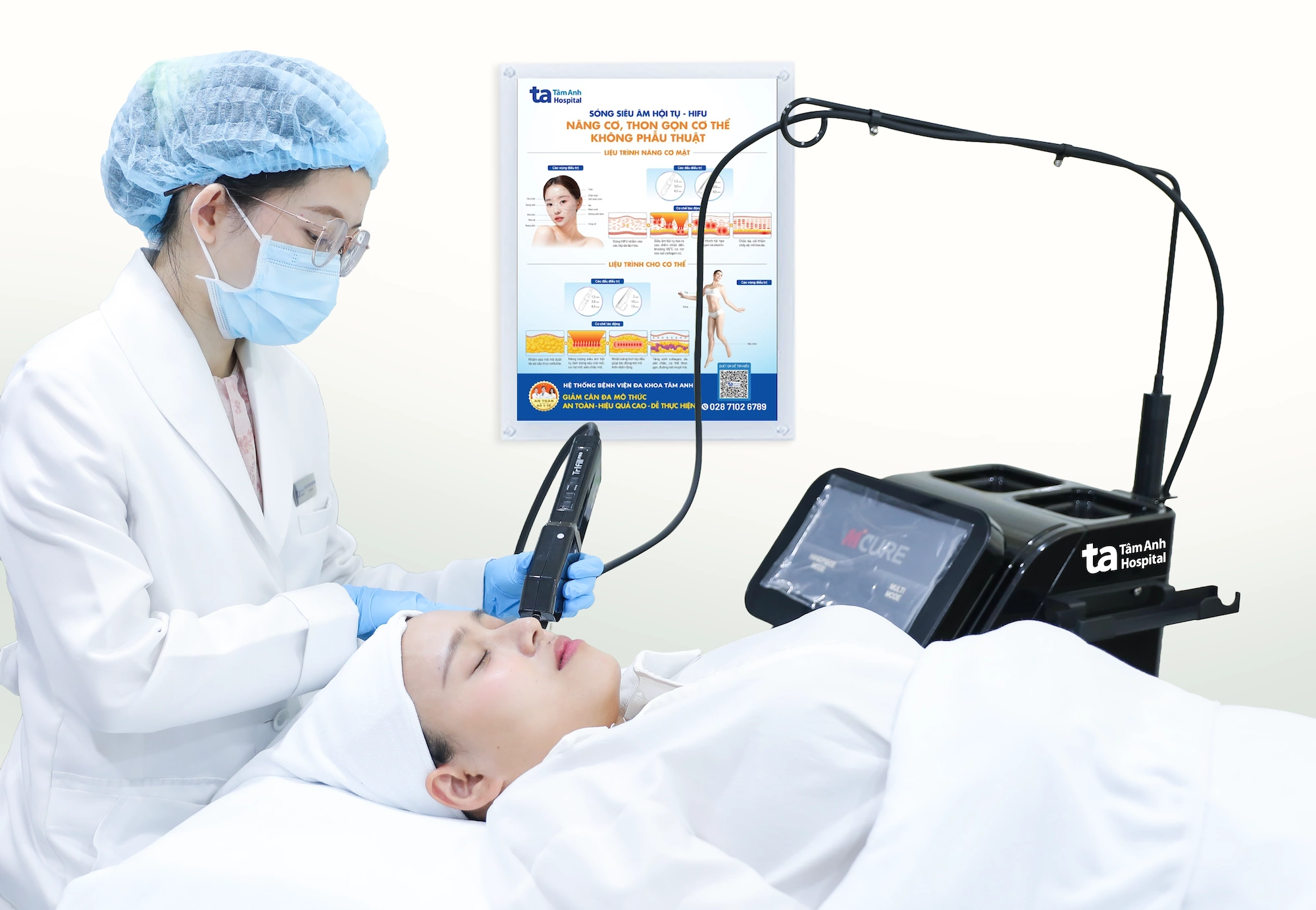 |
A doctor uses TriFill Pro technology to treat a patient's scars. Photo: Tam Anh General Hospital |
The 6D laser features a multi-wavelength system that allows simultaneous action on multiple skin layers, proving effective in treating acne scars. The combination of Er:YAG and Nd:YAG laser modes helps address issues often associated with scars, such as redness, uneven skin texture, while stimulating collagen production and restructuring damaged tissue.
This method is often indicated for individuals with pitted scars accompanied by post-inflammatory hyperpigmentation, rough skin, or enlarged pores. In addition to improving scars, the technology also helps even out skin tone and promotes new skin regeneration. Depending on the specific condition, doctors can adjust the energy levels and penetration depth to improve skin texture and help fill depressed scar areas.
After treatment, patients need to ensure adequate sun protection, proper moisturizing, and adhere to skincare instructions to minimize the risk of post-inflammatory hyperpigmentation and support the recovery process.
TriFill Pro is a new generation scar treatment technology that uses CO₂ gas to perform scar subcision, releasing underlying fibrous bands and allowing the scarred area to lift naturally.
This method is particularly suitable for long-standing pitted scars, especially rolling scars with fibrosis. Depending on the characteristics of each scar type and the extent of damage, doctors may combine TriFill Pro with other technologies to optimize collagen regeneration, improve the skin surface, and enhance treatment effectiveness.
Doctor Linh notes that currently, no method can completely eliminate post-acne scars. The treatment goal is to improve scar depth, flatten the skin surface, reduce pore size, and achieve more even skin.
When scars appear, patients should visit a hospital for a doctor to correctly identify the scar type and develop a suitable treatment protocol. Many cases require combining multiple technologies within the same treatment course. Scar treatment efficacy depends on the scar type and the extent of damage for each individual. Shallow scars typically respond well to methods that stimulate collagen production and skin restructuring. Long-standing or fibrous scars often require a combination of deep-acting techniques to release fibrous bands and regenerate the dermal foundation.
Minh Huong