Dr. Pham Thuy Duong, professional director of Plum Dental Thao Dien (An Khanh Ward, TP HCM), noted that many parents only bring their children to the dentist when teeth are already severely crowded, front teeth are noticeably protruding, there is an underbite, or facial asymmetry is evident. While treatment is still possible at this stage, some cases may have missed the optimal window for monitoring and guiding jaw development.
The American Association of Orthodontists (AAO) recommends that children have their first orthodontic check-up no later than 7 years old. This is when children enter the mixed dentition stage, with both baby and permanent teeth present in the arch. This allows dentists to assess tooth eruption patterns, potential space deficiencies, the relationship between the two jaws, and habits that could affect oral development.
According to Dr. Pham Thuy Duong, the goal of early examination is not immediate braces, but rather to monitor facial and jaw development, detect any abnormalities, and advise on intervention if necessary.
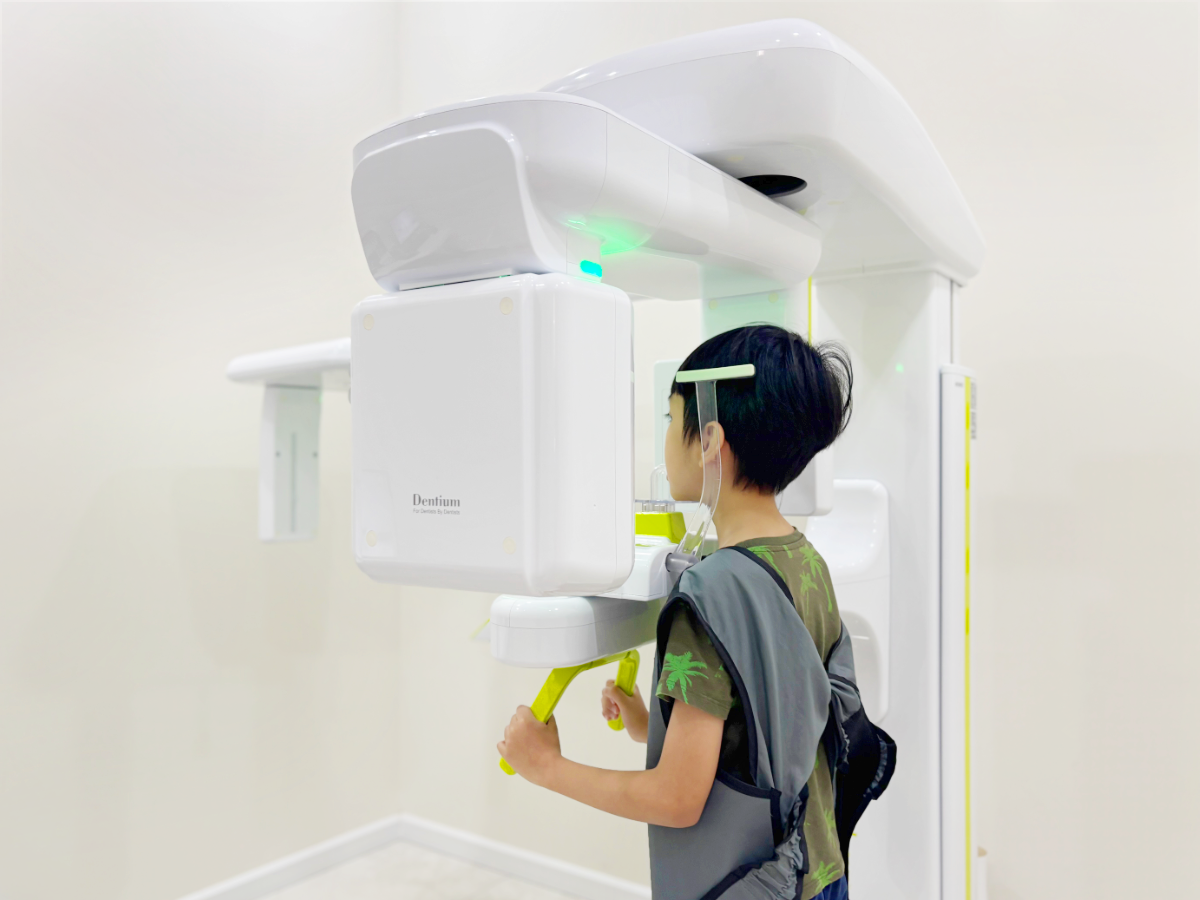 |
A young patient undergoing a jaw X-ray. Photo: Plum Dental |
"Early examination does not mean a child needs braces right away. The goal is to help parents understand their child's facial and jaw development, whether habits need adjustment, or if intervention is appropriate at a certain time," Dr. Duong shared.
Currently, many parents believe that children only need to be examined for braces once most baby teeth have been replaced, typically around 12-13 years old. This is a common stage for comprehensive orthodontic treatment, as most permanent teeth have erupted, providing a stable foundation for dentists to align teeth, correct crowding, address gaps, or resolve certain bite discrepancies.
However, Dr. Duong explained that not all orthodontic issues relate solely to tooth position. Some children have misalignments stemming from jawbone development, such as protruding jaws, underbites caused by jaw structure, narrow upper jaws, uneven lower jaw development, or crossbites. If examined when children are older, their jawbones may have already fully developed, making treatment more complex and less effective.
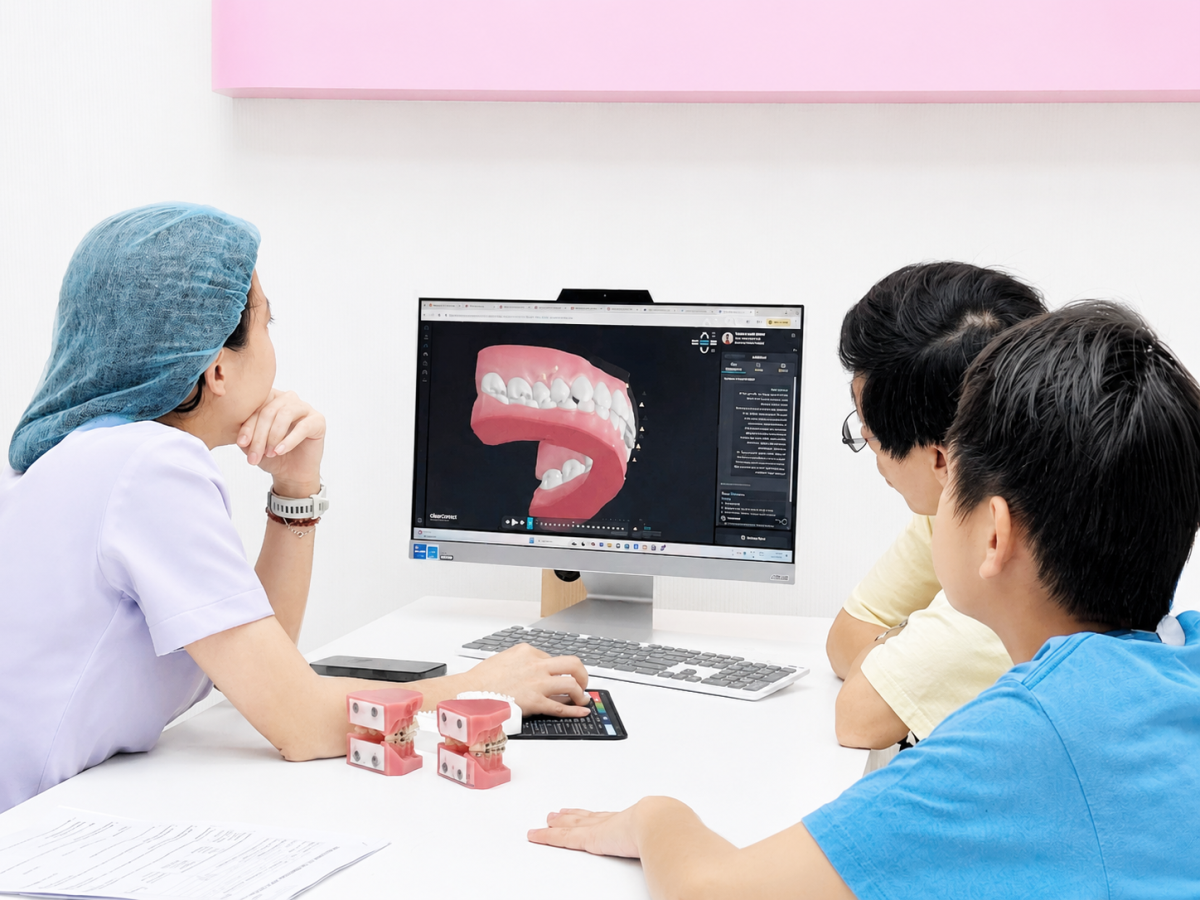 |
Dr. Thuy Duong consulting on an orthodontic case. Photo: Plum Dental |
This is why growth orthodontics is gaining increasing attention in pediatric dentistry. Unlike conventional braces, which primarily focus on aligning teeth, growth orthodontics aims to assess and guide jawbone development while the child is still growing. The objective is to create a favorable foundation for permanent teeth to erupt correctly, ensure a stable bite, and promote more harmonious facial development.
Bringing children for early orthodontic evaluations not only contributes to a more harmonious smile but also helps them achieve a proper bite, improving chewing function and making oral hygiene easier. Good chewing enables children to eat more comfortably and absorb nutrients better, thereby supporting healthy physical development.
Dr. Thuy Duong also advises parents to seek an orthodontic check-up if they notice their child's upper front teeth protruding significantly, a forward-positioned lower jaw, an underbite, open bite, deep bite, severe tooth crowding, facial asymmetry when biting, or if the child consistently chews on one side. Habits such as mouth breathing, sleeping with an open mouth, tongue thrusting, or prolonged thumb sucking also warrant attention.
Children who lose baby teeth too early due to decay, trauma, or improper extraction should also be examined. When a space is lost prematurely, adjacent teeth may tilt into it, causing permanent teeth to erupt incorrectly or lack sufficient space.
According to Dr. Duong, parents should not be overly concerned if their child has a few misaligned teeth during the tooth replacement stage, but they should also not be complacent. The key is to obtain a professional assessment to distinguish between physiological changes that can be monitored and signs that require timely intervention.
Dr. Pham Thuy Duong has many years of experience in orthodontics, particularly in pediatric and growth orthodontics. Dr. Duong has supported numerous orthodontic cases across various age groups, from children and adolescents to adults.
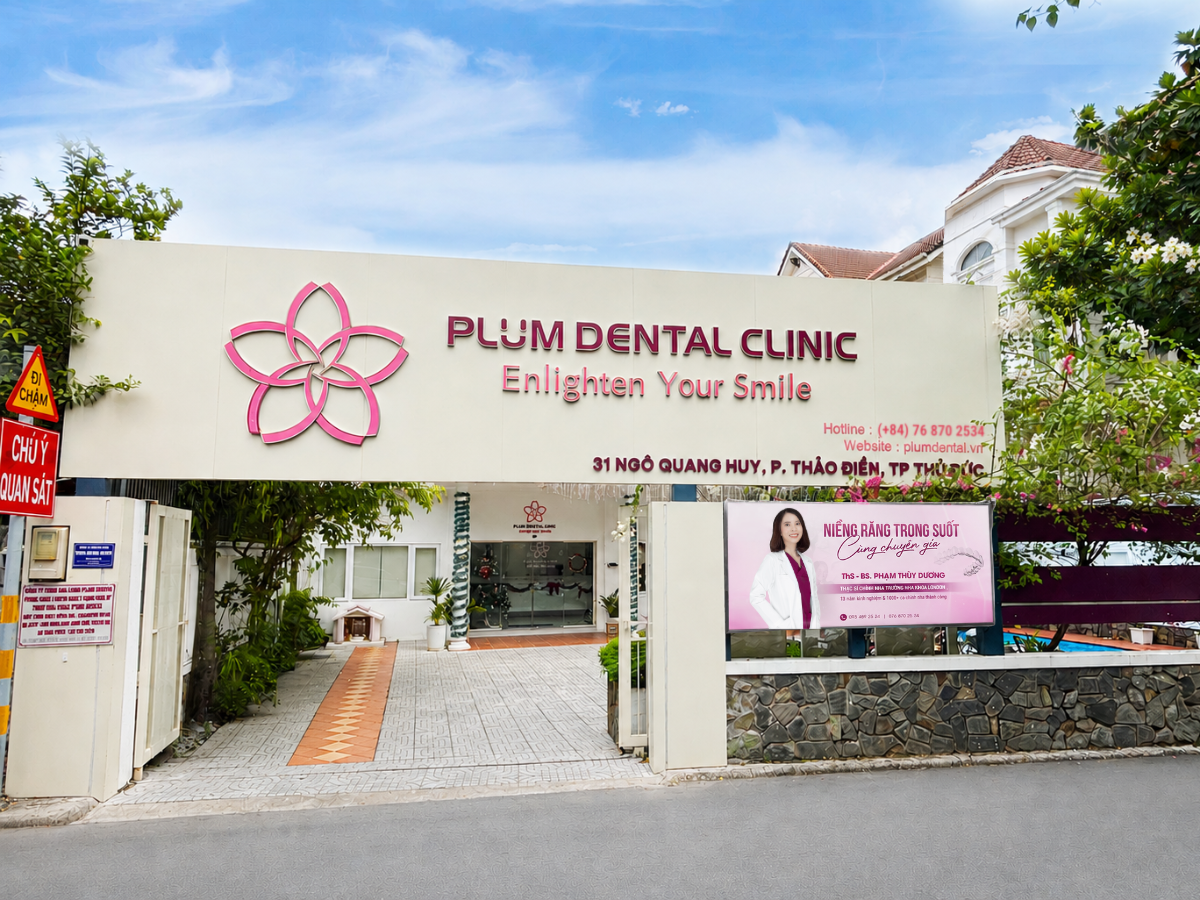 |
Exterior of Plum Dental clinic. Photo: Plum Dental |
Plum Dental, located in the Thao Dien area, is committed to creating a family-friendly dental care environment for families and young children. The clinic has invested in diagnostic and treatment planning equipment such as X-ray imaging, 3D tooth scanning, and intraoral imaging data. These tools provide dentists with additional assessment information and help parents visualize their child's condition.
Yen Chi