Khang, a 15-year-old, recently presented at Tam Anh General Hospital Hanoi with symptoms of eye irritation, redness, pain, and excessive tearing. Approximately one week prior, he began feeling a foreign body sensation and noticed mild redness after each swim.
Doctors observed limbal conjunctival injection (dilated blood vessels at the corneal limbus), increased tear production, and corneal epithelial inflammation. The corneal surface showed damage with an inflammatory reaction, and his vision was reduced compared to before the onset of symptoms.
Based on clinical signs and the patient's frequent swimming over several days, Master of Science, Doctor Phung Van Thanh, from the High-Tech Eye Center, suspected keratitis was likely related to swimming pool water exposure.
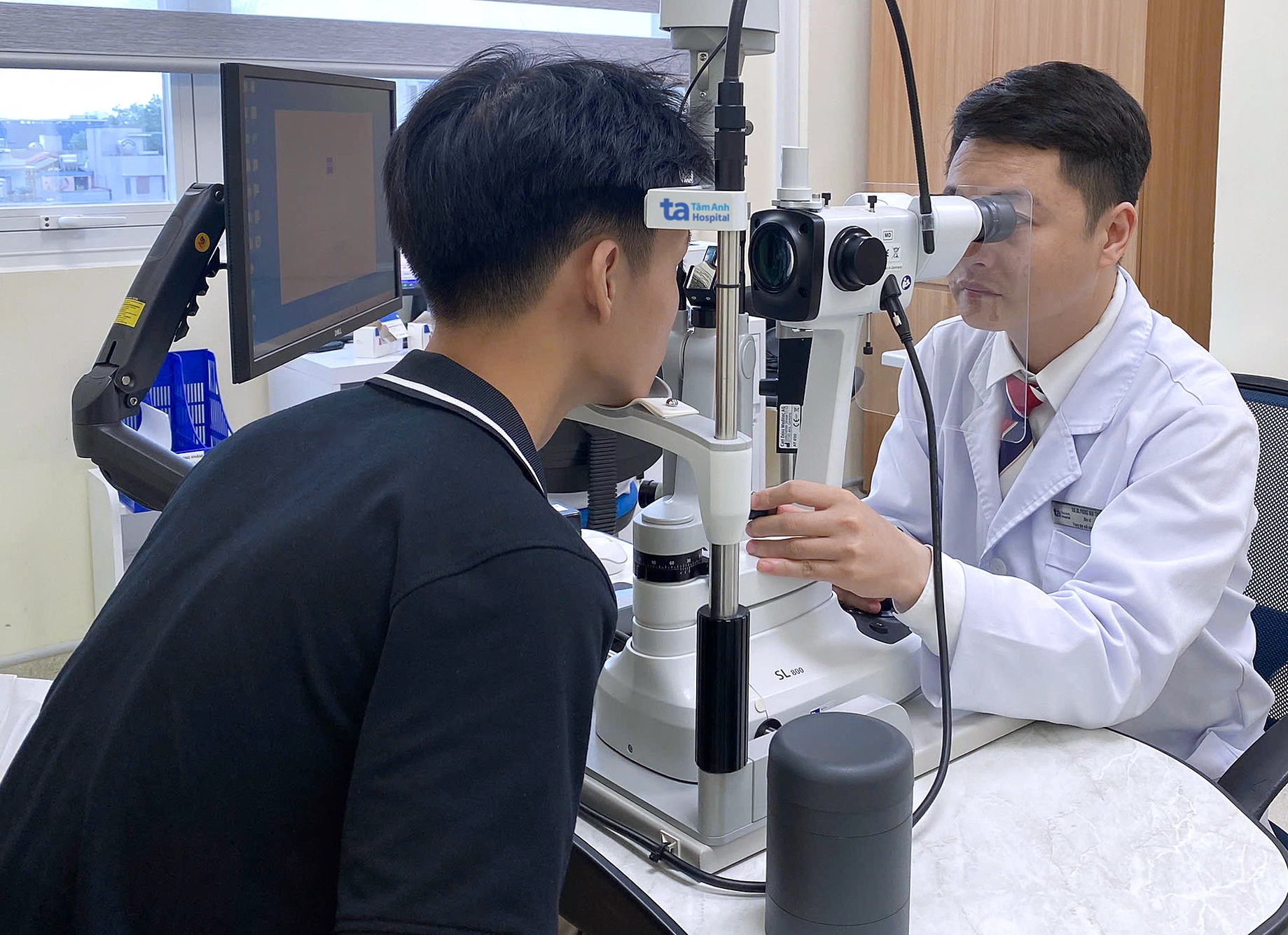 |
Doctor Thanh examines the patient's eyes after treatment. *Photo: Tam Anh General Hospital* |
Doctor Thanh explained that swimming pool water can contain irritants or pathogenic microorganisms if not properly treated and disinfected. Prolonged water exposure, continuous swimming over many days, or frequently rubbing eyes with unclean hands increases the risk of damage to the protective corneal epithelium. This creates favorable conditions for bacteria, viruses, and other pathogens to penetrate corneal tissue, leading to inflammation.
Chlorine and other disinfectants in swimming pools can also alter the tear film protecting the ocular surface. This makes eyes prone to dryness, irritation, and heightened sensitivity to environmental factors. During summer holidays, children and adolescents often swim more frequently. Prolonged exposure to pool water without proper eye protection can increase the risk of developing ocular surface diseases, including keratitis.
The doctor prescribed medication to control the inflammation, reduce irritation, and support the recovery of Khang's damaged corneal epithelium. The patient received instructions on proper eye care, medication use as directed, and temporary cessation of swimming during treatment to prevent worsening corneal damage.
After one week of treatment, Khang's redness, pain, and watery eyes significantly decreased. A follow-up examination confirmed good recovery of the corneal epithelial lesion, controlled inflammatory reaction, and gradual vision improvement.
According to Doctor Thanh, keratitis requires early detection and treatment to limit complications. In some cases, prolonged inflammation can lead to corneal ulcers or scarring, reducing vision and impacting daily activities and studies.
To prevent the condition, the doctor recommends choosing hygienic swimming pools, wearing standard swimming goggles, rinsing eyes with clean water after swimming, avoiding rubbing eyes, and not sharing face towels. If symptoms such as persistent red eyes, eye pain, foreign body sensation, excessive tearing, light sensitivity, or blurred vision appear, patients should visit an eye specialist for examination and avoid self-medicating.
Thu Giang
| Readers can submit questions about ophthalmological conditions here for doctors to answer. |