Three Brazilian sisters were recognized by Guinness World Records in June as the world's oldest living siblings, according to Reuters. They are Zulina de Deus Nunes (103), Zoraide de Deus Mota (104), and Levita de Deus Nunes (109), all currently living in Rio de Janeiro. Their ages were verified by LongeviQuest, a global organization specializing in validating longevity records and a partner of Guinness World Records.
The sisters attributed their good health to a healthy diet and an active lifestyle. Zulina, the youngest, recalled a childhood spent swimming and fishing in the river. Their diet at that time consisted mainly of seasonal produce and fresh food from their family's home-raised livestock and poultry.
'Every food we ate back then was fresh because there were no refrigerators,' Zulina said. Zoraide added, 'Being breastfed played a significant role.'
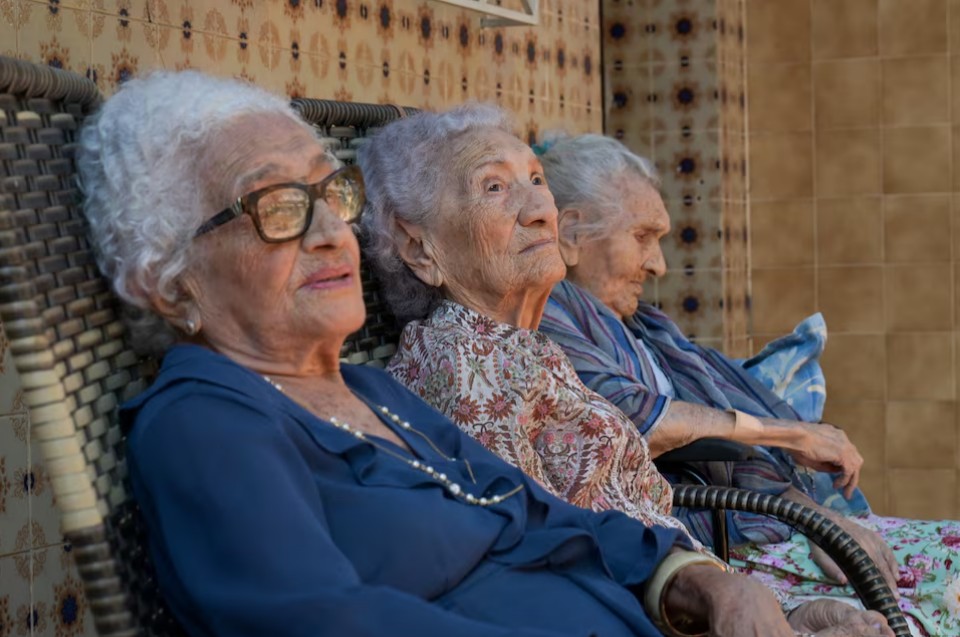 |
Zoraide de Deus Mota, Zulina de Deus Nunes, and Levita de Deus Nunes during a press interview in Rio de Janeiro, Brazil, on 23/6. Photo: Reuters
Despite living for over a century, the three sisters have led simple lives. Levita, the eldest, worked as a craftswoman and later at a television station; Zoraide was a nurse and raised five children; and Zulina was a homemaker, caring for six children.
'I had a peaceful childhood and youth. I have nothing to complain about,' Levita shared.
The world's three oldest sisters share their secrets to good health. Video: Reuters
Beyond their healthy lifestyle, living close to each other has helped the sisters maintain a strong emotional support network and receive timely care from relatives.
The sisters' story has garnered international media attention and sparked interest among scientists. Ben Meyers, CEO of LongeviQuest, stated: 'When three siblings in the same family reach such record-breaking ages, genetic factors clearly play a core role.'
Currently, the sisters' case has been included in the 'ADN Longevo' Project, a study led by scientist Mayana Zatz, coordinator of the Human Genome Research Center at the University of Sao Paulo. This project aims to decipher the biological factors behind the aging process. Scientists believe that genetic factors may play a more decisive role than environmental impacts in protecting physical and intellectual health in the later stages of life.
Within this project, the research team will compare individuals in their 90s and over 100 with those who have experienced physical frailty, cognitive decline, or chronic diseases. 'Through DNA testing, we are tracing genes that can protect the body, and we know many such gene exist. The more people who live past 100, especially families with multiple long-lived members, the more accurately the research will identify those gene,' Zatz emphasized.
Researcher Joao Paulo Guilherme, Zatz's colleague, added that the project's long-term goal is to collect data from 500 individuals over 100 years old. This will allow for the most conclusive scientific findings regarding human longevity.
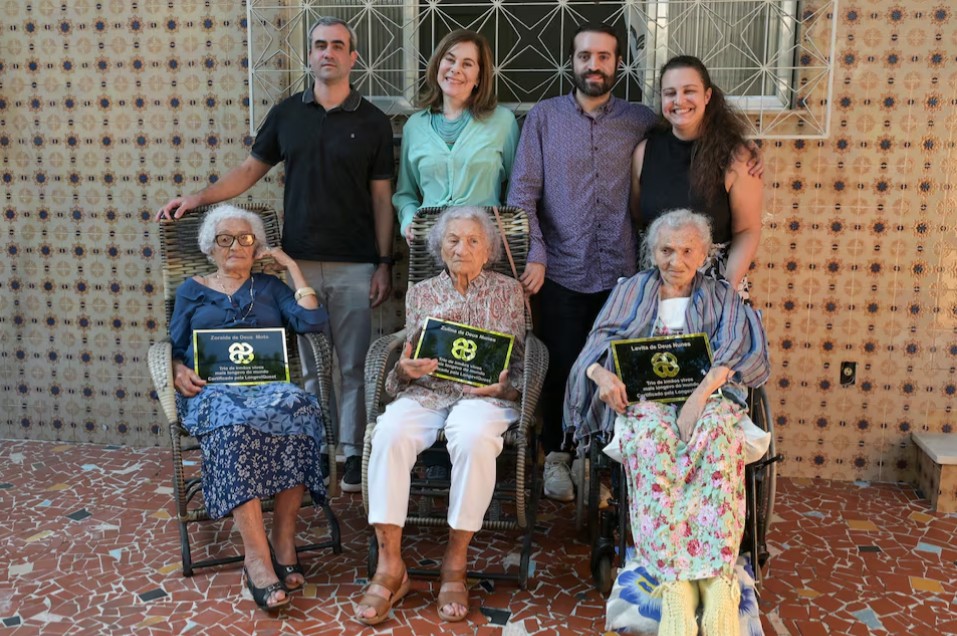 |
The three sisters with their LongeviQuest certificate in Rio de Janeiro, Brazil, on 23/6. Photo: Reuters
Binh Minh (According to Reuters, 20 Minutos, Guinness World Records)