Ms. Ngan, 71, underwent successful endoscopic surgery at Tam Anh General Hospital in Ho Chi Minh City to remove a thymic tumor located precariously close to her heart. The procedure allowed for both removal and biopsy, which confirmed the tumor was benign, averting potential severe complications.
A CT scan at Tam Anh General Hospital revealed a 1.5 cm thymic tumor positioned directly in front of Ms. Ngan's heart, adjacent to major blood vessels. Dr. Nguyen Duc Nghia, a Master of Science and Level I Specialist from the Thoracic - Vascular Surgery Center, explained the sensitive location made conventional needle biopsy too risky, as it could puncture the heart and cause massive bleeding. Consequently, doctors decided on endoscopic surgery to both remove the tumor and obtain a biopsy.
The surgical team performed the procedure through three small incisions, each 0.5-1 cm, on the patient's chest. They carefully dissected and removed the entire tumor along with surrounding fatty tissue from the thymus, ensuring no damage to the pericardium or major blood vessel systems.
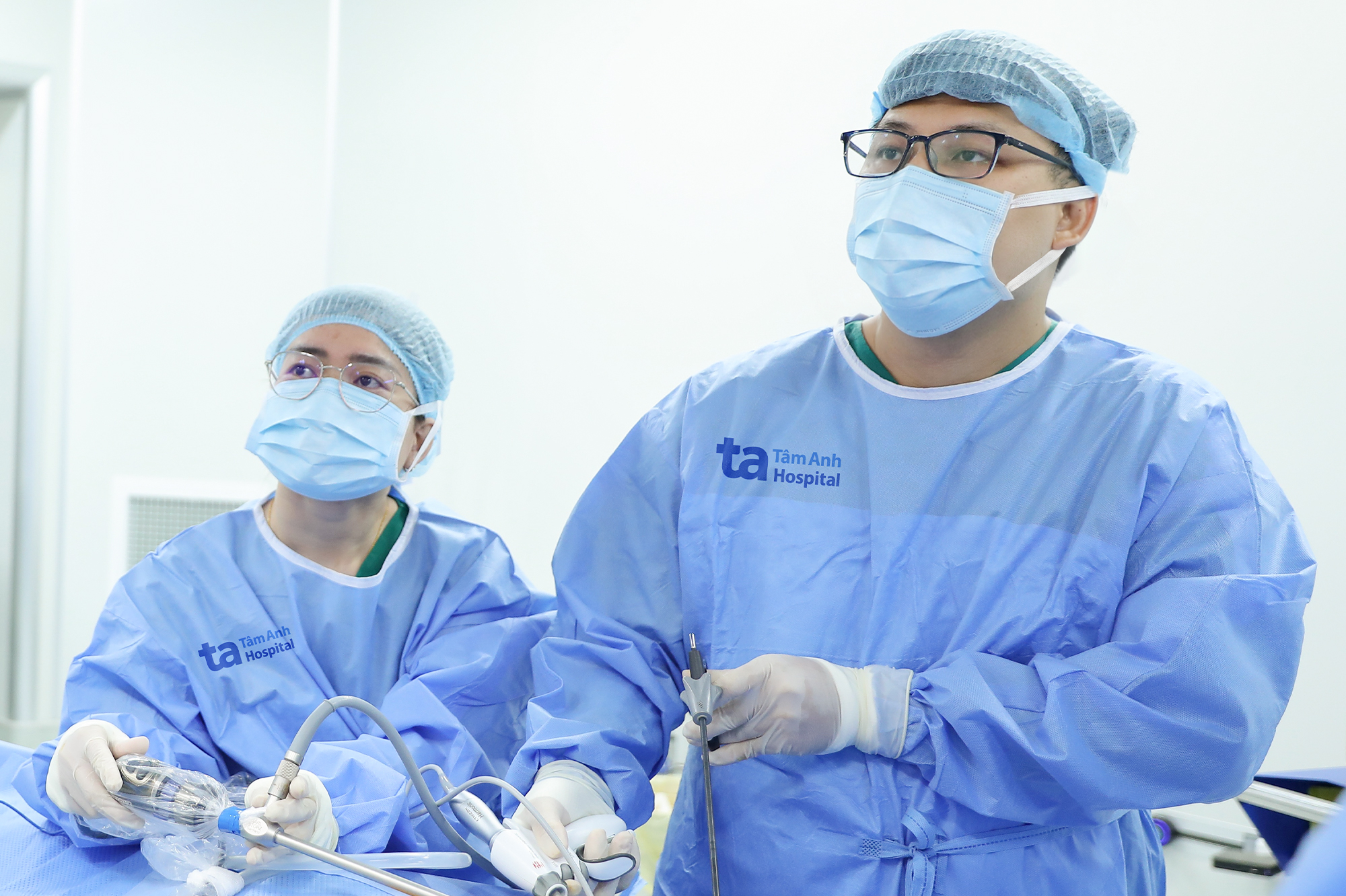 |
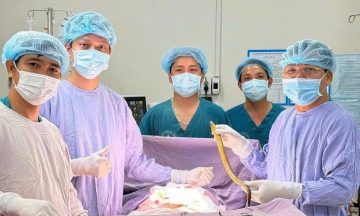
Dr. Nghia (right) and his team performing endoscopic thymic tumor removal on a patient. *Photo: Tam Anh General Hospital* |
Thanks to the minimally invasive endoscopic approach, Ms. Ngan was able to stand and walk gently one day after surgery. On the third day, her physical condition had recovered well, the incisions were dry, and she reported no pain, leading to her discharge from the hospital.
Post-operative pathology confirmed the tumor was a benign thymic cyst, not cancerous. The early detection and removal of the tumor were crucial in preventing dangerous complications such as myasthenia gravis, facial and neck edema, difficulty breathing, or swallowing issues, which can arise if a growing tumor compresses the heart, aorta, trachea, or esophagus.
Thymic tumors originate from the epithelial cells of the thymus and typically progress slowly and silently. Most patients experience no symptoms or signs in the initial stages. However, as a tumor grows and increases in size, causing compression or deep invasion into surrounding organs, surgical removal becomes significantly more challenging. Dr. Nghia advises everyone to undergo regular health check-ups to detect any abnormalities early, allowing for minimally invasive treatment and preventing potential complications.
*The patient's name has been changed to protect privacy.*