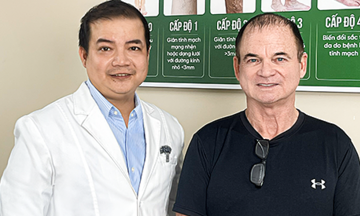
Lisa was admitted to Tam Anh General Hospital, Ho Chi Minh City, for emergency care. An MRI scan revealed fluid accumulation in her right fallopian tube, accompanied by torsion of the fallopian tube pedicle. Additionally, she had endometriosis in the cul-de-sac (the thin tissue layer connecting the vagina and cervix), and a congenital malformation of the right kidney featuring two ureters.
Doctor Nguyen Van Phuc from the Obstetrics and Gynecology Center explained that adnexal torsion, often caused by ovarian tumors, is common. However, isolated fallopian tube torsion, as seen in Lisa's case, is rare, accounting for only 1-3% of cases with an incidence of 1 in 1,500,000 women. Fallopian tube torsion typically occurs in inflamed fallopian tubes with fluid accumulation on one or both sides. A larger fluid accumulation in the fallopian tube increases the risk of torsion. Complications of isolated fallopian tube torsion include: fallopian tube necrosis, rupture of the necrotic mass, abdominal bleeding, pelvic inflammation, and peritonitis.
According to Doctor Phuc, if the patient had arrived at the hospital later, she risked losing one of her ovaries.
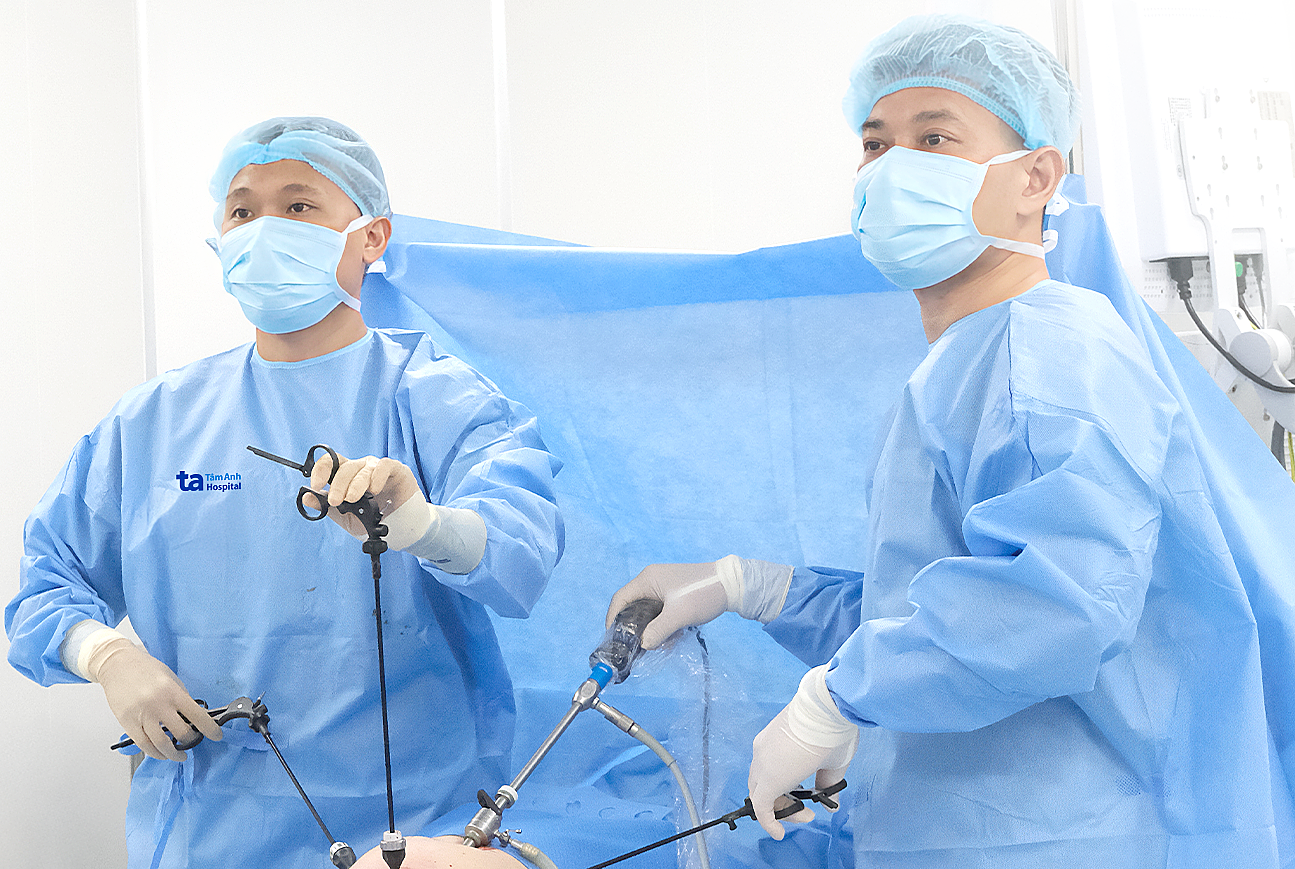 |
The surgical team performed a laparoscopic procedure to remove Lisa's necrotic, twisted fallopian tube. *Photo: Tam Anh General Hospital* |
During laparoscopic surgery, doctors observed that the patient's right fallopian tube was inflamed, had fluid accumulation, was twisted four times, and showed signs of infarction and necrosis, measuring 2x8 cm. The surgeon removed the entire right fallopian tube close to the uterine horn, performed cauterization to control bleeding, and thoroughly irrigated the abdominal cavity before closing the incision.
One day after surgery, Lisa's abdominal pain subsided, and her health began to recover. The kidney malformation with a double ureter was an incidental finding and presented no complications; doctors advised her to undergo regular monitoring.
Doctor Phuc noted that the initial pain from ovarian or fallopian tube torsion can vary. It may manifest as severe acute abdominal pain or non-specific pain resembling common stomachaches—dull, without fever, diarrhea, or severe vomiting. Consequently, patients often mistake these symptoms for food poisoning, bloating, or digestive upset. He advises anyone experiencing such symptoms to seek early medical examination.
Tue Diem
| Readers can submit questions about obstetrics and gynecology here for doctors to answer. |