Dr. Le Thi Ngoc, a pediatrician from the Pediatrics Department at Tam Anh General Hospital, Ho Chi Minh City, emphasized the importance of accurately determining the number of magnets swallowed. Two situations could arise for the child: if there was only 1 magnet in the stomach or if the magnets were stuck together as 1 solid mass, they might pass through the intestines and be excreted. However, if the magnets separated and traveled to different parts of the intestines, they would attract each other, potentially pinching through the intestinal walls. This could lead to ischemic necrosis, intestinal perforation, peritonitis, and life-threatening complications.
Doctors prescribed laxatives and enemas for Hoang to help the magnets move faster through the small intestine and into the large intestine. During the treatment, the family was instructed to check the child's stool to see if the magnets had passed. If the child showed signs of abdominal pain, vomiting, or bloody stools, immediate medical attention was necessary.
After 4 days of medication, the magnetic mass moved into the small intestine but had not yet passed. Doctors adjusted the medication dosage, and fortunately, the foreign object was expelled, saving the child from surgery.
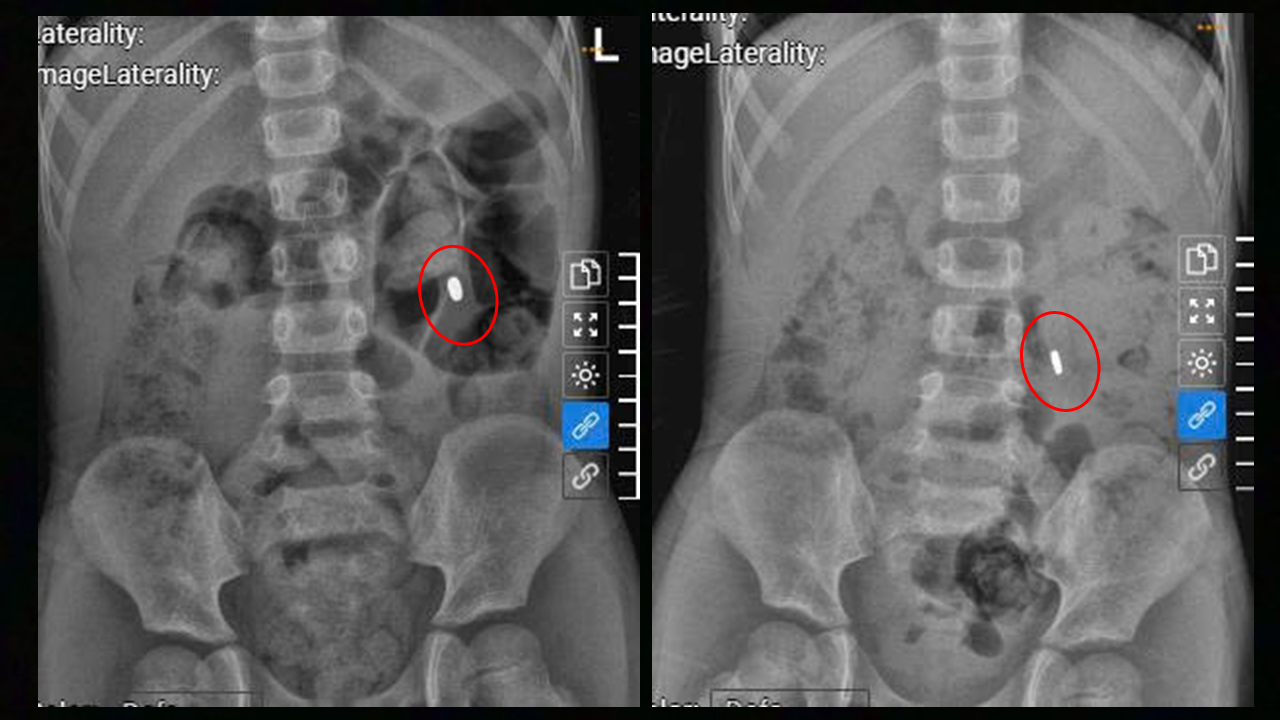 |
The magnetic mass in the patient's abdomen before and after laxative use. Photo: Tam Anh General Hospital |
Foreign object ingestion is a common household accident, frequently seen in children aged 6 months to 5 years. Swallowed foreign objects are categorized into 2 groups based on their danger level. The low-risk group includes small, round, smooth objects such as: marbles, plastic buttons, small coins, and plain rings. These objects usually pass through the digestive tract and are excreted without causing harm. The dangerous group includes items like: batteries, which can cause electrochemical burns, esophageal or blood vessel perforation, and magnets, which can attract each other, leading to intestinal twisting and necrosis.
In some cases, parents may not be aware their child has swallowed a foreign object because there are no immediate symptoms. If a child exhibits unusual symptoms such as: sudden fussiness, refusal to eat, continuous drooling, difficulty swallowing, dry heaving, or abdominal bloating, parents should seek medical attention. Dr. Ngoc advised parents to carefully inspect children's toys, avoiding those with small, easily detachable parts, especially magnets and batteries. Adults should supervise children during playtime to promptly address any potential accidents.
Dinh Lam
*Patient's name has been changed
| Readers can submit questions about children's illnesses here for doctors to answer. |