Master, Doctor Vu Thi Thuy Trang, a dermatologist and aesthetic skin specialist at Tam Anh General Hospital Ho Chi Minh City, stated that in addition to pitted scars with fibrotic, densely distributed bases on both cheeks and forehead, Ms. Mai also had enlarged pores.
Pitted scars develop when inflammatory acne damages collagen and elastin structures beneath the skin. The healing process creates fibrotic bands that pull the skin surface downwards, simultaneously leading to a loss of underlying supportive tissue. During the aging process, natural collagen levels continue to decline, often making scars more prominent even years after acne has cleared. Therefore, treating pitted scars involves more than simply filling the skin's surface; it requires addressing the scar formation mechanism itself, including releasing contractile fibrotic bands, stimulating collagen production, and restructuring damaged tissue.
The doctor treated Ms. Mai using TriFill Pro technology, with a course of about three to four sessions, once a month. This technology combines multiple mechanisms within a single treatment. First, medical CO2 gas targets the fibrotic bands beneath the scar bases to reduce tissue contraction. Next, an active ingredient is directly injected into the newly created space to support regeneration. Finally, the CO2 gas helps disperse the active ingredient evenly within the tissue, minimizing clumping after treatment. This method not only improves pitted scars but also helps reduce pore size and create smoother skin.
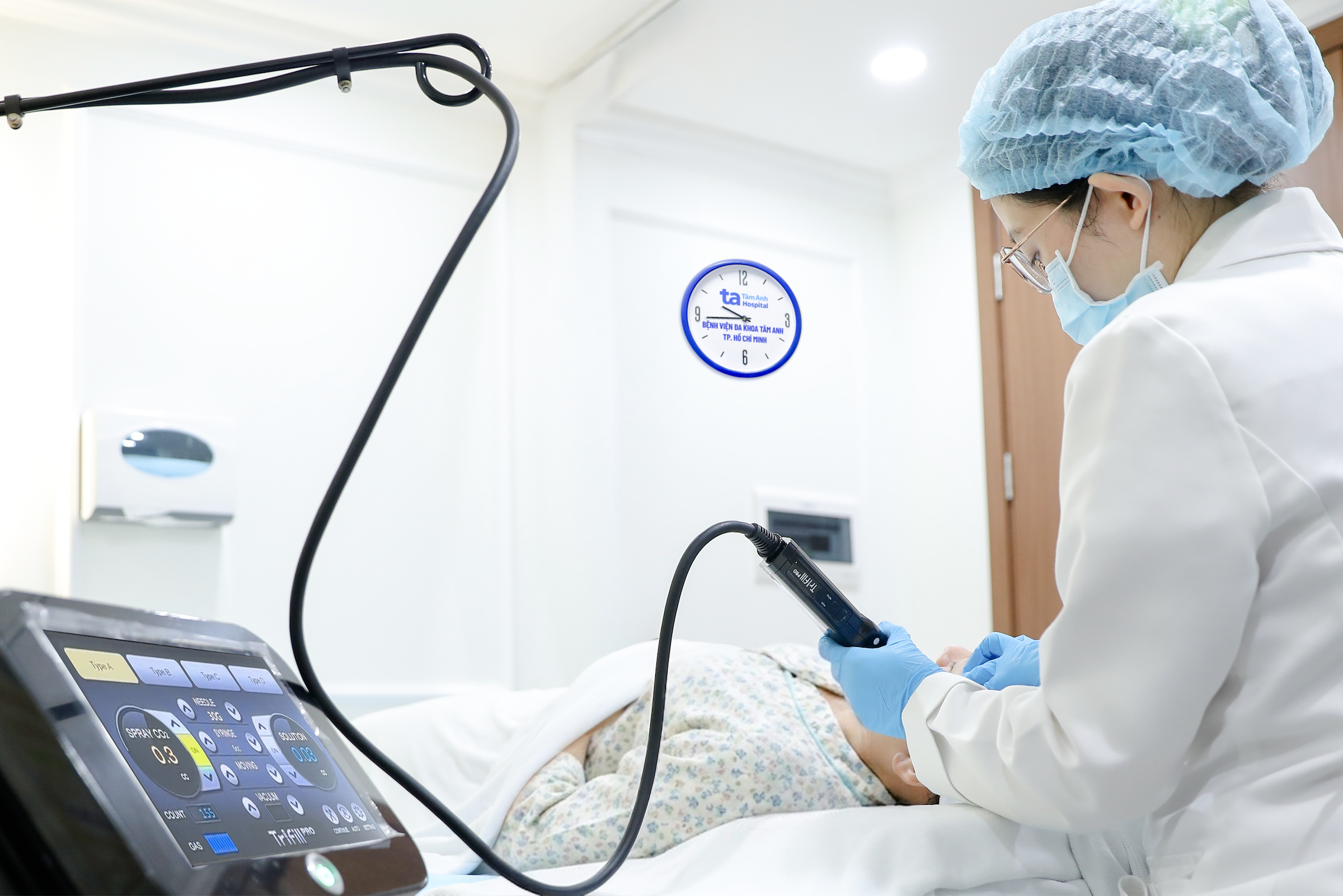 |
The doctor uses CO2 pneumatic technology combined with microneedling to treat Ms. Mai's scars. Photo: Tam Anh General Hospital |
After the two initial treatment sessions, many depressed scar areas on Ms. Mai's face gradually improved, and her skin surface became more even. She needs to continue the treatment course to achieve optimal results and minimize recurrence. She was advised to use diligent sun protection, moisturize adequately, avoid harsh exfoliating products, and refrain from self-extracting acne to prevent skin damage and reduce the risk of new scar formation.
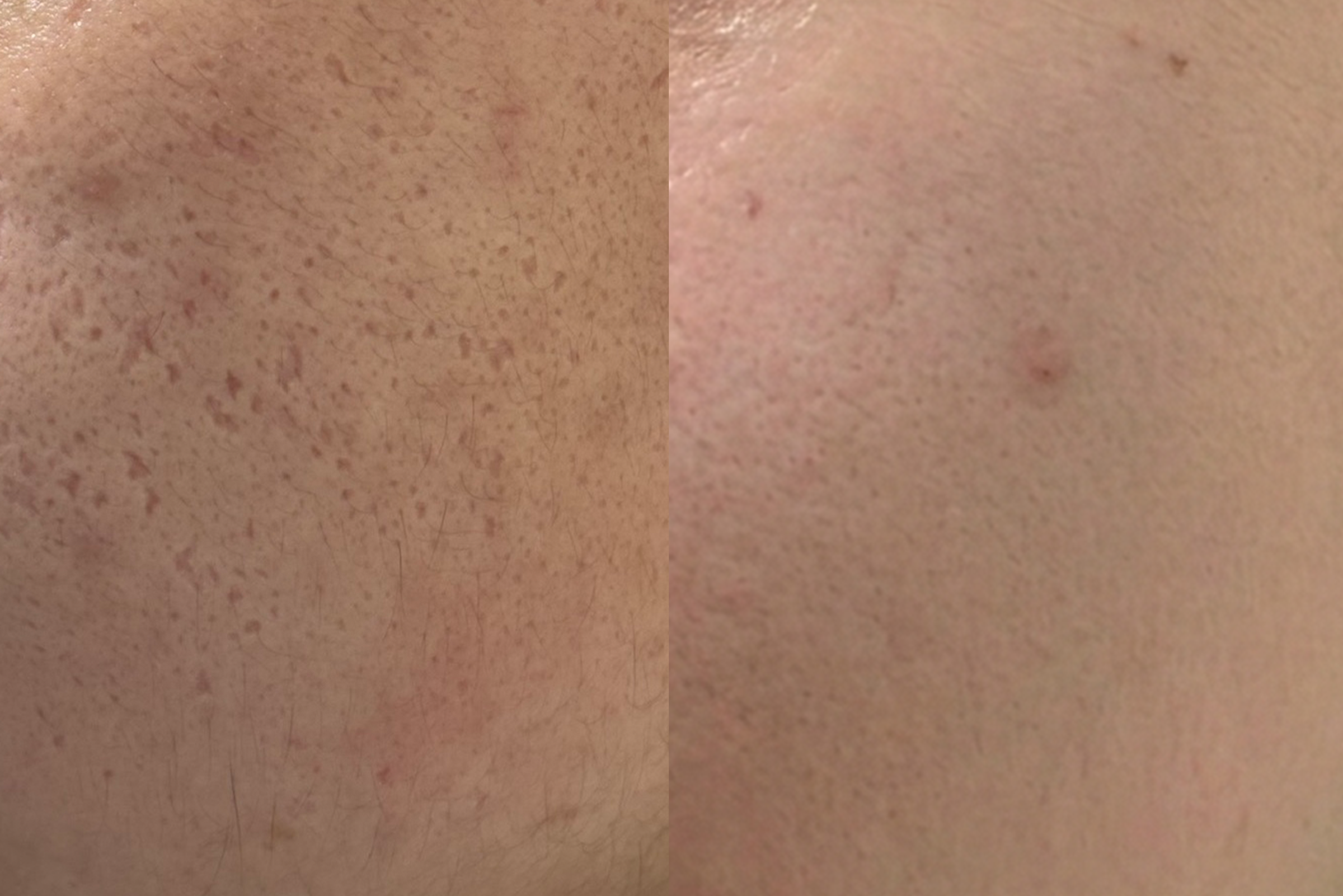 |
Ms. Mai's scar areas improved well after two treatments. Photo: Tam Anh General Hospital |
Doctors recommend that individuals with pitted scars seek early consultation for proper scar assessment to select a suitable method. They should not expect scars to be filled after just one session. Each person has different scar characteristics, depth, skin quality, and response capabilities, thus requiring an individualized treatment plan. Effectiveness depends on the scar type, extent of damage, individual constitution, and the patient's adherence to the treatment course.
Minh Huong
*Character's name has been changed