The Ministry of Health is currently seeking feedback on a draft circular outlining a new population policy. A central aspect of this proposal is to empower localities to allocate budget funds for monthly cash support to children from birth until they reach 36 months old. This initiative represents the latest push to reverse Vietnam's declining birth rate, which has fallen to a historic low of 1,91 children per woman, below the replacement level required for population stability.
The current draft grants autonomy to provinces and cities. Each locality will determine the amount and type of support based on its financial resources and specific social context, ensuring the most practical approach. Rather than a uniform national figure, provinces can opt to provide cash or in-kind assistance to pregnant women and those who have two children.
Beyond the monthly allowance for children up to three years old, the draft circular also proposes additional support. These include covering lunch expenses for preschool children and offering direct incentives to women who complete their family planning by having children before the age of 35.
Data from the General Office for Population and Family Planning indicates that pro-natalist policies implemented over the past five years have not met expectations due to the inadequate level of current support. Most localities have only provided one-time bonuses, ranging from 450.000 dong to one million dong per case. This amount is negligible when compared to the actual costs of raising a child today.
Some localities offer promising examples. Tay Ninh province, for instance, has allocated nearly 20 billion dong to incentivize communes with favorable birth rates and support over 4.500 women who have two children. Similarly, Dong Nai and Hai Phong have invested billions of dong from their budgets to aid families. However, for a truly impactful change, transitioning from one-time bonuses to consistent monthly financial assistance is seen as a more sustainable and effective approach.
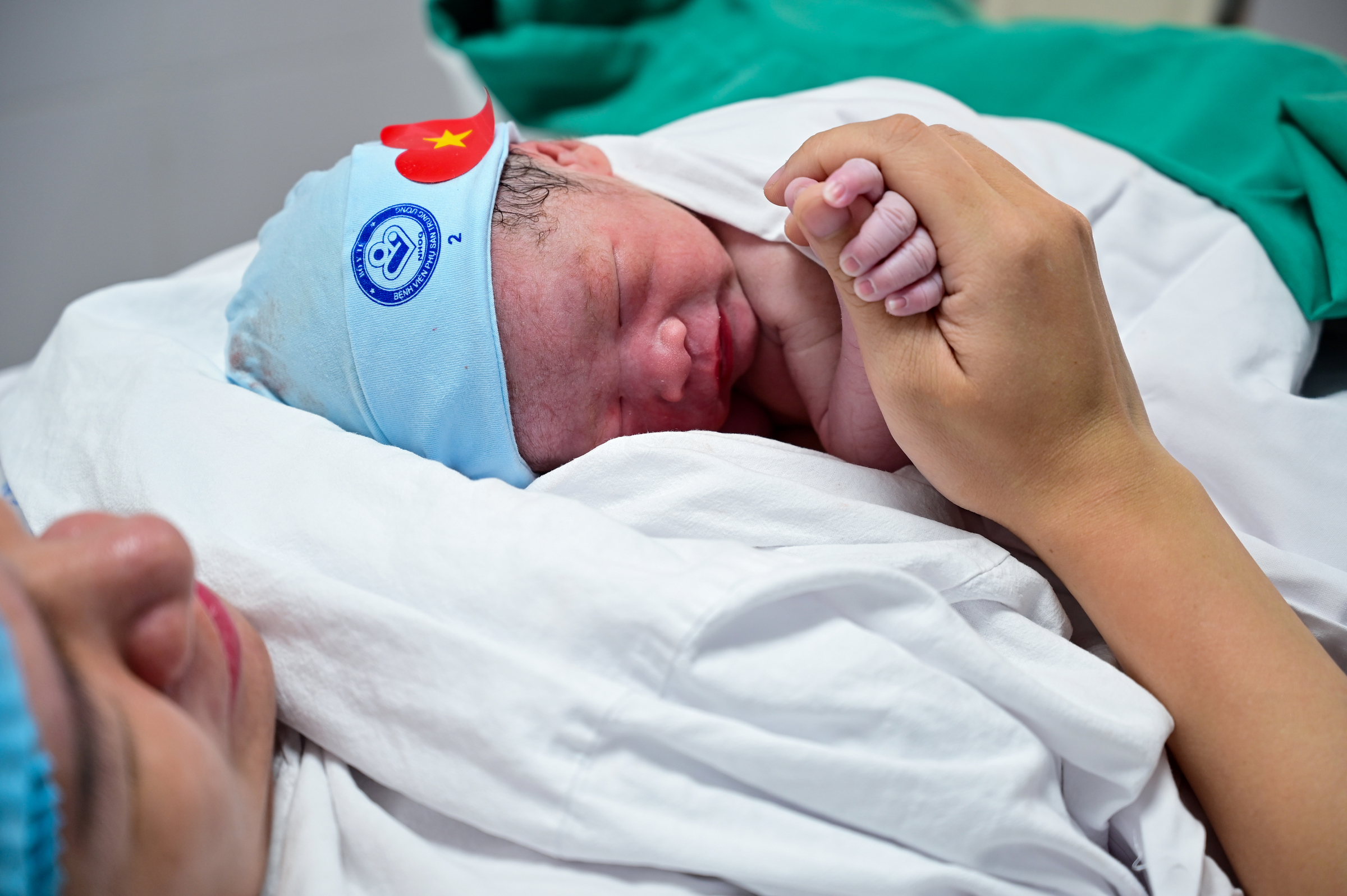 |
A baby born on 2/9 at the National Hospital of Obstetrics and Gynecology. *Photo: Giang Huy* |
Beyond increasing the average number of children, the Ministry of Health's draft also addresses gender balance and population quality. Localities will implement policies to recognize families with two daughters, alongside offering tuition fee waivers and health insurance support for girls in disadvantaged regions. Furthermore, vulnerable groups and impoverished households will receive free prenatal and neonatal screening, contraception services, and routine health check-ups.
Once this circular is officially enacted, provincial Departments of Health will directly advise their respective People's Councils. This guidance will aim to secure approval for specific spending levels, ensuring alignment with local budgetary constraints and the needs of the local populace.
East Asian nations such as South Korea, Japan, and Singapore have invested billions of USD in "baby bonuses" and monthly child allowances. However, these efforts have yet to reverse their historically low birth rates.
In Europe, Nordic countries have seen more positive outcomes by integrating cash allowances with comprehensive welfare systems. Their strategies prioritize free early childhood education and extended paid parental leave for both parents. Hungary's experience demonstrates that aggressive measures, such as lifelong personal income tax exemptions for women who have four children, can provide an immediate boost. However, maintaining population stability proves challenging without robust, long-term social security provisions.
International experts contend that financial support is a necessary component for alleviating the financial strain of raising children. However, the sufficient condition lies in policies promoting work-life balance and gender equality in childcare responsibilities. Ultimately, while cash assistance is crucial, its real-world impact is heavily contingent on the availability of public service infrastructure and the economic stability within each nation.