The new vaccine is scheduled for human trials in the next few weeks, having received approval from the MHRA. This marks the first of four Ebola Bundibugyo vaccine candidates to advance to clinical trials. Oxford University is actively recruiting healthy volunteers in the UK for the initial inoculations.
Dr. Katrina Pollock stated that the trial aims to enroll 50 participants aged 18-55, with plans to extend the study to Uganda. While volunteers will be monitored for one year, the research team anticipates an early assessment of immune responses and potential side effects.
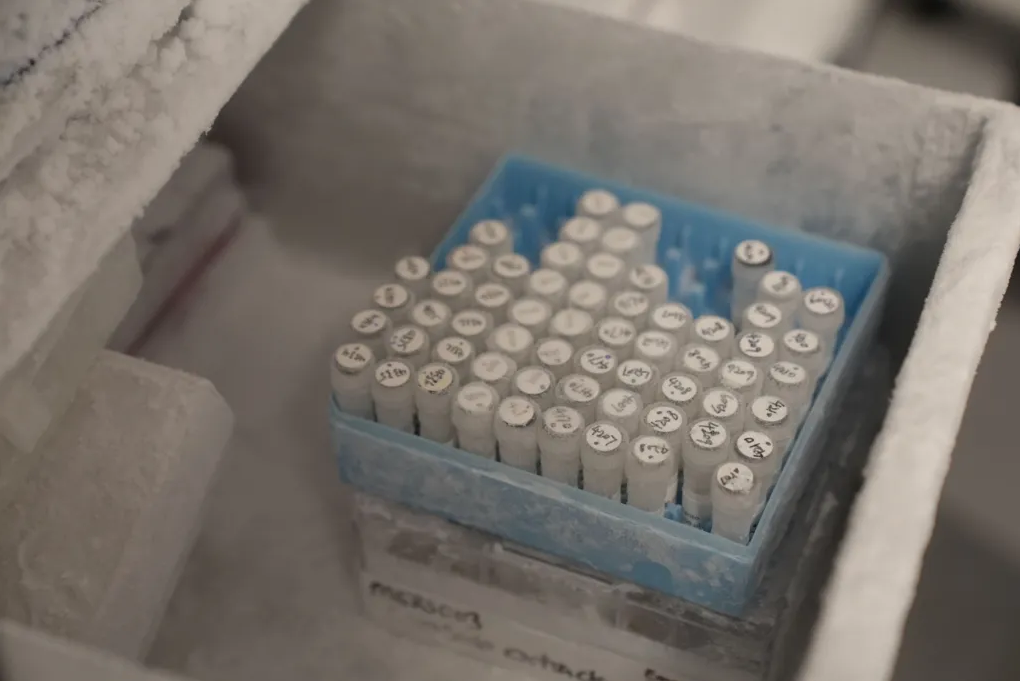 |
Experimental Ebola vaccine samples, cryopreserved in a laboratory at Oxford University. Photo: BBC |
The vaccine's rapid development leveraged the established Oxford/AstraZeneca platform. This technology employs a modified chimpanzee cold virus, rendered harmless, to act as a vector. It delivers the genetic code of Ebola Bundibugyo into the body, prompting the production of viral proteins that activate an immune response without causing Ebola infection. The research team emphasized that all safety protocols were maintained, with various development stages simply conducted in parallel.
The vaccine candidate successfully underwent testing in mice and macaques. The Serum Institute of India produced 620,000 doses to clinical standards, and based on this preclinical data, the MHRA granted authorization for human trials.
While the Oxford/AstraZeneca vaccine platform has been widely deployed, it is associated with a rare risk of blood clots, affecting up to one in 100,000 individuals. This new Ebola vaccine may carry a similar risk. However, this potential risk is deemed substantially lower than the inherent dangers of Ebola Bundibugyo. All associated risks will be transparently communicated to participants.
Beyond Oxford's efforts, three additional vaccine candidates are currently in development. These include an mRNA vaccine from Moderna, and two others from IAVI and Public Health Vaccines. The latter two utilize technology proven effective against a different Ebola species, though their production timelines are slower.
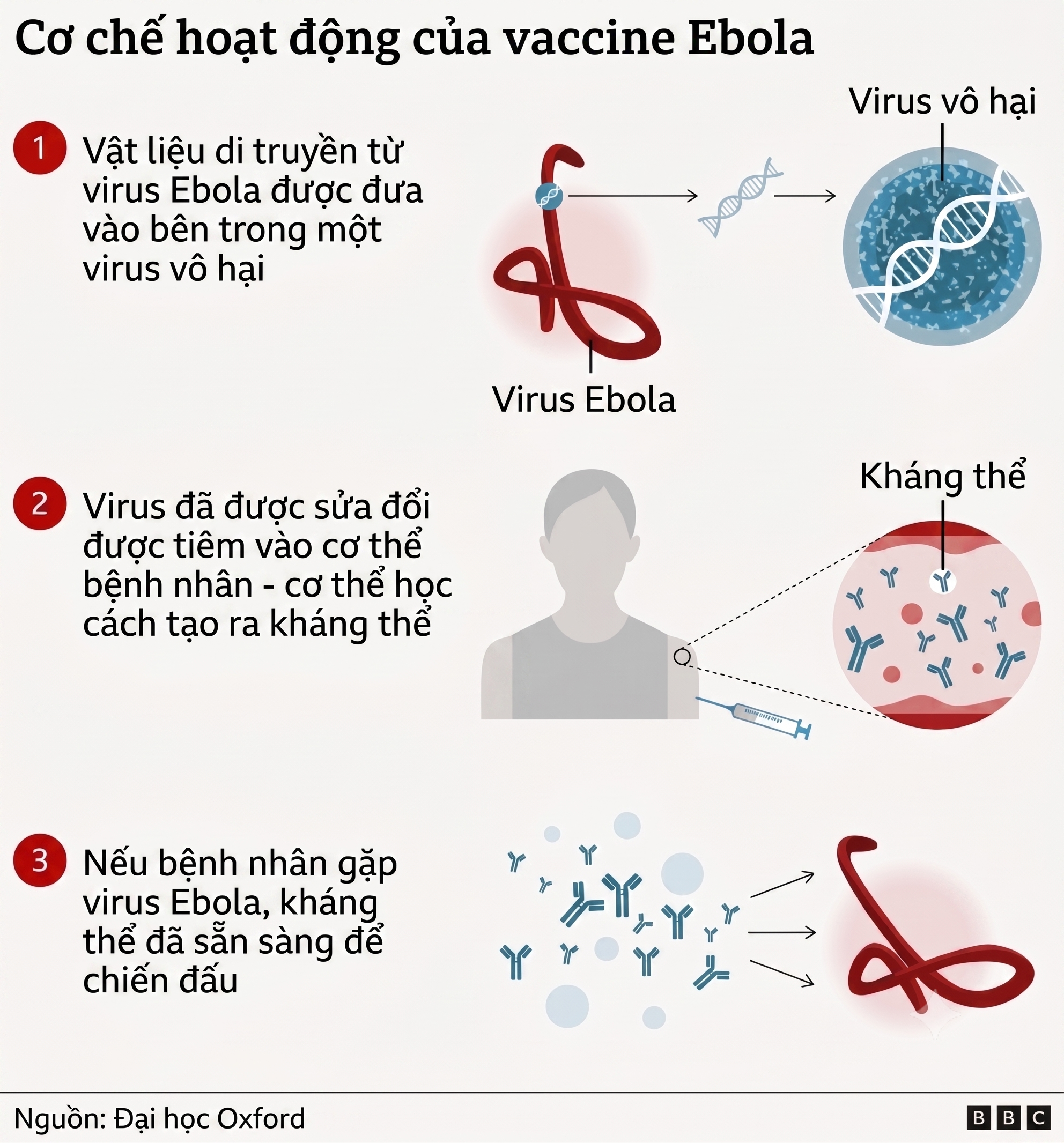 |
Graphic depicting the mechanism of action of the Ebola vaccine. Source: BBC |
Van Ha (According to BBC)