Avoid eating too much right before exercising
According to Cleveland Clinic, after a meal, the body prioritizes blood flow to the digestive system to process food. Simultaneously, muscles demand more oxygen and energy during physical activity. This can lead to chest heaviness and shortness of breath, especially during running or high-intensity workouts. Individuals should eat a main meal approximately two to three hours before exercise, or have a light snack 30-60 minutes prior if additional energy is needed.
Warm up thoroughly before exercise
Dedicate about 5-10 minutes to a brisk walk, joint rotations, or gentle movements. This allows heart rate, breathing, and blood flow to increase gradually, rather than abruptly. Lungs also have time to adapt to the higher oxygen demand required for the main workout. Conversely, starting immediately with high intensity can lead to temporary oxygen deprivation, causing rapid breathing, shortness of breath, or quick fatigue.
Increase exercise intensity gradually
Many individuals, eager to improve fitness quickly, overexert themselves from the start. This prevents the heart and lungs from adequately adapting to the oxygen demands of muscles, leading to breathlessness. Begin with moderate intensity, then progressively increase duration or workout level week by week.
 |
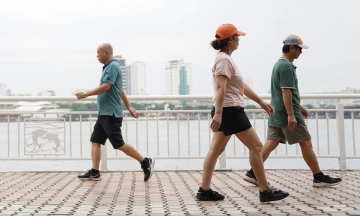
People walking along the Han River, Da Nang. Illustration: Nguyen Dong |
Practice proper breathing techniques
The habit of mouth breathing or shallow breathing makes air intake into the lungs less efficient, often causing breathlessness. For moderate-intensity exercises, prioritize inhaling through the nose to warm the air, then exhaling through the mouth. During high-intensity workouts, combine nasal and mouth breathing to meet increased oxygen demands and avoid holding your breath, according to Healthline.
Maintain regular exercise
With consistent exercise, the heart pumps blood more effectively, lungs improve oxygen exchange, and respiratory muscles function more efficiently. Additionally, muscles utilize oxygen better to generate energy, sustaining activity for extended periods.
Conversely, prolonged inactivity leads to a decline in physical fitness, making activities like climbing stairs or short runs easily cause breathlessness. Adults should maintain at least 150 minutes of moderate-intensity physical activity or 75 minutes of vigorous-intensity activity per week.
Stay hydrated and maintain proper nutrition
Adequate hydration helps maintain moisture in the respiratory tract lining, supports blood circulation, and regulates body temperature during exercise.
Individuals also need to ensure their diet provides sufficient protein, carbohydrates, iron, vitamin B12, and folate. These nutrients are vital for red blood cell production and oxygen transport to tissues. People with anemia or iron deficiency often experience fatigue and shortness of breath more easily during physical activity.
Le Nguyen (Compiled)