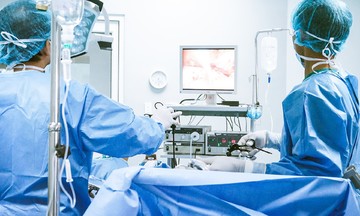
Upon receiving information from the National Organ Transplant Coordination Center regarding a suitable organ source, University Medical Center Ho Chi Minh City activated a red alert protocol on 4/1. Two specialized surgical teams were mobilized to receive the heart and liver, ensuring strict adherence to technical requirements for preservation, transport, and minimizing the organs' cold ischemia time.
The heart recipient was a 61-year-old man who had suffered from dilated cardiomyopathy for over a decade. His end-stage heart failure led to recurrent severe arrhythmias, requiring a defibrillator and high-dose vasopressor medications to sustain life. With increasingly poor response to medical treatment, a heart transplant became his only chance for survival. The surgery, led by Professor, Doctor Nguyen Hoang Dinh, Deputy Director of the hospital, proceeded smoothly. By 21h30, the new heart began its first beats within the patient's chest, with hemodynamic parameters showing positive recovery immediately after the transplant.
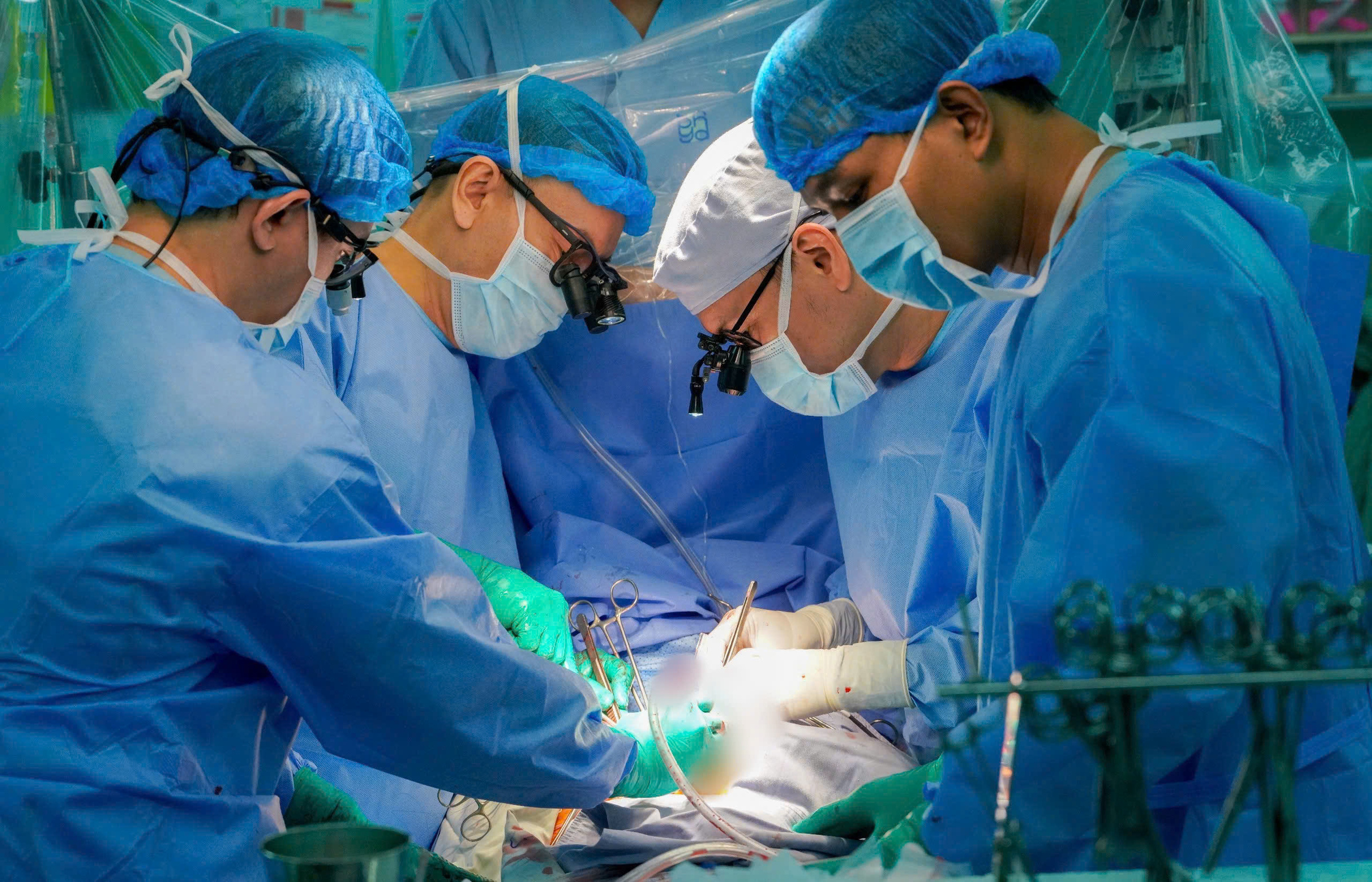 |
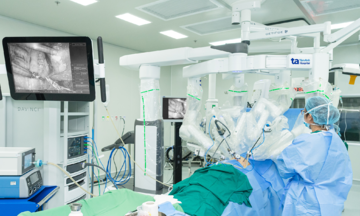
The heart transplant team, led by Professor, Doctor Nguyen Hoang Dinh, Deputy Director of the hospital and head of the heart transplant team, performed and coordinated the surgery. *Photo: Hospital provided* |
Concurrently in an adjacent operating room, a team led by Doctor Tran Cong Duy Long, Deputy Head of the Department of Hepatobiliary-Pancreatic Surgery, performed a liver transplant for a 16-year-old patient. The teenager suffered from end-stage cirrhosis on a chronic liver background, complicated by acute-on-chronic liver failure, coagulation disorders, and hepatic coma, posing an imminent threat to life. By midnight, the transplanted liver lobe began good reperfusion and bile secretion, marking the initial success of the life-saving effort.
A notable aspect of this coordination was the technique of splitting the donated liver. Doctors used an improved method to separate the donor's liver into intact right and left lobes. The right liver lobe was transplanted into the 16-year-old patient at University Medical Center Ho Chi Minh City, while the left liver lobe was transported to Hanoi for a pediatric patient. This second transplant was a collaborative effort between National Children's Hospital and Vinmec Times City Hospital. Historically, liver transplant techniques typically involved using the right lobe (accounting for 60-70% of the volume) for adults and the left lobe (30-40%) for children; splitting the organ for two recipients demands high technical expertise.
The donor's noble act not only saved these two patients but also gave life to many others. The donor's two kidneys were transplanted into patients at Nhan Dan 115 Hospital, and the two corneas were sent to Hue Central Hospital.
To date, after 33 years of implementing organ transplant techniques, Vietnam has successfully performed over 9,500 cases, including more than 100 heart transplants, offering hope to thousands of patients with end-stage organ failure.
My Y