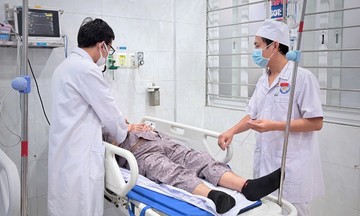
Phuong's coworker had been diagnosed with active hepatitis B over two years ago. Assigned to sit next to this individual, Phuong regularly shared the restroom and a water glass, leading to his concern about contracting the virus.
His concern escalated when quantitative hepatitis B antibody test results showed levels below the protective threshold. Doctors advised that completing three vaccine doses would increase prevention. However, Phuong only felt at ease after receiving a negative result from a specialized hepatitis B test.
 |
Sharing cups or water bottles does not transmit hepatitis B. Illustration: Vecteezy |
Similarly, Tham, 23, became alarmed when a female coworker in her office received a hepatitis B diagnosis after a routine health check-up. The coworker could not recall where she contracted the disease, noting no family history and consistent use of protection during sexual activity.
Given their frequent sharing of meals, milk tea, and drinks, Tham worried about transmission. She reasoned that even with low viral concentrations in saliva, a mouth ulcer or bleeding gums could pose a risk. Tham took time off for a comprehensive liver check and antibody test, subsequently advised to get vaccinated immediately.
Dr. Tong Thi Ngoc Cam, Northern Medical Deputy Director at the VNVC Vaccination System, clarified that the hepatitis B virus is not transmitted through common contact methods. This includes sharing food or drinks, contact with a patient's saliva, or using shared restrooms. She advised the public not to be overly alarmed.
To prevent the disease, individuals should undergo regular health check-ups and quantitative hepatitis B antibody tests. If antibody levels are absent or below the protective threshold, vaccination should be administered promptly to prevent infection.
Vietnam offers various hepatitis B vaccines, including monovalent types and combination vaccines that also protect against hepatitis A in a single shot. Adults need to complete three doses within six months, with antibody testing before vaccination and booster shots if levels fall below the protective threshold. Newborns should receive the hepatitis B vaccine within 24 hours of birth, continuing according to schedule with 5-in-1 or 6-in-1 vaccines.
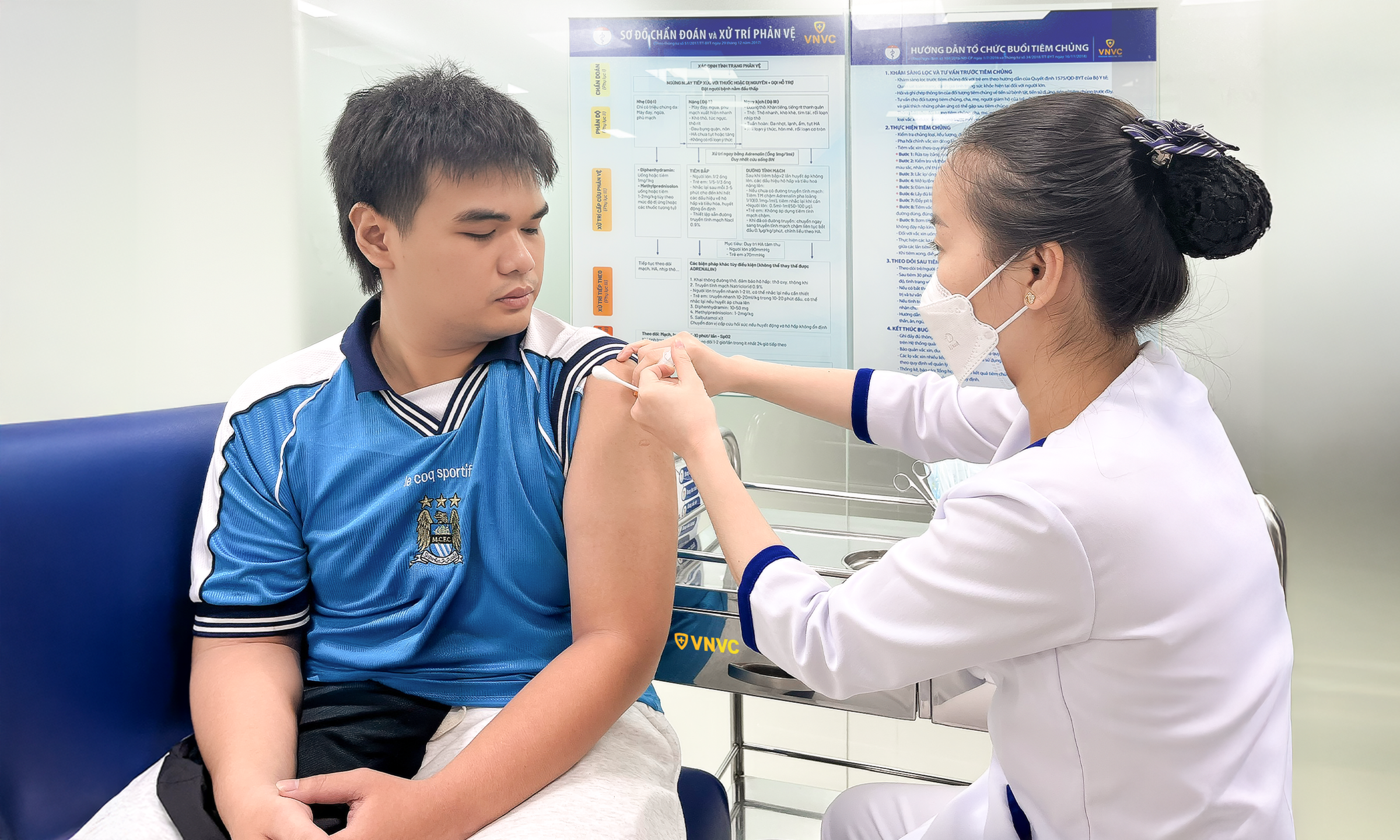 |
A young man receives a hepatitis B vaccine at the VNVC Vaccination System. Photo: Dieu Thuan |
Hepatitis B, caused by the hepatitis B virus (HBV), progresses silently, often leading to late detection and treatment. This increases the risk of spreading the pathogen within the community.
The disease has three modes of transmission: mother-to-child, sexual contact, and bloodborne. Bloodborne transmission occurs during blood transfusions or the sharing of items that can cause skin abrasions or bleeding, such as: needles, medical instruments, nail clippers, tweezers, razors, toothbrushes, tattooing equipment, and piercing tools.
Hoang Minh