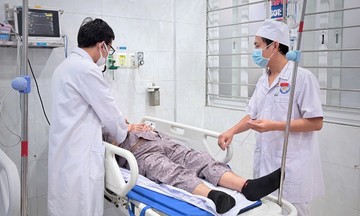
Many children with influenza A can be cared for and recover at home. However, certain warning signs indicate that a child requires a medical examination and care to prevent dangerous complications.
Your child's chest indrawing is a critical sign requiring immediate hospitalization. A doctor will examine and assess the severity of the illness. In many cases, doctors prescribe antiviral medication within the first 48 hours for pediatric patients to reduce the risk of complications.
Abnormal breathing is a major concern. If a child breathes rapidly, has chest indrawing, nasal flaring, or wheezing, these are signs of lower respiratory tract damage. If their lips or extremities turn blue, the child is experiencing respiratory failure. This is an emergency, and the child needs to be taken to the nearest medical facility without delay.
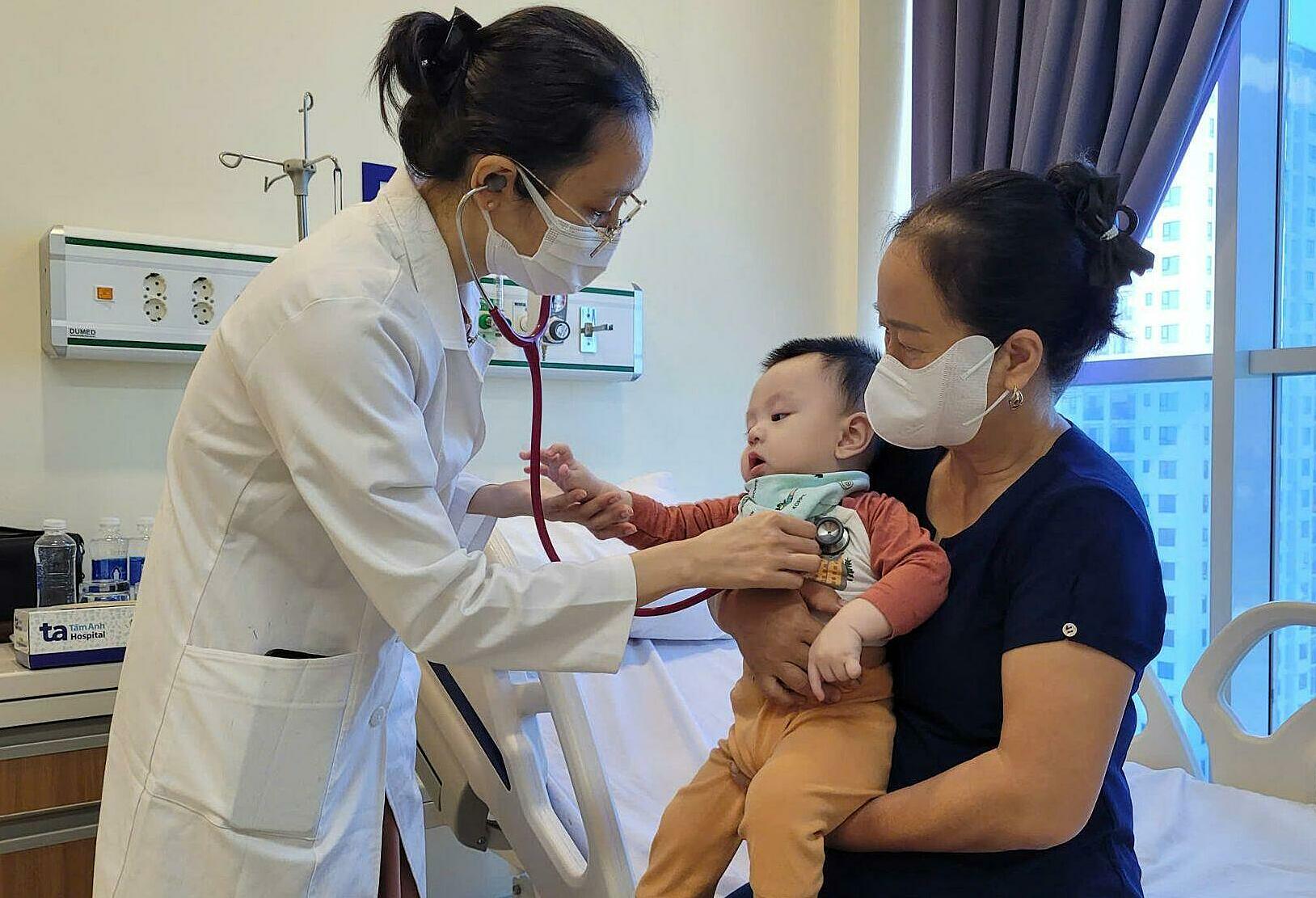 |
A boy with influenza A receiving medical treatment. Illustration: Tam Anh General Hospital |
Other signs that necessitate medical attention include:
- **Lethargy, excessive sleep, or extreme irritability**: A child who is difficult to wake, sleeps excessively, or cries inconsolably may show signs of a severe infection or neurological complications.
- **Poor feeding, refusing to feed, or signs of dehydration**: Infants and young children are at high risk of rapid dehydration. If a child feeds less than 50% of normal, has reduced urine output, completely refuses to feed, vomits frequently, has dry skin, or sunken eyes, they should be taken to a doctor for proper fluid replacement.
- **Seizures**: A child experiencing seizures needs to be taken to the hospital, even if the seizure has stopped.
- **Prolonged or worsening symptoms**: If a child has a persistent or recurrent fever, they may have a bacterial superinfection and require medication as prescribed.
Children belonging to high-risk groups are also vulnerable. This includes children under three months old, those born prematurely or with low birth weight, and those with chronic illnesses or compromised immune systems. These children are most susceptible to severe illness and should be examined early as soon as flu symptoms appear.
Fever reducers and other supportive care methods are applied depending on the child's age and condition. Parents must not self-administer antibiotics, cough medicine, adult flu medicine, or treat based on personal experience.
Dr. Nguyen Huu Hieu
Department of Pediatrics, Tam Anh General Hospital Hanoi
| Readers can submit questions about children's illnesses here for doctors to answer. |