Answer:
Preimplantation genetic testing for aneuploidy (PGT-A) is a technique that identifies chromosomal abnormalities. It assists doctors in selecting suitable embryos for transfer, increasing the chance of a successful pregnancy. For women aged 40, the risk of embryos having chromosomal abnormalities is higher than for younger women. However, PGT-A is not mandatory for all older patients. The benefits of this test must be carefully considered alongside embryo quantity, quality, reproductive history, and individual treatment goals.
For patients indicated for PGT-A, after fertilization and culturing embryos to the blastocyst stage (day 5 or day 6), embryologists will biopsy a few cells from the trophectoderm layer for chromosomal testing. The biopsied embryos are then cryopreserved while awaiting results. Once normal embryos are identified, the doctor prepares the uterine lining and selects an appropriate time to thaw and transfer the embryo.
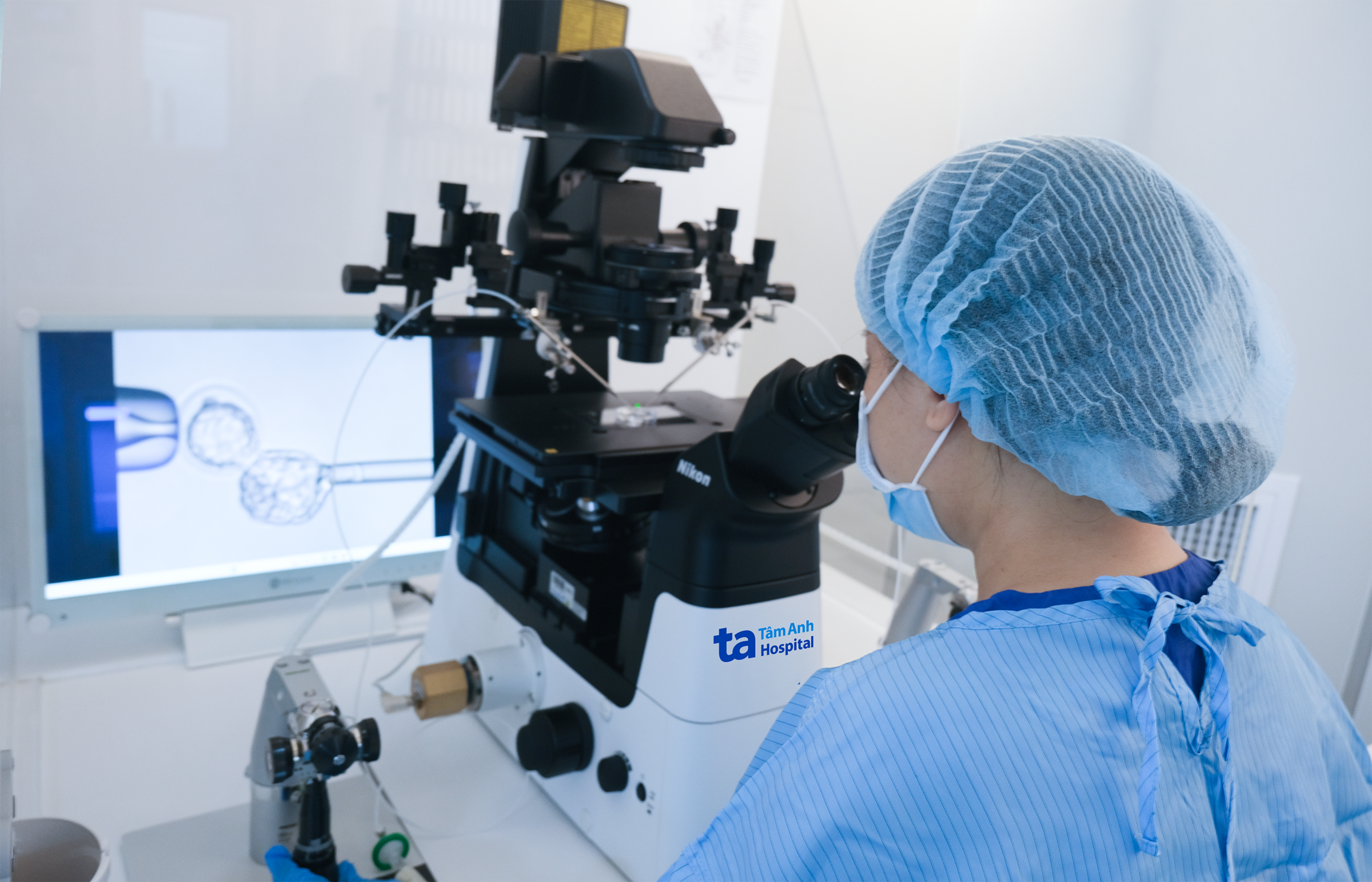 |
Embryologists perform preimplantation embryo biopsy. *Illustration: IVF Tam Anh* |
For embryos already cryopreserved, if PGT-A is desired, embryologists must first thaw them and evaluate their viability, recovery, and quality before proceeding with the biopsy. After biopsy, the embryos are re-frozen while awaiting results. Suitable embryos will then be thawed for transfer into the uterus.
Therefore, day-5 embryos that are currently cryopreserved can still undergo PGT-A. However, compared to embryos biopsied before initial freezing, these embryos must endure an additional thawing and re-freezing cycle, which carries a risk of non-survival or inadequate recovery.
A single failed embryo transfer does not definitively indicate abnormal embryos. Before deciding to thaw embryos for PGT-A, doctors need to assess embryo quality based on morphology, post-thaw recovery potential, and review the entire treatment process. This evaluation helps weigh the benefits and risks of the test and determine the most appropriate treatment plan.
At IVF Tam Anh, patients receive personalized consultation and treatment protocols based on their age, duration of infertility, treatment history, and genetic risks. Depending on the case, doctors may recommend preimplantation genetic testing techniques such as PGT-A to detect chromosomal number abnormalities, PGT-SR to identify chromosomal structural rearrangements, and PGT-M to screen for single gene inherited diseases. This ensures the selection of suitable embryos before transfer, increasing the chances of a healthy baby.
Dr. Nguyen Cong Minh
Fertility Support Center
Tam Anh General Hospital Ho Chi Minh City
| Readers can submit questions about infertility here for doctor's answers |