A young man’s unhealthy habits led to a diagnosis of hypogonadism at 28, highlighting the impact of lifestyle on hormonal health. On 5/9, a representative from Medlatec General Hospital reported a patient with a history of consuming many soft drinks, a sedentary lifestyle, and grade II obesity, weighing over 110 kg and standing 169 cm tall. There was no family history of similar conditions.
He reported being unable to maintain an erection during sexual intercourse for nearly a year, which significantly impacted his quality of life. Initial clinical examination found no obvious abnormalities, but specialized tests revealed reduced testosterone levels at 8,27 nmol/L (normal range 8,64–29,0 nmol/L). The patient also had elevated liver enzymes, high blood uric acid, and an abdominal ultrasound showed grade II fatty liver.
Following diagnosis, a treatment plan focused on lifestyle modification led to significant improvement in the patient's condition. Doctors diagnosed him with hypogonadism and prescribed outpatient treatment, along with advising lifestyle adjustments including reducing sugary drinks, increasing physical activity, and weight management. After two months, his endocrine and metabolic indicators gradually stabilized, and he could resume normal sexual activity.
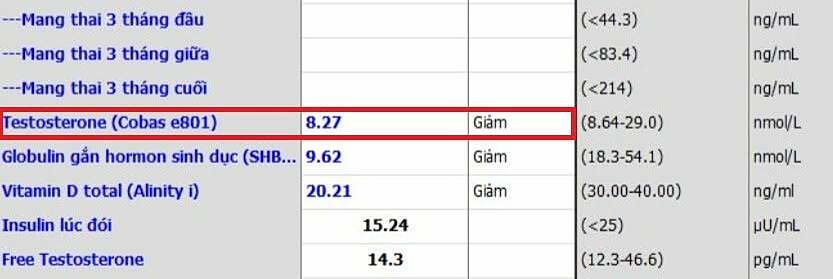 |
Tests showed the patient's testosterone levels were lower than normal. *Photo: Medlatec Hospital* |
Doctor Tran Hai Nam, from the Clinical Department, explained that hypogonadism is an impairment of the hypothalamic-pituitary-gonadal axis, leading to reduced sex hormone production. This primarily affects testosterone in males, causing physiological, reproductive, and metabolic disorders. Testosterone plays a crucial role in sexual function, musculoskeletal health, and various metabolic activities. Therefore, prolonged testosterone deficiency can lead to numerous mental and physical symptoms.
The symptoms of hypogonadism are diverse, affecting both mental well-being and physical health. Mentally, patients may experience fatigue, decreased libido, irritability, reduced cognitive ability, or symptoms of depression. Physically, testosterone deficiency can lead to erectile dysfunction, reduced muscle mass, increased fat mass, decreased beard growth, dry skin, reduced sperm production, and impact bone health, including the risk of reduced bone density and osteoporosis. Some cases may also present with anemia or increased breast size.
Hypogonadism can affect various age groups, with lifestyle factors playing a significant role in younger males. In young males, factors such as obesity, sedentary lifestyle, metabolic disorders, certain endocrine diseases, or medications can contribute to affecting testosterone levels and sexual function. Therefore, when persistent symptoms appear, patients should have the underlying cause evaluated rather than assuming it is merely a psychological issue or due to age.