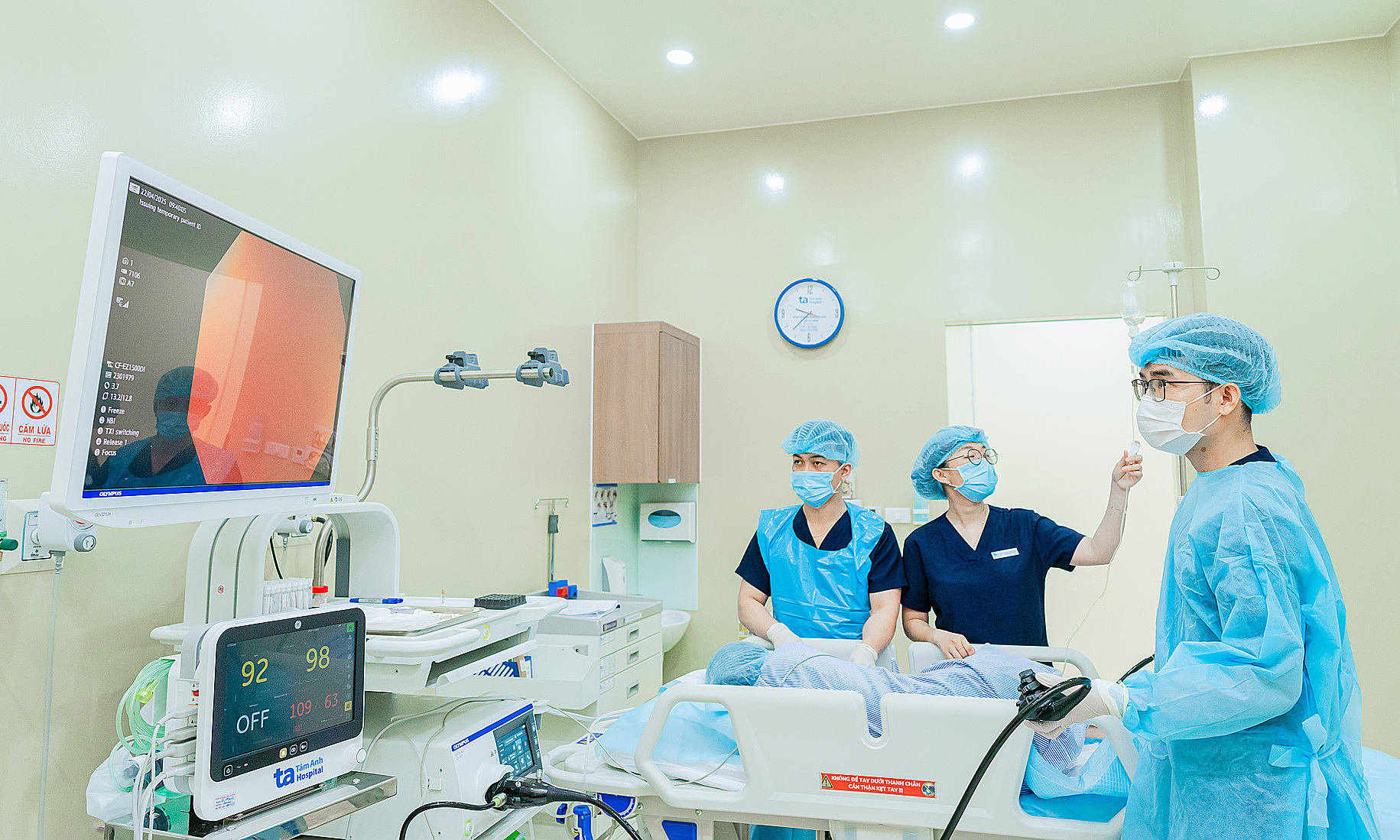
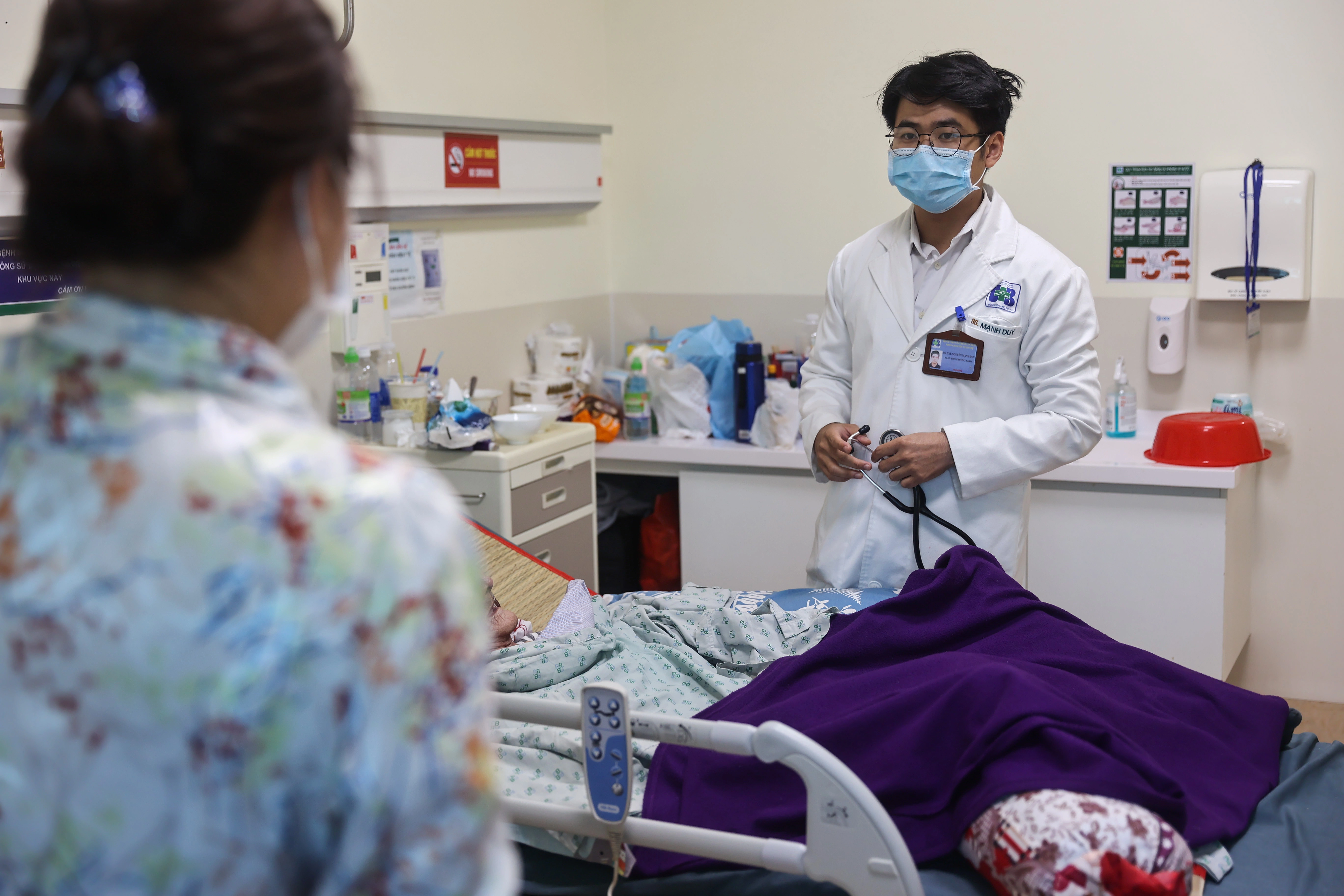
Ovarian cancer involves abnormal cells developing in one or both ovaries, forming malignant tumors that invade and destroy tissues and organs. If left untreated, these malignant cells can metastasize to other organs. Surgery is often the primary treatment choice for patients with ovarian cancer, playing a crucial role in diagnosis and treatment.
This method allows doctors to precisely stage the cancer by direct observation, assessing its spread and collecting tissue samples for biopsy. During surgery, doctors can also examine the current state of the tumor, ovaries, and any existing lesions within the patient's abdominal cavity. Based on examination results, doctors may remove the entire uterus, both adnexa, the greater omentum, and eliminate or destroy all tumors.
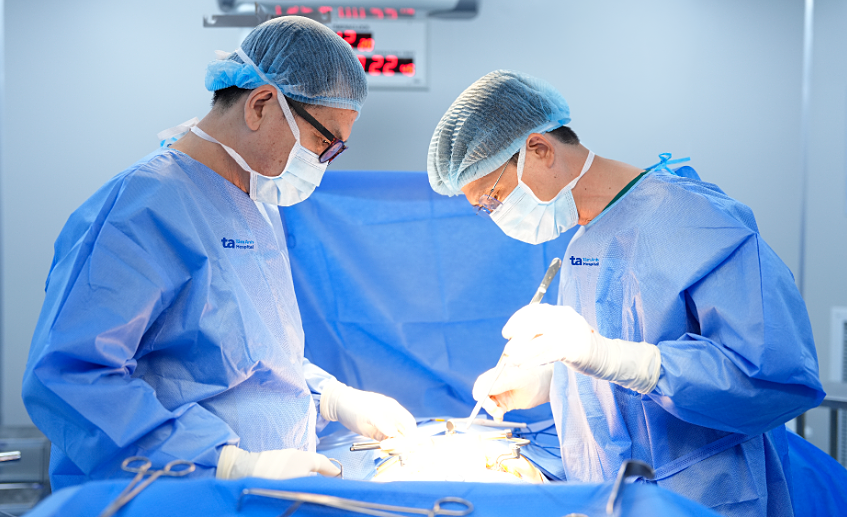 |
Doctor Tan and his team performing ovarian cancer surgery for a patient. Illustration: Tam Anh General Hospital
Concurrently, during surgery, doctors will inspect the underside of the diaphragm and the entire peritoneum, performing biopsies if abnormalities are suspected. Subsequently, pelvic and para-aortic lymph nodes are examined to remove any metastasized nodes. Depending on the disease's severity and the patient's health, doctors may perform open surgery or laparoscopy. In early stages, patients may undergo minimally invasive laparoscopic surgery, which reduces pain and shortens recovery time.
In advanced stages, with large tumors or extensive adhesion to adjacent organs, or metastasis, patients may need pre-surgical chemotherapy to shrink the tumor. This approach enhances surgical effectiveness. After surgery, patients may continue treatment with chemotherapy, targeted therapy, or other methods. Ovarian cancer has a high cure rate, over 90%, if detected early and treated correctly from the initial stage. For the first two years post-surgery, patients require careful monitoring, regular follow-ups, a healthy diet, a balanced lifestyle, and a positive mindset, adhering to doctor's instructions to prevent recurrence.
If patients wish to conceive after treatment, they should discuss this with their doctor immediately upon diagnosis to receive guidance on fertility preservation methods. Since you have been advised to undergo surgery, early treatment according to the doctor's protocol is recommended. Treating the tumor while it is small and has not spread increases the cure rate, simplifies surgery, and reduces the duration and intensity of chemotherapy.
Women should undergo regular gynecological check-ups, especially those at high risk, such as having a family history of ovarian cancer or existing gynecological conditions. If abnormal vaginal bleeding occurs after intercourse or menopause, if menstrual cycles are too short or too long, if there is prolonged bleeding, or if a mass is felt in the lower abdomen, women should consult a gynecological oncology specialist for examination, diagnosis, and timely, appropriate treatment.
Master, Doctor, First-Degree Specialist Huynh Ba Tan
Department of Surgical Oncology
Oncology Center
Tam Anh General Hospital, TP HCM
| Readers can send questions about cancer here for doctors to answer |