Ortho-K lenses are gas permeable rigid contact lenses prescribed for overnight wear to correct vision by temporarily reshaping the cornea. This method is commonly used to treat refractive errors, allowing users to see clearly during the day without glasses or daytime contact lenses.
Dr. Le Thanh Huyen, from the High-Tech Eye Unit at Tam Anh Cau Giay General Clinic, stated that Ortho-K does not cure myopia. Vision correction is only maintained when users wear the lenses regularly as instructed. If use is discontinued, the cornea gradually returns to its original shape, and vision reverts to the previous myopic level.
According to Dr. Huyen, many people currently misuse Ortho-K, leading to eye irritation, infection, or reduced treatment effectiveness.
Wearing lenses without an eye exam
Ortho-K lenses are custom-designed to fit each individual's corneal shape. The prescription process often requires corneal topography measurement and multiple adjustments for accuracy.
If the lenses are ill-fitting, users may experience discomfort, eye pain, or corneal abrasions due to lenses that are too tight or too loose. Dr. Huyen noted that accurate measurement and design of the lenses are crucial factors determining the effectiveness and safety of this method.
Improper lens and hand hygiene
Eye infections are the most concerning complication when using contact lenses. Common causes stem from not following proper lens cleaning and storage procedures. Frequent mistakes include not washing hands before handling lenses, reusing old cleaning solution, allowing tap water to contact lenses or their case, and not replacing the lens case regularly.
Insufficient wear time
The effectiveness of Ortho-K is only temporary, designed to reshape the cornea for clearer daytime vision. If sleep duration is too short, and lenses are worn for only a few hours before removal, the cornea may not be sufficiently reshaped, so daytime vision does not significantly improve. Moreover, skipping lens wear for one or more consecutive nights also causes the cornea to gradually return to its original shape, resulting in blurrier vision the next day.
Users need to wear the lenses consistently every night and ensure adequate sleep duration as advised by their doctor to maintain the effectiveness of vision correction.
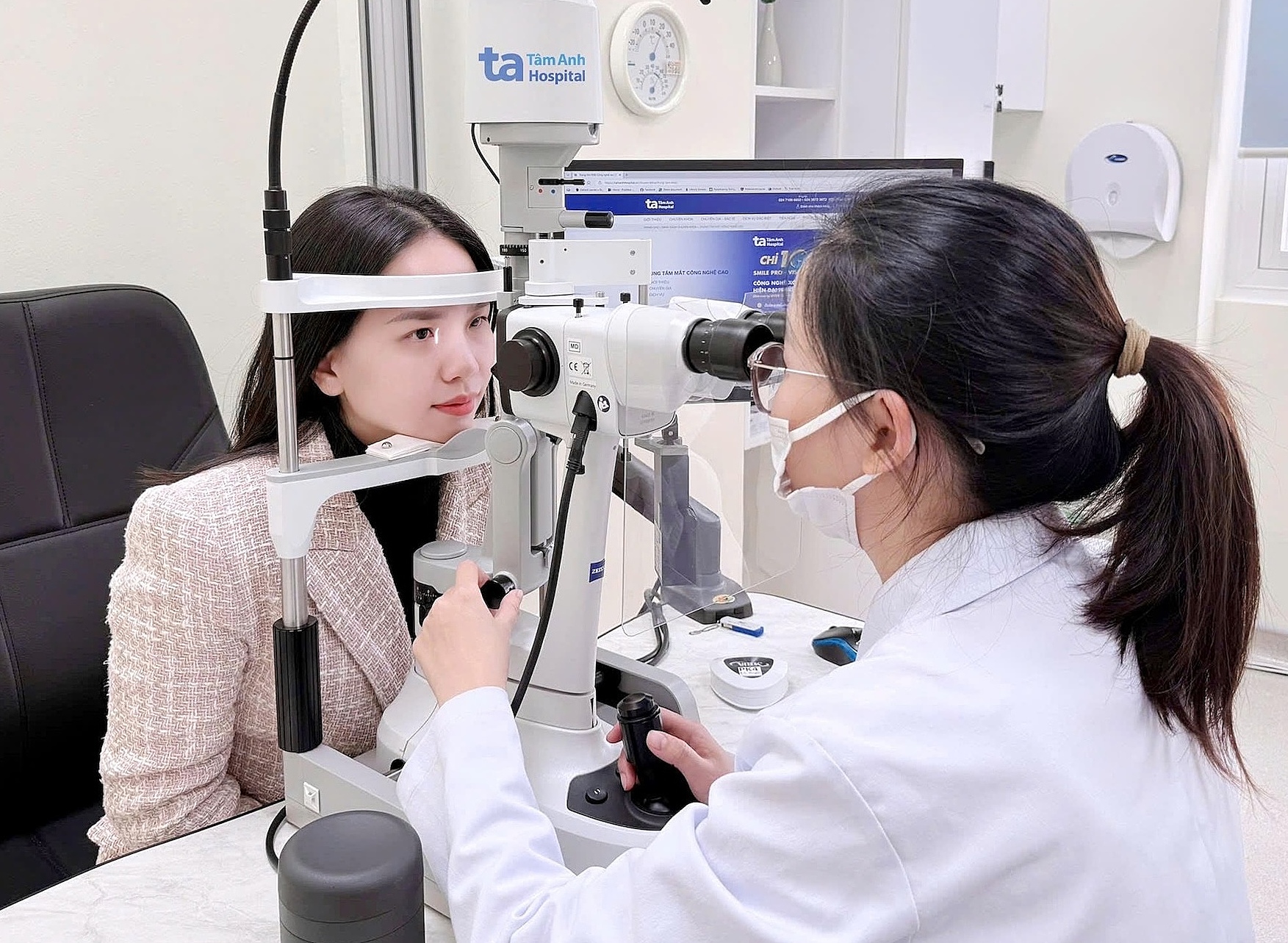 |
Dr. Huyen examines a woman's eyes. *Photo: Tam Anh General Hospital*
Wearing lenses for too long during sleep
Ortho-K lenses typically need to be worn for 6-8 hours each night to achieve effective corneal reshaping. Wearing them longer does not lead to clearer vision; instead, it reduces oxygen supply to the cornea, which can easily cause dry, gritty, or red eyes. Users should remove lenses immediately upon waking and clean them properly. If frequent discomfort or oversleeping occurs, consultation with a doctor is necessary.
Wearing lenses with eye inflammation or discomfort
Some individuals continue wearing lenses when their eyes are red, painful, or discharging, which can worsen the inflammation. Dr. Huyen advises that if symptoms such as eye pain, redness, blurred vision, or discharge appear, lenses should be removed, and an early examination sought.
Skipping regular follow-up appointments
Many people do not return for follow-up appointments after getting accustomed to Ortho-K. However, the cornea and lens fit can change over time, especially in children. Ill-fitting lenses can reduce effectiveness, cause irritation, or corneal abrasions. Timely follow-ups help detect abnormalities early and allow for lens adjustments when necessary, ensuring effective vision correction and long-term safety.
Ly Nguyen
| Readers can submit questions about ophthalmological conditions here for doctors to answer. |