Two years ago, Ms. Lan discovered a uterine fibroid about 4 cm but did not seek treatment. Recently, experiencing prolonged menstrual irregularities, she visited Tam Anh General Hospital Hanoi. An MRI revealed the fibroid had grown to 9,7 x 6,8 cm, located within the uterine muscle layer, in the posterior fundus of the uterus, pushing the uterine lining inward. Doctors diagnosed the fibroid as highly vascularized, belonging to FIGO 2, a type prone to causing menorrhagia and severe menstrual pain.
Associate Professor, Doctor Nguyen Xuan Hien, from the Center for Diagnostic Imaging and Interventional Radiology, recommended uterine fibroid embolization for Ms. Lan instead of a hysterectomy. Embolization helps reduce fibroid volume, control menstrual blood loss, prevent chronic anemia affecting quality of life, preserve the uterus, avoid surgery, and ensures quick patient recovery.
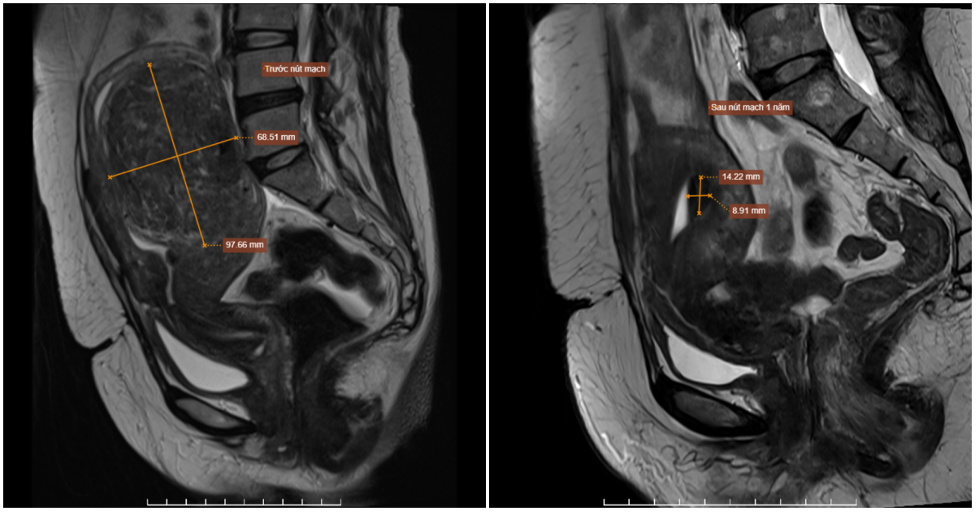 |
The fibroid's size changed before and after intervention. Photo: Tam Anh General Hospital
According to Doctor Hien, embolization is a minimally invasive, safe, and effective method for many women with uterine fibroids. Doctors use catheters to access arteries, injecting an embolic agent to cut off the blood supply nourishing the fibroid. This causes the fibroid to shrink, gradually reducing and eliminating symptoms like abdominal pain or menorrhagia. The procedure leaves only a small 2 mm incision on the thigh skin, which heals within one week, leaving no scar.
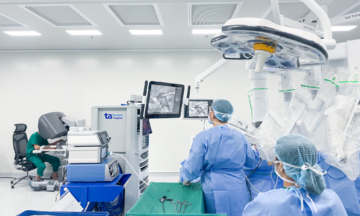
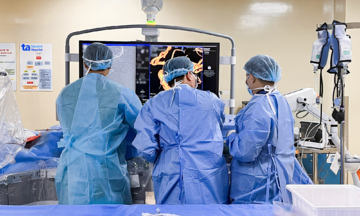
Previously, patients with large uterine fibroids often required surgical removal, which carried a high risk of bleeding if the fibroid was submucosal, potentially necessitating a hysterectomy. Today, embolization technology, supported by a robotic angiography system, allows doctors to successfully treat large fibroids without surgery, resulting in fewer post-treatment complications while preserving the uterus and the ability to conceive.
Uterine fibroids are benign tumors common in women of reproductive age. These fibroids tend to grow quickly, deforming the uterine cavity, but rarely become cancerous.
Doctor Hien advises women to manage weight, exercise regularly, eat a balanced diet, and have regular health check-ups for early detection and timely treatment. Women with uterine fibroids or those who have undergone fibroid removal surgery should visit the hospital for follow-up every 6 to 12 months. Early screening and treatment help prevent complications and protect women's reproductive health.
Thuan Le
*Name changed
| Readers can submit questions about cancer here for doctors to answer |