On 26/11, Doctor of Clinical Oncology 2 Nguyen Thi Huyen Trang, Head of Obstetrics Department at Military Hospital 175, reported that the pregnant woman was admitted to the emergency room late at night with severe pain in the area of her old surgical scar and fresh vaginal bleeding. The medical team quickly established an intravenous line, conducted tests, and activated a red alert. Less than two minutes later, Doctor Tran Ngoc Son from the Obstetrics Department arrived to examine the patient, identified the risk of uterine rupture, and immediately transferred her to the operating room.
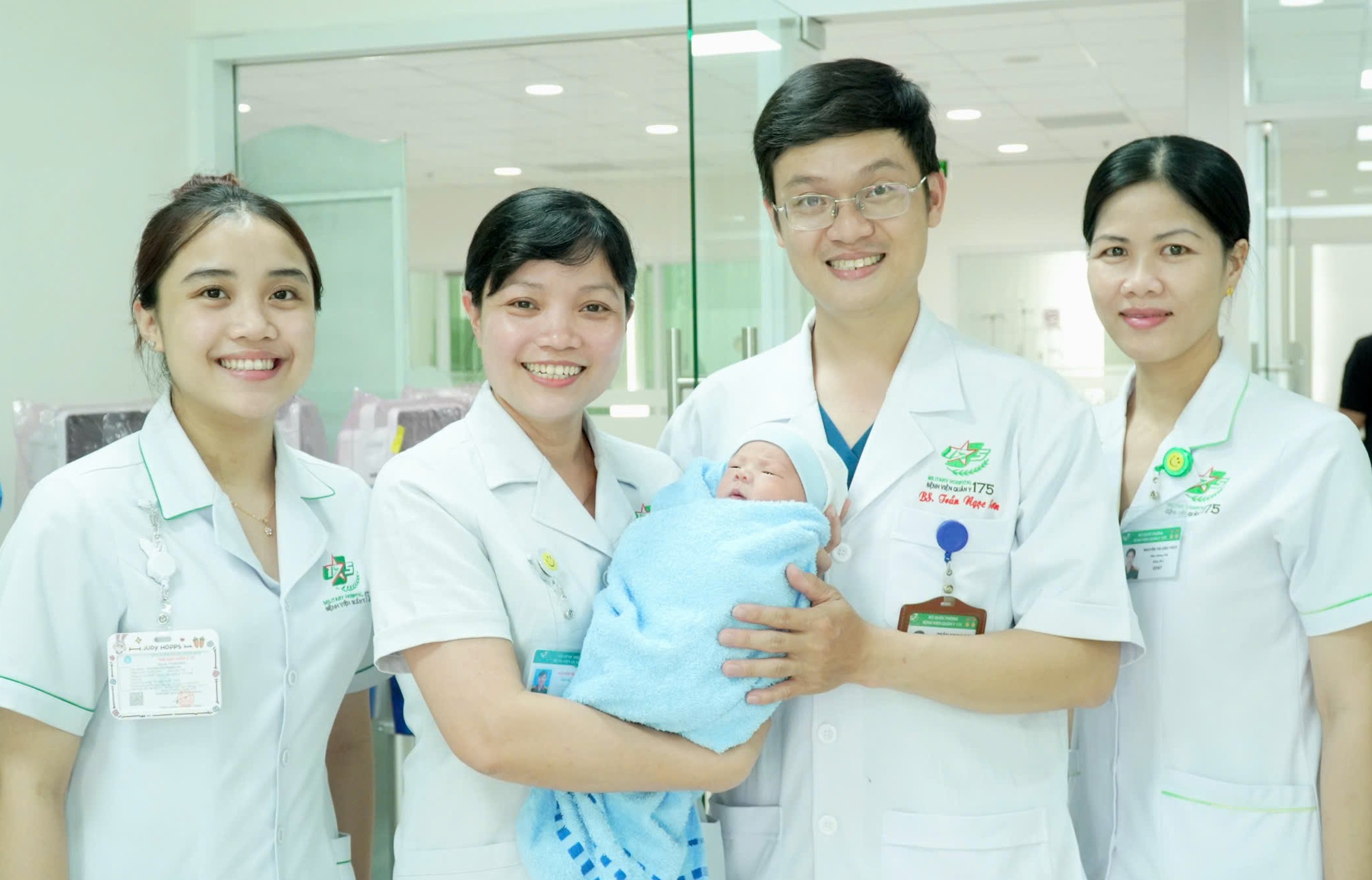 |
The baby is recovering well after the C-section, held by the medical staff at Military Hospital 175. Photo: Hospital provided |
Upon arrival, the patient was experiencing severe abdominal pain, her abdomen was deformed, and the fetal heart rate was sporadic. Doctors from the Surgery, Obstetrics, and Anesthesia-Resuscitation departments held a rapid consultation, agreeing on an emergency C-section. The priority was to save both mother and child, bypassing all administrative procedures.
During the laparotomy, doctors observed a complete uterine rupture, approximately 13 cm long, located at the site of the old surgical scar. The rupture extended to the left uterine artery and down to the cervix. The posterior uterine wall was detached, causing the entire fetal chest, abdomen, and umbilical cord to escape outside the uterus. The abdominal cavity contained about 700 ml of fresh blood mixed with amniotic fluid, indicating a high risk of fatality if not managed within a very short timeframe.
The obstetric team immediately delivered a 2,9 kg baby boy, who was cyanotic, had weak muscle tone, and a sporadic heart rate. The Pediatrics Department provided intensive resuscitation. After about five minutes, the baby became pink and cried well. The surgery continued, focusing on bleeding control and uterine preservation and repair for the mother.
"From the moment of admission until the baby was safely delivered, the entire process took only about 10 minutes," Doctor Trang said.
Currently, the health of both mother and child is stable, and they are recovering well. The pregnant woman had a previous C-section scar due to a narrow pelvis. However, during this pregnancy, she did not undergo regular prenatal check-ups, only two ultrasounds, and desired a natural birth.
According to Doctor Trang, uterine rupture is a dangerous obstetric complication that can quickly lead to death for both mother and child. Pregnant women with C-section scars need regular prenatal check-ups, especially from 36 weeks onwards. This ensures proper assessment of the old scar and provides guidance on the appropriate timing and method of delivery. Warning signs of scar dehiscence include pain across the pubic bone, continuous pain, or sharp pain on pressure. If these symptoms appear, it is crucial to seek immediate medical attention at a hospital with an obstetrics department.
Le Phuong