


Doctor Hoang Quyet Tien, from the Medical Information Center at Tam Anh General Hospital Ho Chi Minh City, states that the risk of developing joint degeneration increases with age, especially in groups with low physical activity or office workers. Joint damage begins very early, potentially taking several months to several years before causing noticeable pain. The stages of knee joint degeneration – from early, mild, moderate, to severe – have different recognition methods, diagnoses, and treatment goals.
Unlike many other organs in the body, joint cartilage lacks blood vessels and pain-sensing nerves. In the early stage, the cartilage layer surrounding the joint ends and the subchondral bone experiences mild wear, so patients do not feel significant pain or display any abnormal symptoms. However, damage to the cartilage and subchondral bone structures silently progresses; small bone spurs may already form during this stage, leading to more issues in subsequent stages.
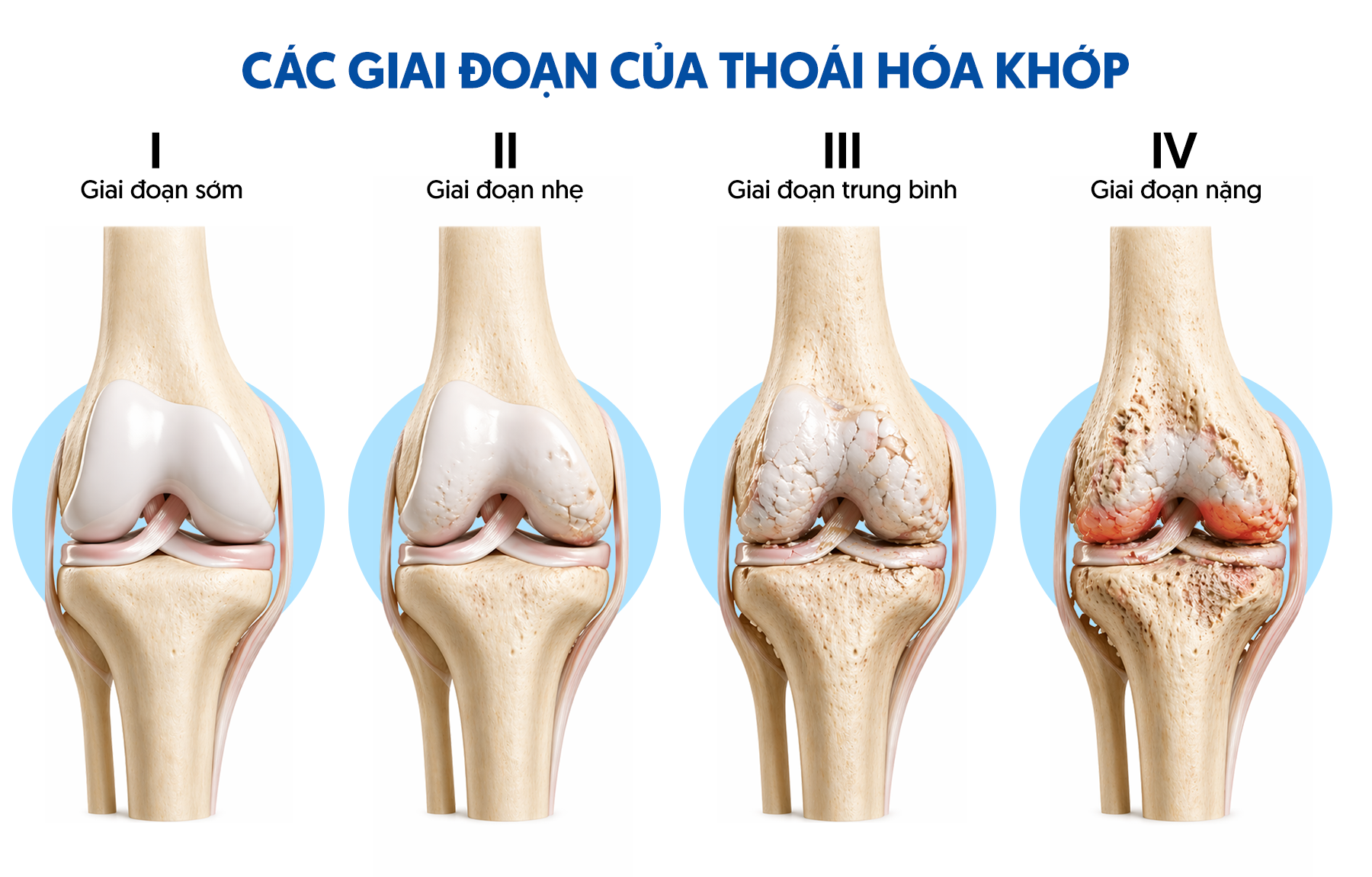 |
Stages of knee joint degeneration with damage to cartilage and subchondral bone. *Photo: Eco Pharmaceutical Company* |
Joint ultrasound and magnetic resonance imaging (MRI) can observe and detect damage to joint cartilage, ligaments, and synovial membranes in the early stage. Patients at this stage need to focus on building a healthy lifestyle, managing weight, exercising regularly, and using supplements to slow down the degeneration process.
When joint degeneration progresses to stage two – the mild stage, X-ray images show the joint space beginning to narrow, accompanied by the appearance of bone spurs. At this point, the cartilage surface becomes rough and thinner, and patients may experience persistent pain during movement, as bone spurs rub against the surrounding tissue at the joint ends.
Pain only appears with extensive movement, and joint stiffness occurs if not moving for several hours. Doctor Tien states that this is still the mild stage of joint degeneration, advising patients to proactively seek medical examination immediately upon noticing abnormal symptoms for diagnosis and measures to prevent disease progression.
By stage three – the moderate stage, patients with joint degeneration experience significant pain during movement and joint stiffness in the morning upon waking or after prolonged inactivity, requiring massage for a while before regaining movement. The persistent and dull pain affects daily activities.
X-ray images at this stage show clear signs of erosion and damage to the cartilage layer between the bone ends, significant narrowing of the joint space, and more numerous bone spurs. The soft tissues surrounding the joint and the synovial capsule may also become inflamed, causing joint swelling and pain.
Treatment for stage three joint degeneration includes medication combined with supportive measures such as physical therapy and lifestyle changes.
Stage four joint degeneration – the severe stage – occurs when the articular cartilage surrounding the joint is completely eroded, exposing the bone ends. The joint space narrows significantly, numerous large bone spurs form, and the subchondral bone becomes dense and fibrous. At this point, even a simple movement causes pain, making it very difficult or almost impossible for patients to perform daily activities.
Additionally, the joint fluid decreases significantly, insufficient to lubricate the joint, causing the bone ends to rub against each other with every movement, exacerbating the pain. Surgery is the preferred treatment method.
 |
Doctors at Tam Anh General Hospital guide measures to improve and restore knee joints. *Photo: Hospital provided* |
According to Doctor Tien, by the time joint pain appears, the damage has often progressed to a level where restoring and preserving joint structure is difficult. Treatment at this point primarily aims to control symptoms, slow disease progression, and maintain mobility.
Doctor Tien recommends proactive prevention of joint degeneration, early monitoring, and intervention. Although difficult to detect in early stages, joint degeneration can still be recognized through signs such as transient joint stiffness after waking, discomfort during movement after prolonged sitting, or reduced joint flexibility. Individuals experiencing these prolonged abnormal signs should seek early medical examination for timely assessment and intervention.
Maintaining appropriate physical activity, managing weight, and adjusting posture in daily life help reduce pressure on the joints. Supplementing with undenatured type two collagen essence, hydrolyzed collagen peptides, eggshell membrane, and chondroitin sulfate: supports cartilage structure maintenance, enhances joint fluid quality, and contributes to slowing degeneration, especially in the early stages.
Dinh Dieu
| Readers can submit questions about musculoskeletal diseases here for doctors to answer. |


