Lien had her first child at 9 years old, but after remarrying, she struggled to conceive again. Examinations at the Center for Reproductive Assistance, Tam Anh General Hospital Ho Chi Minh City (IVF Tam Anh TP HCM), revealed Lien's anti-Mullerian hormone (AMH) level, an indicator of ovarian reserve, had decreased to 1,6 ng/ml. The average AMH for women at 30 years old is approximately 2,5 ng/ml. She was also diagnosed with a left ovarian endometriosis cyst and chronic hepatitis B.
Doctor Dinh Thi Ngoc Ngan, from IVF Tam Anh TP HCM, explained that the ovarian endometriosis cyst not only occupies space but also continuously secretes inflammatory cytokines. These cytokines destroy healthy ovarian follicles and damage the genetic structure (DNA) of eggs. This can lead to a decline in egg quality, making fertilization difficult. Prolonged presence of the cyst severely diminishes ovarian reserve, reducing the patient's chances of conceiving with her own eggs.
Lien's husband had normal reproductive health, but he works in the United States and returns home only one month each year, further lowering their chances of conception.
Doctor Ngan developed an ovarian stimulation protocol for Lien, followed by in vitro fertilization (IVF) using intracytoplasmic sperm injection (ICSI). Thanks to the Time-lapse embryo culture system integrated with artificial intelligence (AI), Lien yielded 12 embryos, including seven good-quality day-5 embryos.
Concurrently with the IVF process, doctors collaborated with the Hepatobiliary Department to manage Lien's hepatitis B, ensuring a safe pregnancy and minimizing the risk of mother-to-child transmission. Test results showed a low hepatitis B virus load in her blood and stable liver function.
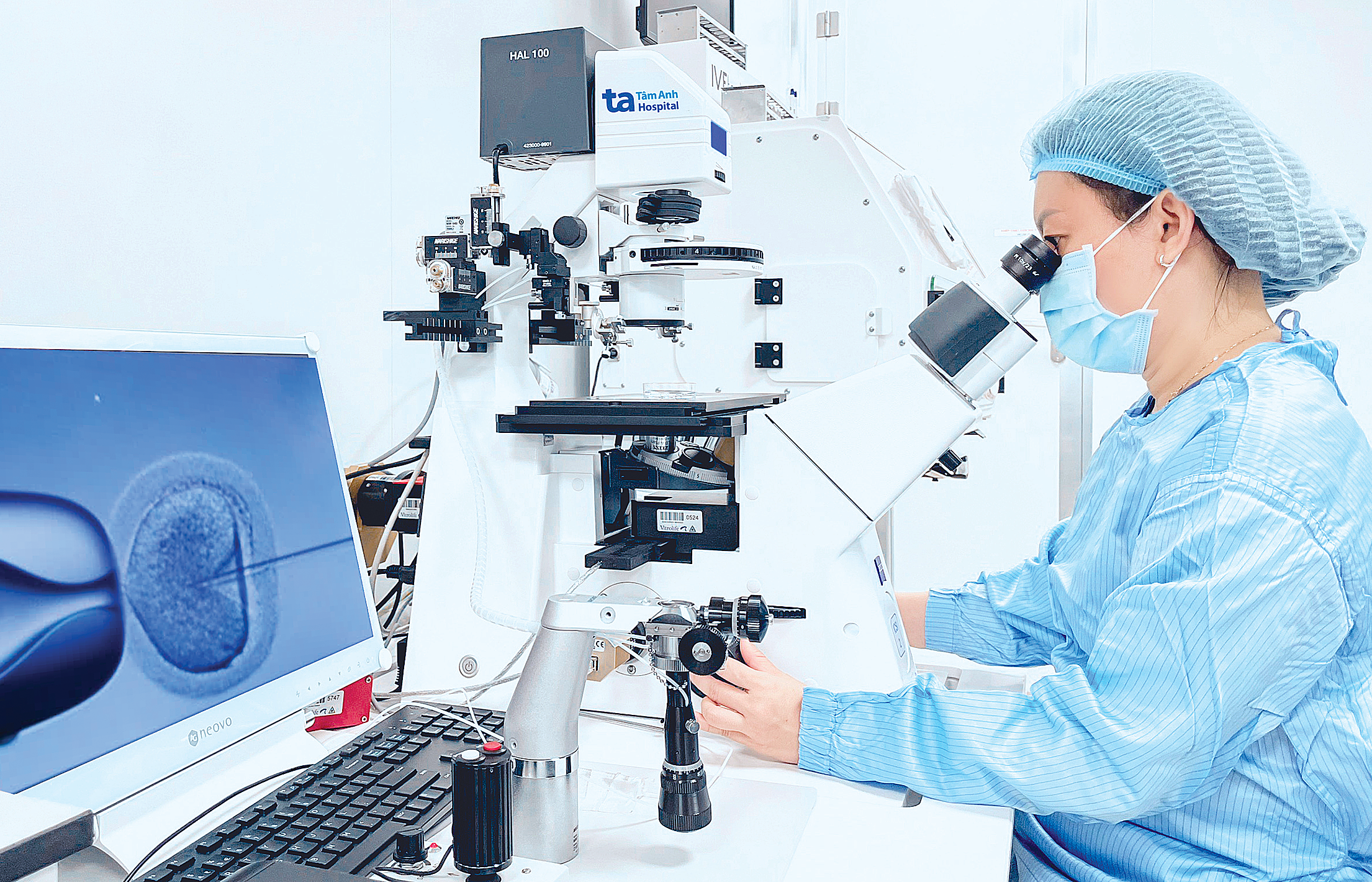 |
Master Nguyen Ngoc Quynh, Head of Lab, IVF Tam Anh TP HCM, performs intracytoplasmic sperm injection (ICSI). *Photo: Quynh Chau*
Before embryo transfer, Doctor Ngan prescribed medication to suppress the ovarian endometriosis. Once the uterine lining reached an ideal thickness, doctors proceeded with the embryo transfer, resulting in Lien's successful conception on the first attempt.
Given the patient's history of a previous cesarean section and a narrow pelvis, doctors decided on an elective cesarean section at 39 weeks. Lien gave birth to a healthy baby girl weighing 3,2 kg. The remaining embryos were cryopreserved for future family planning.
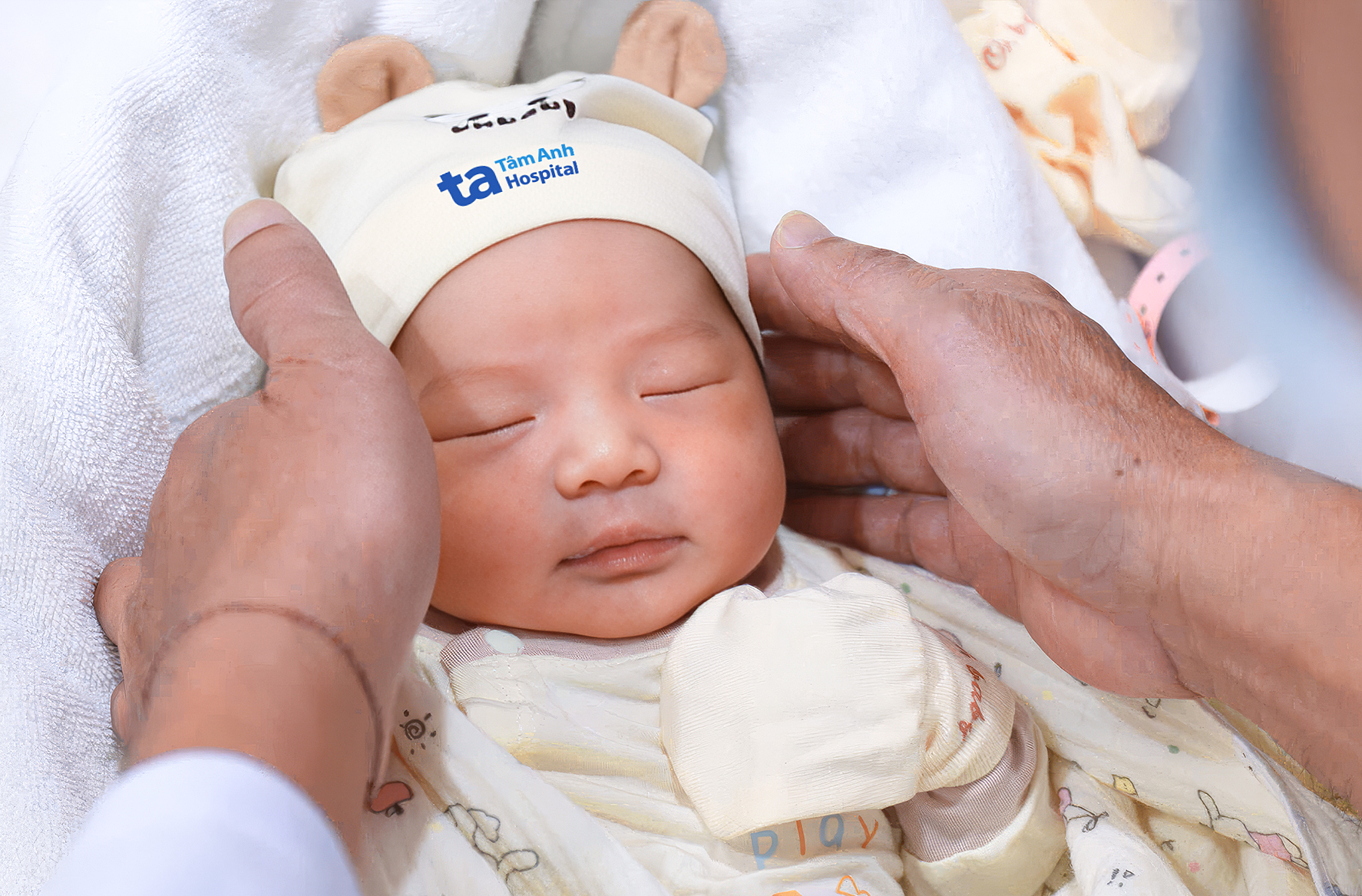 |
Lien's daughter at birth. *Photo: Nguyet Nhi*
According to Doctor Ngan, secondary infertility in women accounts for over 50% of patient cases at IVF Tam Anh. Conditions such as ovarian endometriosis cysts and chronic endometritis can develop silently years after childbirth, compounded by age-related decline in ovarian reserve. Many patients seek help after experiencing infertility for several years, requiring advanced techniques to have another child.
Doctor Ngan recommends that couples under 35 years old who fail to conceive after one year (or six months for those over 35) should seek immediate medical consultation. For couples who frequently live apart or plan to delay childbirth, proactive and regular reproductive health screenings are advisable to allow for timely intervention and avoid missing the "golden window" for treatment.
Nguyet Nhi
*Character's name has been changed