Many women, like you, exercise aerobically unaware of their pregnancy. An ultrasound revealing 10% fluid accumulation under the chorionic membrane (placental abruption) signals a threatened miscarriage.
According to recommendations from US, UK, and Vietnamese obstetric and gynecology associations, pregnant women with placental abruption should stop high-intensity physical activities such as aerobic dancing, fast running, or heavy weightlifting. During this critical period, stabilizing the pregnancy is paramount, minimizing shaking, impacts, and abdominal pressure. The first three months of pregnancy are prone to complications like arrested fetal development, threatened miscarriage, or miscarriage. Even a small 10% abruption can worsen with strenuous exercise, increasing fluid accumulation.
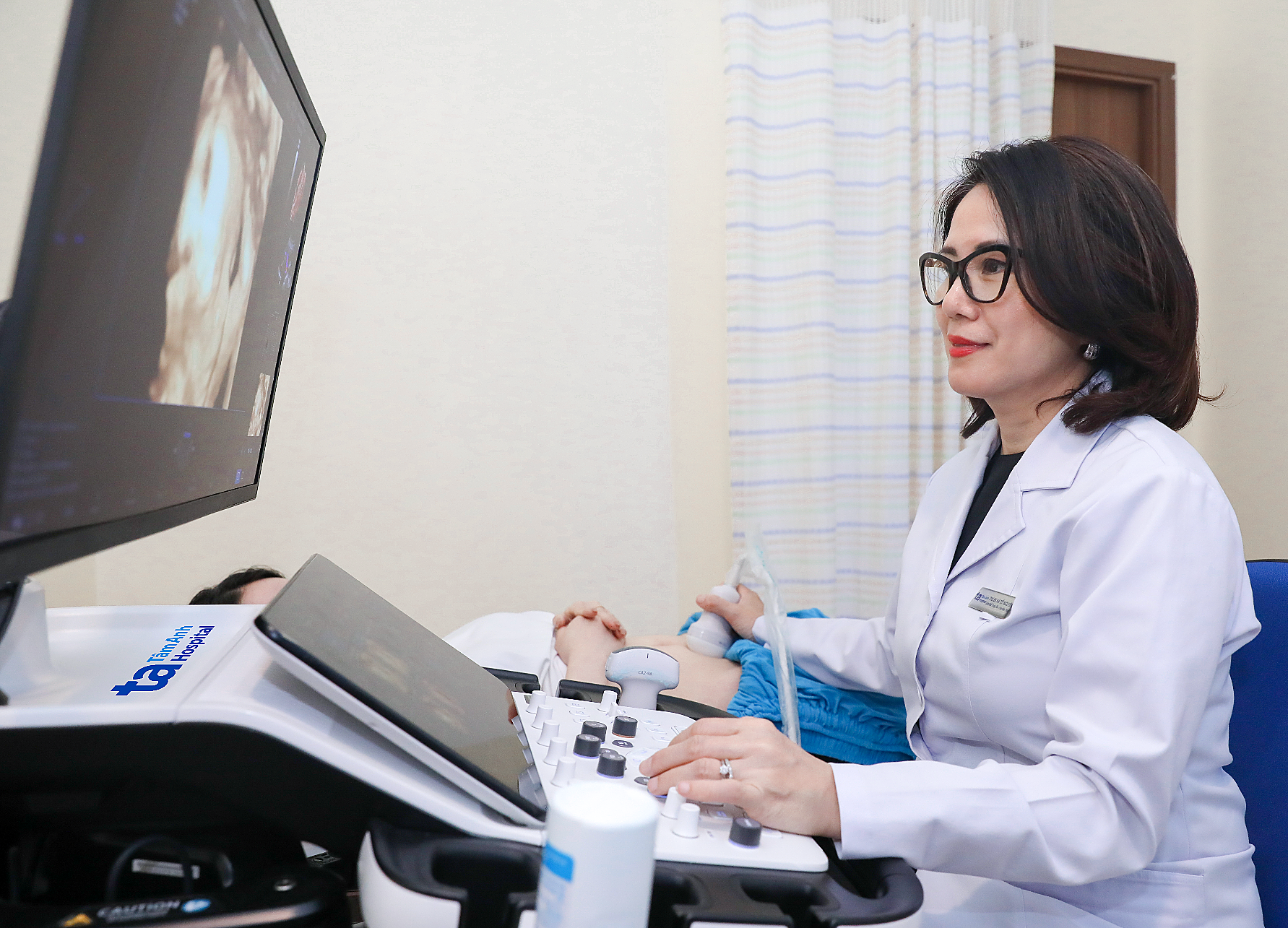 |
Regular ultrasounds check fetal development and health. *Illustration: Huyen Vu*
You should schedule an early follow-up appointment with an obstetrician to assess embryo development, re-evaluate the abruption, and check for abnormal signs like intermittent abdominal pain or vaginal bleeding. Based on your specific condition, the doctor will advise on nutrition, micronutrient supplementation, and suitable pregnancy monitoring.
Proper rest, avoiding strenuous activity, and regular follow-up appointments allow the gestational sac to implant firmly, reducing early pregnancy complication risks. If experiencing signs of fetal movement, threatened preterm birth, placenta previa, or a history of recurrent miscarriages, pregnant women must prioritize rest and avoid much activity.
Once the doctor confirms pregnancy stability, pregnant women can engage in gentle activities like slow, rhythmic walking for 10-15 minutes daily, without exertion. It is advisable to wait until the pregnancy stabilizes after three months before resuming exercise, but avoid aerobic activities. Aerobic exercises involving posture changes can cause falls, and some abdominal contracting movements increase abdominal pressure, potentially inducing preterm labor. Pregnant women experiencing increasing abdominal pain, fresh red bleeding, or blood clots require immediate hospital checks.
Dr. Do Dinh Dat, Specialist Level I
Obstetrics and Gynecology Center
Tam Anh General Hospital, Ho Chi Minh City
| Readers can submit questions about obstetrics and gynecology here for doctors to answer |