Combined chemoradiation therapy is a treatment approach for cancer that merges two distinct methods: chemotherapy and radiation therapy. This strategy is not universally applied but is reserved for specific situations when doctors determine that the combination will yield superior results compared to using either treatment alone. Doctor Ngo Truong Son, Deputy Head of the Oncology Department at Tam Anh Cau Giay General Clinic, emphasizes that these two therapies, with their differing mechanisms, effectively complement each other to boost overall treatment efficacy.
Chemotherapy involves systemic medication. These drugs travel through the bloodstream, affecting cancer cells across various parts of the body, not just the primary tumor site. It works to destroy cancer cells throughout the body, manage the risk of microscopic spread, and often helps shrink existing tumors.
In contrast, radiation therapy utilizes high-energy beams directed precisely at the tumor area to destroy the DNA of localized cancer cells. This method is particularly effective for regional control, aiming to shrink or eradicate tumors at a defined location.
Doctors consider concurrent chemoradiation therapy in several key scenarios:
When a tumor is localized but at risk of spreading: Even when a tumor is confined to a specific area, there can be minute cancer cells nearby that are undetectable through standard imaging. In such cases, chemotherapy helps control these dispersed cells, while radiation therapy targets and destroys the main localized tumor.
When cancer is locally advanced but has not metastasized distantly: For tumors that have significantly grown or invaded nearby tissues but have not spread to distant sites, concurrent chemoradiation therapy assists in local disease control, extends survival, and can offer curative treatment or enhance tumor management.
Replacing or supporting surgery in certain cases: For some cancer types, chemoradiation therapy can act as a primary curative treatment, particularly when surgical removal is challenging or offers limited benefit due to the tumor's location. Furthermore, it is often employed before or after surgery to lower the risk of recurrence.
According to Doctor Son, concurrent chemoradiation therapy is applicable for various cancers, including head and neck cancer, esophageal cancer, cervical cancer, and certain instances of locally advanced non-small cell lung cancer.
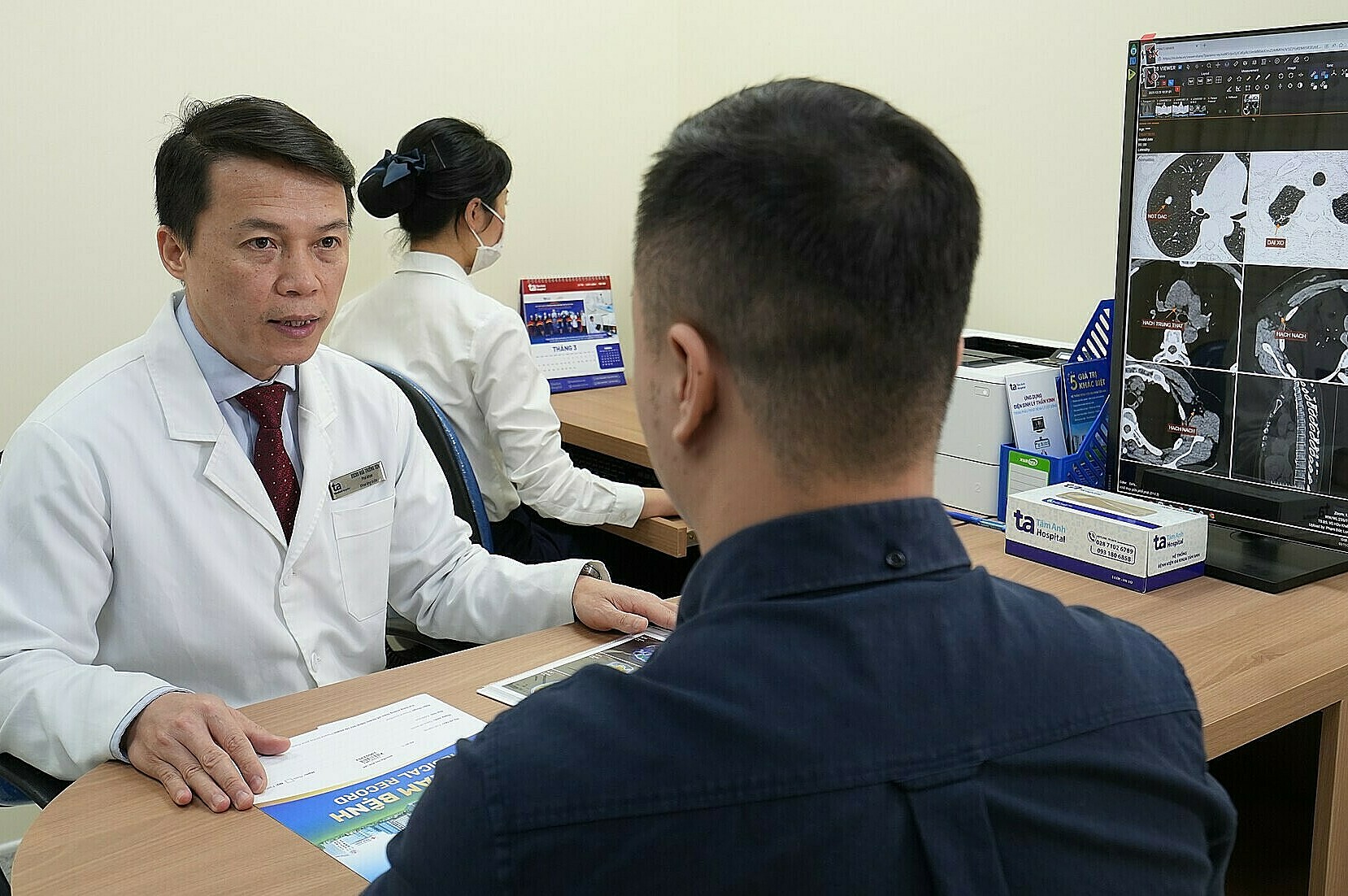 |
Doctor Son advises patients on cancer treatment protocols. *Photo: Tam Anh General Hospital*. |
This combined treatment approach is not suitable for all patients. Its indication depends on multiple factors: the specific type and stage of cancer, the treatment objectives (whether curative or palliative), and the patient's overall health. In many other situations, doctors may choose single-modality chemotherapy, single-modality radiation therapy, or sequential treatments rather than a simultaneous combination.
A potential drawback of concurrent chemoradiation therapy is an increased risk of side effects compared to either method used alone, as the body is simultaneously exposed to both medication and radiation. To ensure maximum patient safety, doctors closely monitor the patient's physical condition, clinical status, and laboratory test results before, during, and after treatment. This allows for timely adjustments to the protocol and prompt management of any adverse reactions.
By Hieu Nguyen
| Readers can submit questions about cancer here for doctors to answer. |