After nearly ten months of treatment and recovery, she can now manage basic daily activities, but still suffers from stiff hand joints, thinning hair, and a weakened physique.
Hoa developed a high fever in August 2025, shortly after moving to Gia Lai. Believing it was a common fever, she sought treatment near home, but her condition quickly worsened, with symptoms of vomiting, diarrhea, and difficulty breathing.
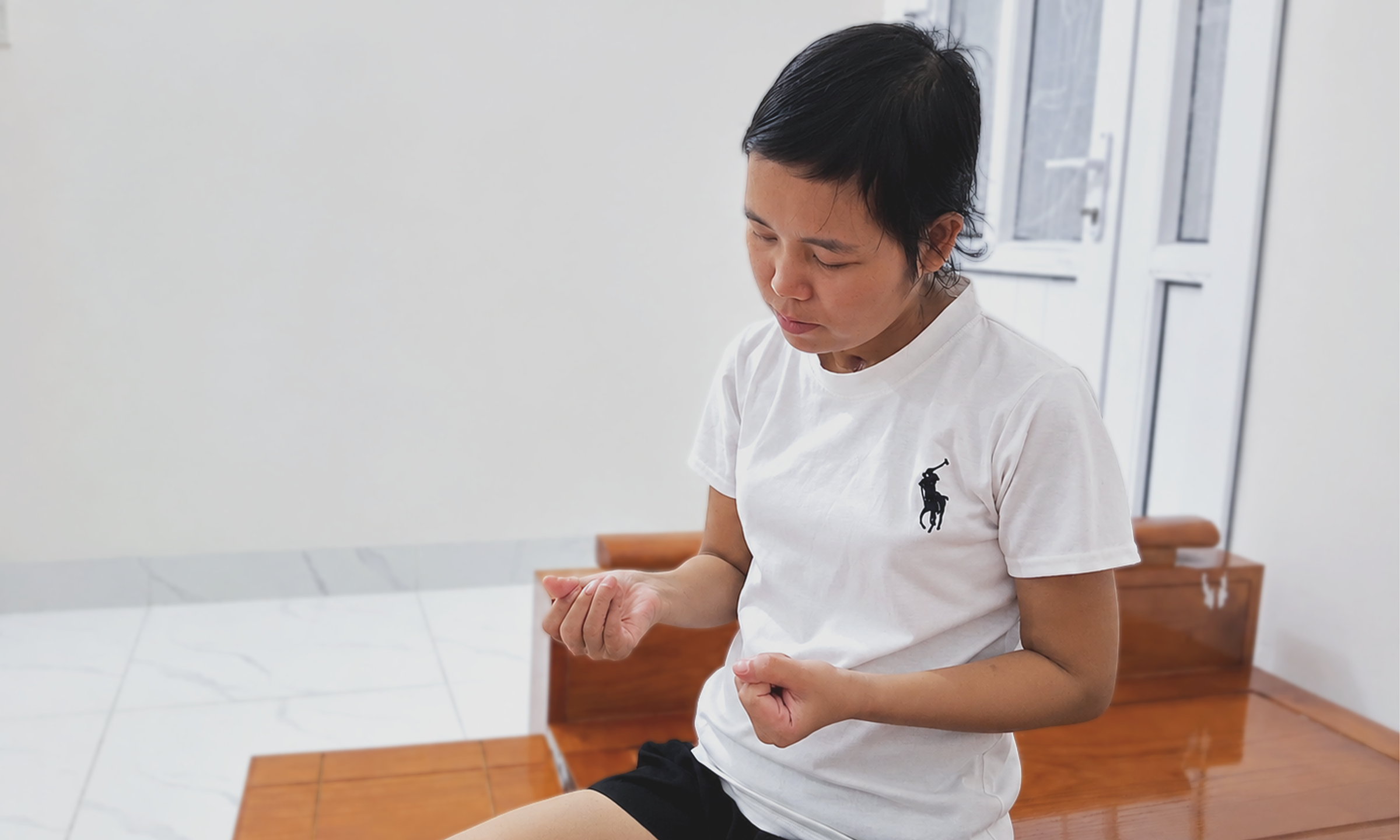 |
After ten months, Hoa’s once thick hair is now sparse, her stiff hands cannot clench, and a scar on her neck from a removed cannula is still visible. Photo: Family provided |
After ten months, Hoa’s once thick hair is now sparse, her stiff hands cannot clench, and a scar on her neck from a removed cannula is still visible. Photo: Family provided
By the time she was transferred to Tay Nguyen General Regional Hospital, she was in a coma, in shock, suffering from acute liver failure and a coagulation disorder. She was then moved to Military Hospital 175 in Ho Chi Minh City. Her liver, kidneys, and lungs were severely damaged, requiring mechanical ventilation, dialysis, plasma exchange, and ECMO intervention to support heart and lung function. During her hospital stay, she also developed multi-drug resistant bacterial superinfections and prolonged lung damage.
At that time, doctors assessed her condition as critical, with poor prognoses on multiple occasions. After three months of intensive care, treatment costs exceeded one billion Vietnam dong.
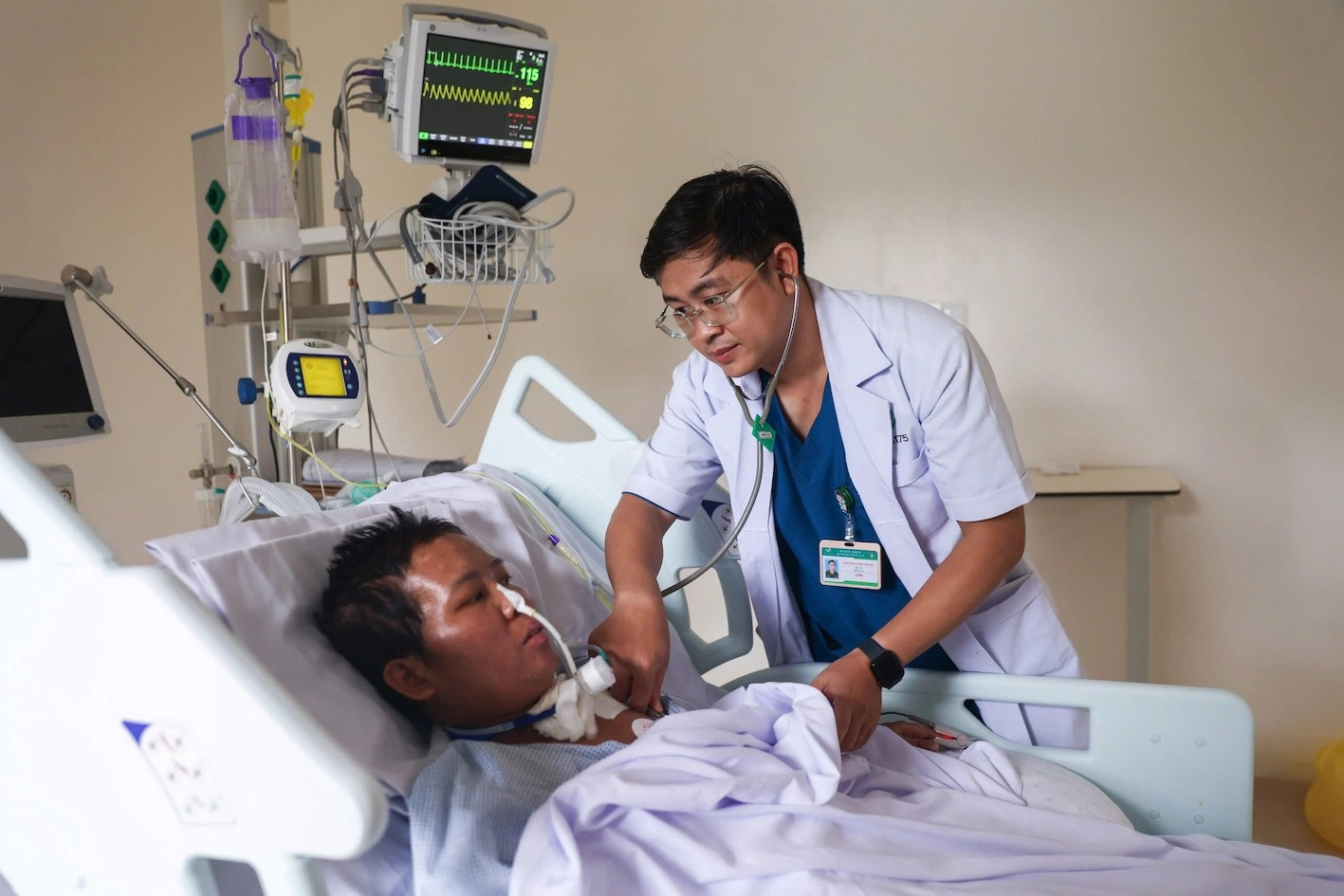 |
Hoa while in the intensive care unit at Military Hospital 175, Ho Chi Minh City. Photo: Quynh Tran |
Hoa while in the intensive care unit at Military Hospital 175, Ho Chi Minh City. Photo: Quynh Tran
In February, she was discharged and returned to her hometown of Nghe An for recuperation. However, she developed a tracheoesophageal fistula, causing choking, difficulty swallowing, and a weight loss of 10 kg. She was subsequently transferred for treatment from a local hospital to Hanoi. Throughout this period, her husband, Hieu, cared for his wife while managing treatment costs, often haunted by the fear that she would not survive.
From this case, Doctor of First Degree Specialization Le Thi Truc Phuong, Medical Specialist at the VNVC Vaccination System, noted that dengue fever is common in Vietnam and typically increases during hot, humid, and rainy conditions. In recent years, the outbreak cycle of dengue fever in Vietnam has tended to shorten from approximately five years to three to four years. In the first five months of 2026, the country recorded over 50,000 cases, a 2,5-fold increase compared to the same period last year.
According to doctor Phuong, not all cases become severe, but when the disease worsens, patients can experience dengue shock syndrome, multi-organ damage affecting the liver, kidneys, pleural effusion, and respiratory failure. Patients may require mechanical ventilation, dialysis, prolonged resuscitation, and face long-term complications. The cost of treating a critical patient in intensive care can reach billions of Vietnam dong, not including lost wages for family members or caregivers.
Even after surviving a critical phase, the recovery process can be lengthy, involving physical exhaustion, hair loss, joint pain, weight loss, or damage to certain organs, as Dinh Thi Hoa is currently experiencing.
Therefore, doctors advise individuals with sudden high fever to seek early medical attention. They should not self-administer intravenous fluids, self-medicate, or be complacent when the fever subsides, as this could be the point when the disease begins to worsen.
Warning signs of dengue fever requiring hospitalization include abdominal pain, frequent vomiting, lethargy, unusual bleeding, cold hands and feet, difficulty breathing, reduced urination, or extreme fatigue. Additionally, people should continue to practice familiar preventive measures such as eliminating mosquito larvae, avoiding mosquito bites, and removing stagnant water around their homes.
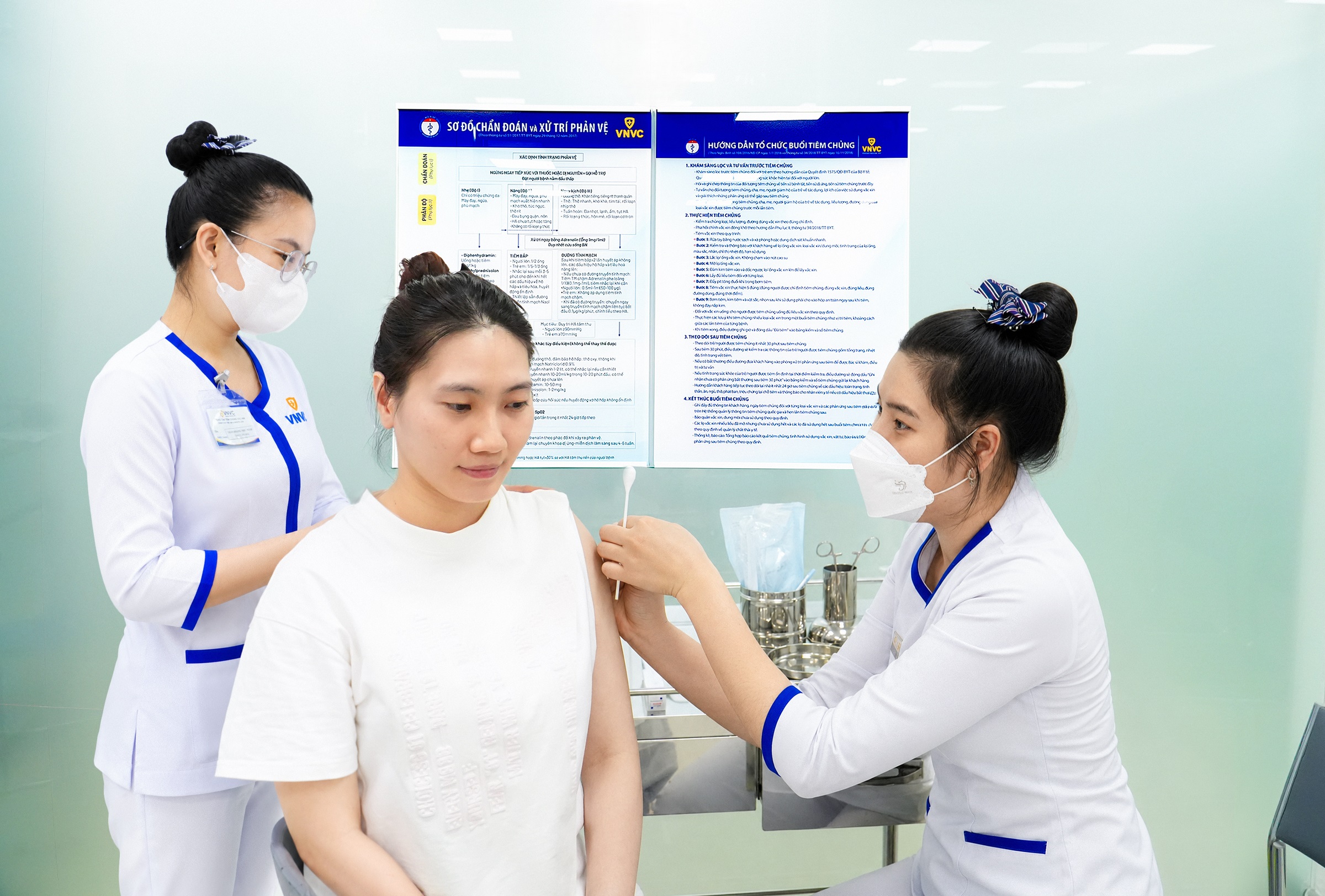 |
Qdenga vaccine helps reduce the risk of contracting, re-contracting, and being hospitalized due to dengue fever. Photo: Binh An |
Qdenga vaccine helps reduce the risk of contracting, re-contracting, and being hospitalized due to dengue fever. Photo: Binh An
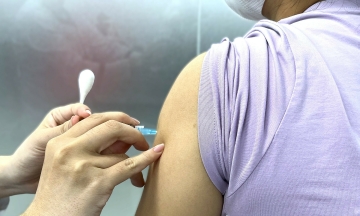
In addition to measures for controlling disease-carrying mosquitoes, Vietnam has now licensed Takeda's Qdenga vaccine for individuals aged four and older. It is administered in two doses, three months apart, to protect against all four serotypes of the disease.
Based on available data, the vaccine reduces the risk of contracting the disease by over 80% and the risk of hospitalization by over 90%. Individuals who have previously had dengue fever can still be reinfected, making proactive prevention essential.
To recover quickly and return to her preschool teaching job, Hoa actively practices breathing exercises, walking, and grasping objects every day. "I feel lucky to be alive and to be with my husband and children. But after all I've been through, I hope no one else has to suffer from this disease," she said.
Hoang Duong
high-risk occupations for dengue fever
Aedes mosquitoes live close to humans and bite during the day, so everyone is susceptible to dengue fever. Higher-risk groups include: people living or working in epidemic areas; individuals frequently in environments with many mosquitoes and stagnant water, such as construction workers, engineers, sanitation workers, farmers, tour guides, security guards, preschool teachers, students.