Immunotherapy works by restoring and activating the body's immune cells to combat cancer cells. This treatment represents a significant advancement in oncology; however, its application is limited to specific cases.
For breast cancer treatment, immunotherapy is typically used for patients with high-risk early-stage triple-negative breast cancer (tumors over 2 cm, with regional lymph node metastasis, corresponding to stage II to III) or those with advanced metastatic disease expressing PD-L1 (a transmembrane protein that regulates the immune system).
Triple-negative breast cancer (TNBC) is characterized by cancer cells that test negative for all three receptors: estrogen receptor (ER), progesterone receptor (PR), and human epidermal growth factor receptor 2 (HER2). This type of cancer is highly aggressive, grows rapidly, is prone to metastasis, and does not respond to conventional breast cancer treatments such as hormone therapy and HER2-targeted drugs.
 |
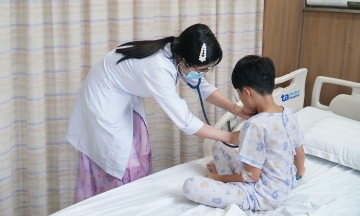
Doctor Dat consults a patient. Illustration: Tam Anh General Hospital. |
Doctor Dat consults a patient. Illustration: Tam Anh General Hospital.
Patients receive immunotherapy combined with chemotherapy before surgery to shrink tumors and eliminate microscopic cancer cells. Notably, this approach increases response rates, reduces the risk of recurrence, prolongs survival, and limits disease progression. Following surgery, patients continue immunotherapy for a full one-year cycle.
Immunotherapy does not harm healthy cells, resulting in fewer side effects compared to chemotherapy. However, an overstimulated immune system can attack healthy organs, causing inflammation. Common side effects include: thyroiditis, adrenal insufficiency, and pneumonia.
During treatment, patients require close monitoring of vital signs, regular blood tests to manage side effects, and imaging diagnostics to assess treatment response.
You should take your mother to an oncologist for a thorough assessment of her specific stage and related factors, enabling the doctor to recommend an appropriate treatment plan.
Doctor Le Tan Dat
Deputy Director of the Oncology Center
Tam Anh General Hospital Ho Chi Minh City
Readers can submit questions about cancer here for a doctor's response.