Eng English
China 中国人

Eng English
China 中国人
  • News
  • World
  • Business
  • Entertainment
  • Sports
  • Law
  • Education
  • Health
  • Lifestyle
  • Travel
  • Science
  • Digital
  • Automobiles
  • Trở lại Thể thao
  • Health
Sunday, 14/6/2026 | 12:01 GMT+7

When is hysterosalpingography needed to identify causes of infertility?

Hysterosalpingography is often indicated when women experience long-term infertility, recurrent miscarriages, or are suspected of having abnormalities in the uterine cavity or fallopian tubes.

Master, Doctor Nguyen Xuan Anh Duy, from the Assisted Reproductive Unit at Tam Anh Cau Giay General Clinic, explains that hysterosalpingography (HSG) is an X-ray technique. It involves injecting a contrast dye into the uterine cavity to examine the uterus's shape and the patency of the fallopian tubes. This procedure helps diagnose infertility, uterine malformations, and blocked fallopian tubes.

One common scenario for HSG is when couples have regular, unprotected intercourse for one year (or six months for women over 35) without conceiving. In such cases, doctors assess whether blocked fallopian tubes are preventing sperm from reaching the egg for natural conception.

In assisted reproductive technology, HSG is a crucial diagnostic step. It helps determine subsequent treatment plans, such as natural cycle monitoring, intrauterine insemination (IUI), or in vitro fertilization (IVF).

Doctors also recommend HSG when they suspect uterine cavity abnormalities, including uterine adhesions, polyps, submucosal fibroids, uterine malformations, or scarring from previous infections, abortions, or surgeries. Additionally, it is considered for women with recurrent miscarriages to identify structural issues affecting embryo implantation and pregnancy maintenance.

Patients who have undergone fallopian tube surgery, tubal ligation, or recanalization procedures may also require a follow-up HSG to evaluate the outcomes.
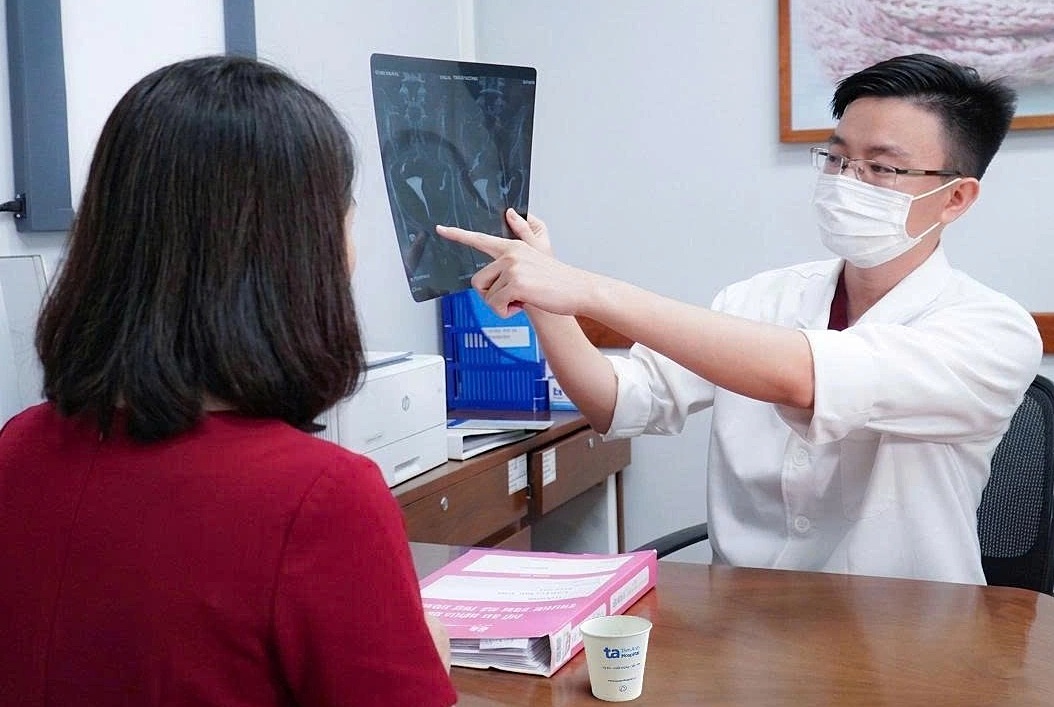
A doctor consults with a patient after hysterosalpingography. *Photo: Tam Anh Cau Giay General Clinic*

However, HSG is not indicated for all women experiencing infertility. Doctors typically postpone the procedure if a patient has ongoing gynecological infections, pelvic inflammatory disease, untreated sexually transmitted infections, abnormal bleeding, or suspected pregnancy. HSG is a minimally invasive procedure that could increase infection risk or cause complications if performed at an inappropriate time.

The most suitable time for HSG is usually one to three days after menstruation ends, before ovulation, and when pregnancy is unlikely in that cycle. Performing the procedure at the correct time ensures clearer images and reduces the risk of complications if the patient is unknowingly pregnant.

Before the procedure, patients are usually advised to abstain from intercourse from the start of their menstrual cycle until the HSG. In some cases, doctors may prescribe pain relievers or prophylactic antibiotics. The procedure itself causes only mild discomfort or cramping during contrast dye injection, especially if the fallopian tubes spasm or are blocked; this sensation typically subsides quickly. After the HSG, patients might experience mild abdominal pain or light vaginal discharge or bleeding for one or two days.

According to Doctor Anh Duy, in addition to conventional HSG, hysterocontrast sonography (HyFoSy), which uses ultrasound with contrast gel, can be performed to detect signs of fallopian tube blockage with comparable effectiveness.

For couples who have been trying to conceive for a long time, have a history of pelvic infections, gynecological surgery, or recurrent miscarriages, timely examination of the uterine cavity and fallopian tubes can help doctors quickly identify abnormalities and recommend appropriate treatment plans.

Van Anh
By VnExpress: https://vnexpress.net/khi-nao-can-chup-tu-cung-voi-trung-tim-nguyen-nhan-hiem-muon-5085437.html
Tags: infertility fallopian tubes uterus infertility diagnosis

News in the same category

4 things your breath reveals about health

4 things your breath reveals about health

Breathing through your nose helps protect the respiratory tract, abnormal breathing patterns can be a sign of underlying health conditions, while regular exercise contributes to improving lung function.

What happens when you nap for 20 minutes daily?

What happens when you nap for 20 minutes daily?

Napping for around 20 minutes daily can boost alertness, improve memory, enhance work performance, and support brain health.

How frequent bubble tea consumption harms kidneys

How frequent bubble tea consumption harms kidneys

Frequent and excessive bubble tea consumption can increase the risk of kidney stone formation, chronic kidney failure, and concentrated urine.

How stress from watching football impacts the heart

How stress from watching football impacts the heart

Excitement or discomfort while watching football can increase the risk of heart rhythm disorders, potentially triggering a heart attack.

Three ways to enhance iron absorption through diet

Three ways to enhance iron absorption through diet

Cooking vegetables to al dente to preserve vitamin C, along with incorporating beta-carotene-rich carrots and pumpkin, can significantly boost the body's iron absorption.

Removing a vascular malformation from a man's head

Removing a vascular malformation from a man's head

A 36-year-old patient's arteriovenous malformation behind his ear, which connected multiple blood vessels and carried a risk of rupture, was successfully surgically removed by doctors.

5 morning habits to reduce Alzheimer's risk

5 morning habits to reduce Alzheimer's risk

Incorporating eggs and coffee into breakfast, combined with crossword puzzles and morning walks, can support brain health and help reduce the risk of cognitive decline.

What nutrient deficiencies does significant hair loss warn of?

What nutrient deficiencies does significant hair loss warn of?

Iron, vitamin D, vitamin B12, zinc, and protein deficiencies can affect the hair follicle growth cycle, making hair weaker and more prone to breakage and loss.

5 eating and playing habits that help children develop their brains

5 eating and playing habits that help children develop their brains

Staying hydrated, engaging in puzzle games, outdoor activities, and getting enough sleep can help children maintain focus, memory, and learn more effectively.

Mistakes that darken melasma and freckles

Mistakes that darken melasma and freckles

Improper sun protection, frequent skin whitening, and overlooking internal factors can lead to melasma and freckles becoming darker and more challenging to treat.

Eng English
China 中国人
  • News
  • World
  • Business
  • Entertainment
  • Sports
  • Law
  • Education
  • Health
  • Lifestyle
  • Travel
  • Science
  • Digital
  • Automobiles
FPT Tower, 10 Pham Van Bach Street, Dich Vong Ward,
Cau Giay District, Hanoi, Vietnam
Email: contacts@vnportal.net
Tel: 028 7300 9999 - Ext 8556
Advertise with us: 090 293 9644
Register
© Copyright 2026 vnnow.net. All rights reserved.
Terms of use Privacy policy Cookies