Answer:
The back of the knee, located between the hamstring muscles and the calf, is a joint that flexes and extends. Pain in this area often indicates injury to muscles, tendons, ligaments, or the knee joint itself. This pain can manifest in various ways, from a dull ache or sharp pain to tightness or pressure behind the knee, often worsening with movement, bending the leg, or standing after prolonged sitting.
Posterior knee pain is common across all age groups and may subside with rest. However, you should seek medical attention if you experience any of the following symptoms:
If you experience pain following an injury such as an accident, fall, severe impact, or sports activity, seek immediate medical evaluation. This helps identify or rule out damage to tendons, ligaments, or menisci, ensuring effective treatment.
Consult a doctor if pain persists for several days without improvement, even after resting and applying home care following the RICE principle (rest, ice, compression, and elevation).
Swelling, a palpable lump, or deformity behind the knee could indicate a Baker's cyst or joint effusion. If swelling accompanies a fever or if the area behind the knee is hot and red, it may signal an infection.
Pain radiating down the calf accompanied by swelling, especially if it occurs in only one knee, could be a symptom of deep vein thrombosis, a serious condition requiring immediate medical attention.
Numbness, weakness, or reduced sensation in the leg may indicate nerve compression or a circulatory disorder.
Reduced mobility or a limited range of motion in the knee joint, making walking difficult and impacting daily activities or work, warrants a medical consultation.
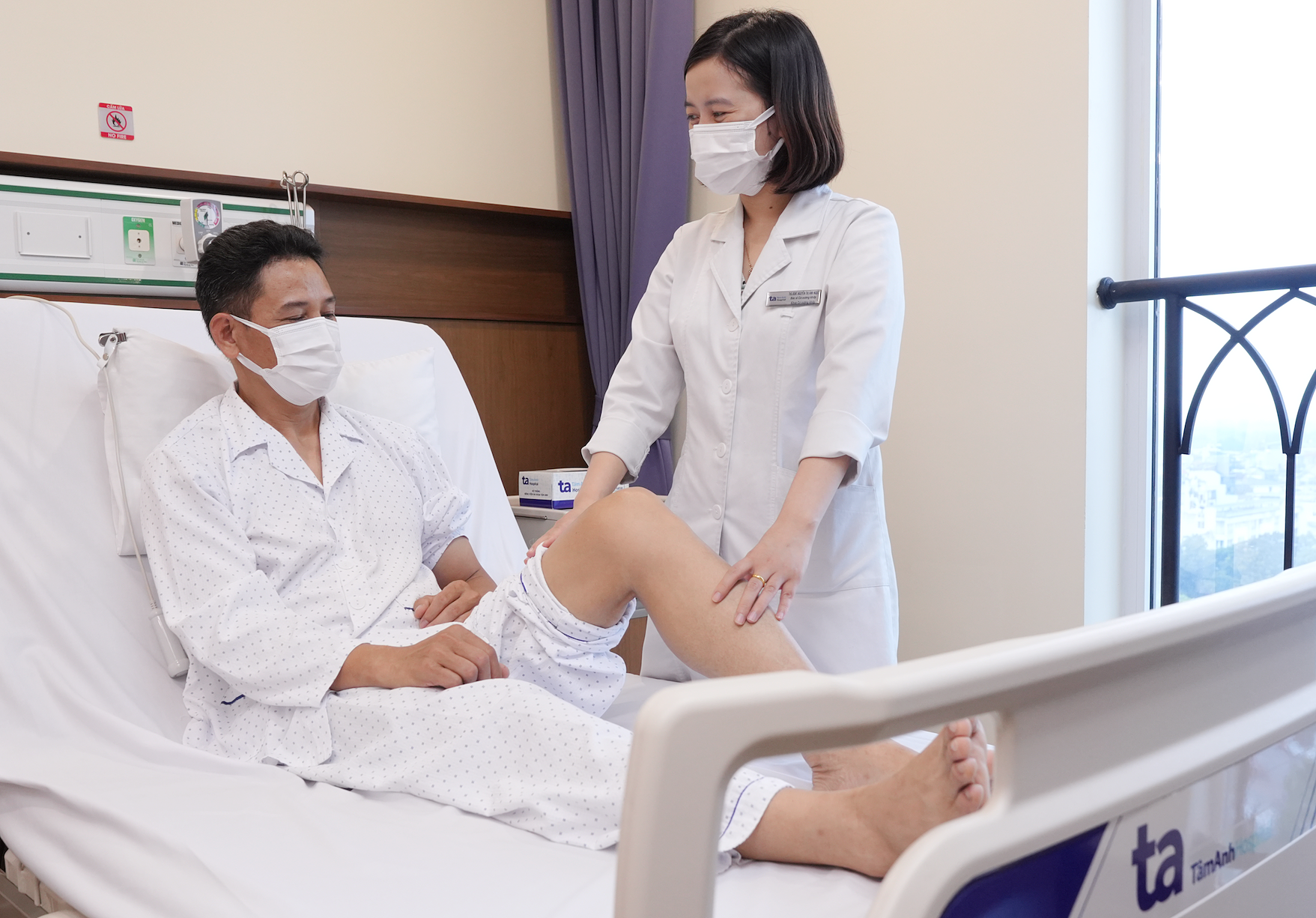 |
A doctor examines a patient's knee. Illustration: Tam Anh General Hospital
Given that your posterior knee pain has lasted over one week, a prolonged duration, you should seek medical evaluation. The doctor will inquire about your injury history, perform a clinical examination, and may order additional diagnostic tests such as X-rays, ultrasound, or magnetic resonance imaging (MRI) to determine the cause and recommend a treatment plan. If a serious condition like deep vein thrombosis is detected, immediate emergency care will be provided.
For musculoskeletal conditions and common injuries, knee pain often improves with a combined treatment approach including physical therapy, medical management with pain relievers and anti-inflammatory drugs, and intra-articular injections.
If conservative medical treatment is ineffective, certain conditions, such as ligament tears or meniscal tears, may require surgery. You should visit a multi-specialty hospital for a thorough examination and screening to pinpoint the cause of your posterior knee pain and receive effective treatment.
Master of Science, Doctor Pham Thu Phuong
Deputy Head, Department of Musculoskeletal Medicine
Tam Anh Cau Giay General Clinic
| Readers can submit questions about musculoskeletal conditions here for doctors to answer. |