Eng English
China 中国人

Eng English
China 中国人
  • News
  • World
  • Business
  • Entertainment
  • Sports
  • Law
  • Education
  • Health
  • Lifestyle
  • Travel
  • Science
  • Digital
  • Automobiles
  • Trở lại Thể thao
  • Health
Sunday, 31/5/2026 | 08:02 GMT+7

Who can receive lung cancer radiotherapy?

My grandfather has stage two lung cancer, with a difficult-to-reach tumor. He is elderly and does not wish to undergo surgery. Can he receive radiotherapy? (Minh Tuyet, 46 years old)

Radiotherapy is a viable option for lung cancer patients across various stages, particularly for early-stage cases (one or two) unsuitable for surgery, or when combined with chemotherapy in advanced stages. For patients with stage two lung cancer, like your grandfather, who cannot undergo surgery due to age or tumor location, stereotactic body radiotherapy (SBRT) is often recommended. For stage three, patients typically receive concurrent chemoradiation. In stage 4, radiotherapy aims to alleviate symptoms.

You should take your grandfather to the hospital for an examination. Doctors can order tests, including computed tomography (CT) scans, magnetic resonance imaging (MRI), and positron emission tomography (PET/CT) scans, to determine the tumor's stage and exact location. This will help them devise an appropriate treatment plan and recommend the most suitable method.

Radiotherapy is a local cancer treatment that uses high-energy rays, typically X-rays, to destroy cancer cells or halt their progression. Radiation can be delivered externally (external beam radiation therapy) or placed directly near the tumor inside the body (brachytherapy). This method can be applied before surgery to shrink tumors, or after surgery to eliminate any remaining cancer cells. In some cases, external beam radiation therapy serves as the primary treatment for lung cancer.
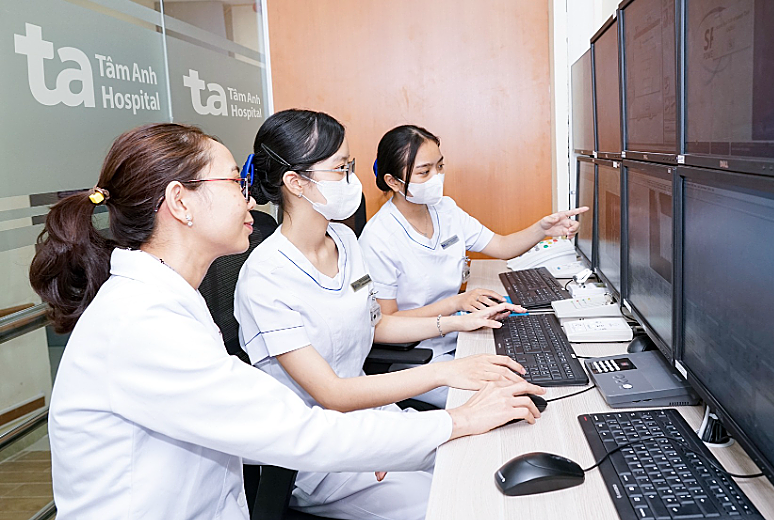
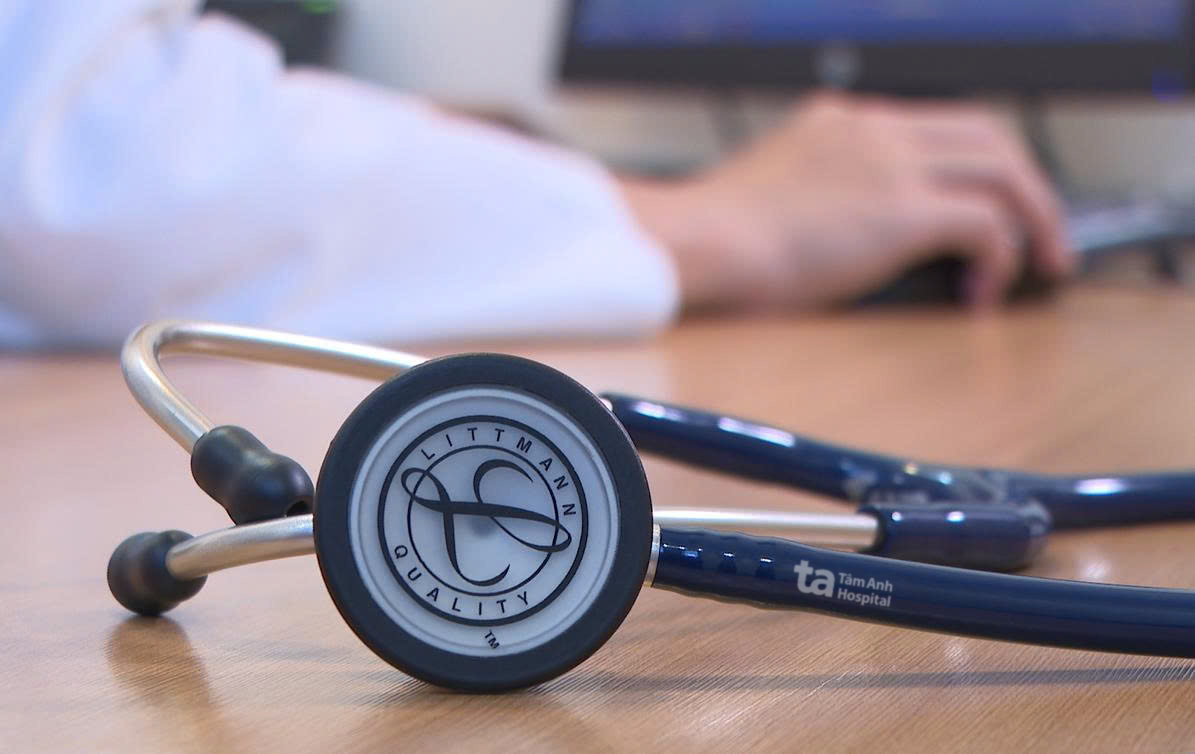
Doctor Dang (left) monitors a patient undergoing radiotherapy via a computer system. Photo: Tam Anh General Hospital

Several radiotherapy techniques are used to treat lung cancer, including stereotactic body radiotherapy (SBRT), intensity-modulated radiation therapy (IMRT), volumetric modulated arc therapy (VMAT), three-dimensional conformal radiation therapy (3D-CRT), and prophylactic cranial irradiation (PCI).

Patients undergoing radiotherapy for lung cancer may experience side effects such as redness or burning in the treated area, difficulty swallowing, pain when eating, fatigue, loss of appetite, coughing, or shortness of breath if radiation pneumonitis occurs.

Patients receiving radiotherapy should consume soft, easily digestible foods and drink plenty of water. Wearing loose, soft clothing can help reduce friction on the irradiated skin. If a patient develops a fever, experiences severe pain, or has difficulty breathing, they should revisit the doctor or inform their treating physician. Do not self-medicate or apply topical treatments without consulting a doctor. Patients need regular follow-up appointments and close monitoring of their health as advised.

Master, Doctor Phan Thi Hong Dang

Department of Radiotherapy, Oncology Center

Tam Anh General Hospital, Ho Chi Minh City

Readers can submit questions about cancer here for doctors to answer
By VnExpress: https://vnexpress.net/ai-co-the-xa-tri-ung-thu-phoi-5079968.html
Tags: radiotherapy lung cancer

News in the same category

Things to avoid after eardrum repair

Things to avoid after eardrum repair

Individuals who have recently undergone eardrum repair should avoid flying, strenuous exercise, or swimming, as these activities can increase pressure on the ear and hinder the recovery process.

Nutritional mistakes that hinder children's development

Nutritional mistakes that hinder children's development

Skipping breakfast, frequently consuming fast food, and insufficient water intake are common errors that can impede a child's physical growth.

Can individuals with high blood pressure go trekking?

Can individuals with high blood pressure go trekking?

I have high blood pressure and am not currently taking medication; is trekking safe for me? (Thuan Hoa, Hai Phong)

What to eat regularly for a long life?

What to eat regularly for a long life?

Whole grains, cruciferous vegetables, and fatty fish are rich in fiber and omega-3, which help reduce inflammation, stabilize blood sugar, and improve joint health in old age.

3 facial signs that may warn of an unhealthy heart

3 facial signs that may warn of an unhealthy heart

Three facial signs warning of cardiovascular disease risk are a diagonal crease on the earlobe, a vertical crease between the eyebrows, and a horizontal crease at the nasal root.

Benefits of eating chia seeds every morning

Benefits of eating chia seeds every morning

Consuming chia seeds in the morning can help increase feelings of fullness, support digestion, supplement omega-3, and provide energy for daily activities.

10 common lifestyle habits silently damaging kidneys

10 common lifestyle habits silently damaging kidneys

To help people proactively prevent chronic kidney disease, specialists are warning about 10 harmful daily habits that can lead to kidney failure.

Doctors divide brain-dead patient's liver to 'double life'

Doctors divide brain-dead patient's liver to 'double life'

From the liver of a 48-year-old brain-dead man, doctors separated it into two parts for transplantation to two patients, including a one-year-old baby.

How often should couples have sex each week?

How often should couples have sex each week?

I am 26 years old and about to get married. I have been advised not to have sex too frequently, as it might lead to long-term weakness. For newlywed couples, how many times a week is considered appropriate? (Thuc, Dong Nai)

Doctor warns of mistakes that silently weaken kidneys

Doctor warns of mistakes that silently weaken kidneys

Self-medicating with painkillers or prolonged use of dietary supplements are common mistakes that can silently weaken kidneys over time.

Eng English
China 中国人
  • News
  • World
  • Business
  • Entertainment
  • Sports
  • Law
  • Education
  • Health
  • Lifestyle
  • Travel
  • Science
  • Digital
  • Automobiles
FPT Tower, 10 Pham Van Bach Street, Dich Vong Ward,
Cau Giay District, Hanoi, Vietnam
Email: contacts@vnportal.net
Tel: 028 7300 9999 - Ext 8556
Advertise with us: 090 293 9644
Register
© Copyright 2026 vnnow.net. All rights reserved.
Terms of use Privacy policy Cookies