This move follows WHO's official declaration of the outbreak of this virus strain, for which there is currently no approved vaccine or specific treatment, as a public health emergency of international concern, Reuters reported on 22/5.
"We are adjusting the risk assessment for the outbreak to 'very high' at the national level, 'high' at the regional level, and maintaining it at 'low' globally," WHO Director-General Tedros Adhanom Ghebreyesus told reporters.
Tedros stated that Congo has recorded 82 confirmed cases and 7 confirmed deaths, in addition to 177 suspected deaths and nearly 750 other suspected infections. These figures are expected to rise as epidemiological surveillance expands.
Experts have identified the Bundibugyo virus strain, responsible for this outbreak, as rare. It transmits through direct contact with bodily fluids of infected individuals or contaminated items. This virus has no vaccine or specific treatment, and its fatality rate ranges from 25% to 40%.
Meanwhile, the disease situation in neighboring Uganda is "under control," with two confirmed cases identified as individuals returning from the affected region in Congo. One of these cases resulted in death.
"The potential for rapid spread of this virus strain is very high, extremely high, and that has completely changed the landscape of the battle against the epidemic," said Abdirahman Mahamud, WHO Director of Health Emergencies Alert and Response.
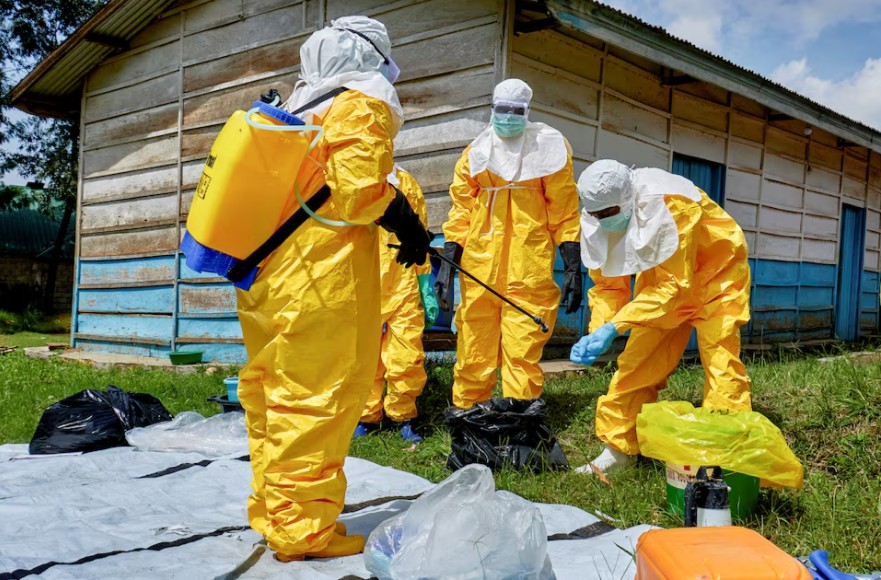 |
Red Cross staff disinfect after handling the body of an Ebola victim at a medical center in Bunia city, Ituri province, Congo, on 21/5. Photo: Reuters |
Red Cross staff disinfect after handling the body of an Ebola victim at a medical center in Bunia city, Ituri province, Congo, on 21/5. Photo: Reuters
A WHO representative indicated that timely interventions implemented in Uganda, including aggressive contact tracing and the cancellation of a large gathering event, have been effective in preventing the virus's transmission chain. Regarding international cases, a US citizen working in Congo was confirmed to be infected with the virus and transferred to Germany for specialized treatment. Another US citizen, who had high-risk contact with the patient, was also moved to the Czech Republic for medical observation.
In an effort to find urgent solutions, WHO Chief Scientist Sylvie Briand stated that an antiviral treatment named Obeldesivir could be used for individuals exposed to Ebola patients to prevent the onset of the disease.
Obeldesivir is an oral antiviral drug for Covid-19 treatment currently in the trial phase by pharmaceutical company Gilead Sciences. "This is a promising treatment, but its deployment must be carried out under an extremely strict control process," Briand emphasized.
WHO assesses that the epidemiological surveillance system has shown initial signs of effectiveness in detecting new cases. However, the agency is racing against time because the outbreak may have started two months ago but was only officially declared last week. "We are working urgently to truly control this outbreak. As the virus continues to spread, the number of cases will certainly increase for some time," said Anne Ancia, WHO representative in Congo.
The Ebola virus is believed to transmit from its natural hosts, fruit bats, to humans. After an incubation period of two to 21 days, patients suddenly develop symptoms such as fever, malaise, and muscle pain, rapidly progressing to vomiting, diarrhea, liver failure, and kidney failure. The virus spreads widely in the community through direct contact (broken skin, mucous membranes) with the blood and bodily fluids of infected individuals, or through burial rituals involving direct contact with corpses.
The Vietnam Ministry of Health on 22/5 warned the country to prepare for an Ebola response, given that the actual number of cases in Congo and Uganda is higher than reported. Previously, the agency also advised citizens not to panic but to self-monitor their health for 21 days if returning from an affected area.
To date, Vietnam has not recorded any Ebola cases.