Many couples carry recessive genes without symptoms, risking disease transmission to their children. Genetic screening for recessive genes and sex chromosome abnormalities during in vitro fertilization (IVF) helps identify and select embryos free of disease-causing genes and chromosomal anomalies for uterine transfer. This process increases a couple's chances of having a healthy child and reduces the risk of miscarriage and birth defects.
If the husband has no sperm or weak sperm, doctors typically order a karyotype test and a specific gene analysis on the Y sex chromosome, which regulates sperm production. This helps physicians detect a significant number of conditions, such as Klinefelter syndrome or balanced translocations, that directly affect spermatogenesis.
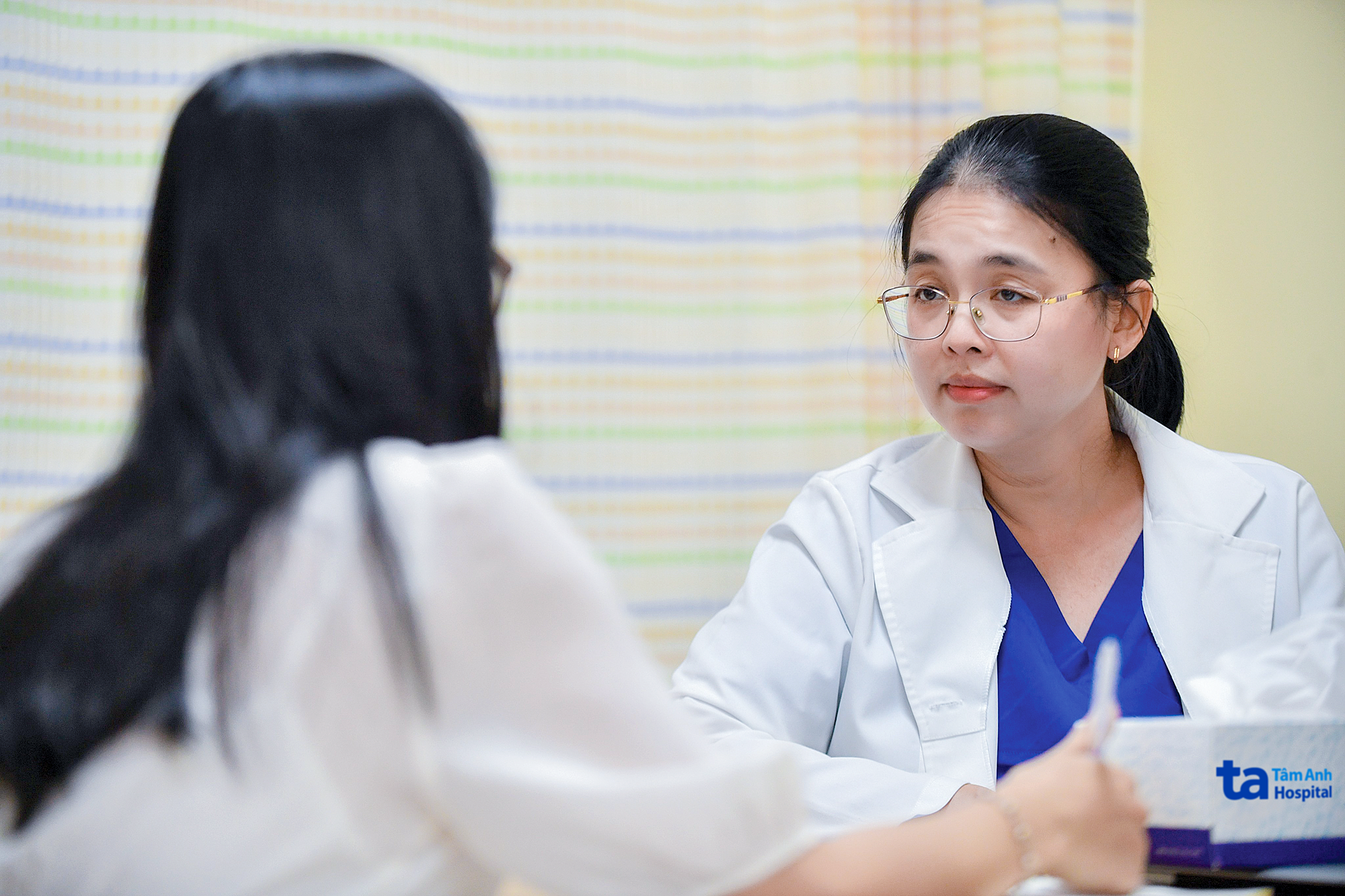 |
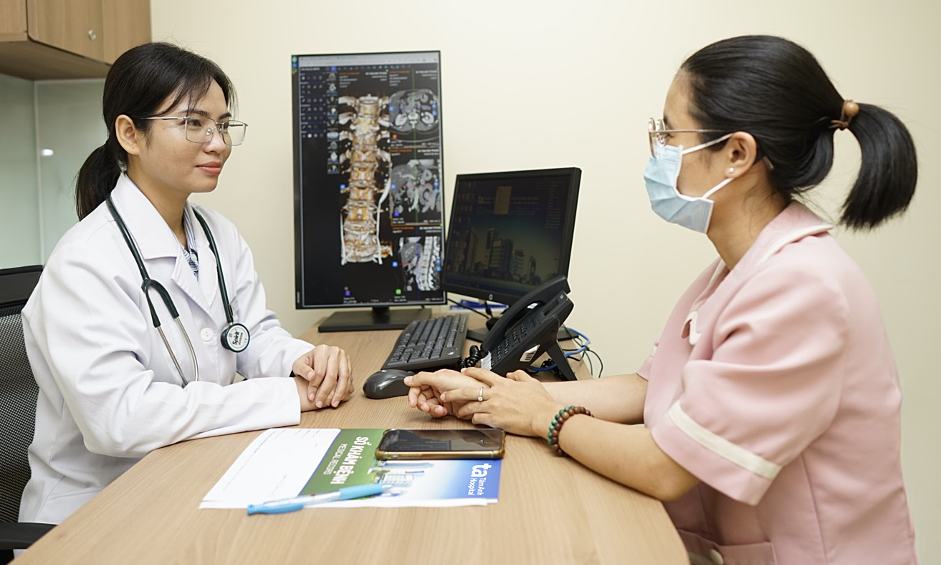
Master of Science, Doctor Giang Huynh Nhu provides infertility treatment consultation to a female patient. Photo illustration: IVF Tam Anh |
Women experiencing premature ovarian failure, multiple failed embryo transfers, or recurrent miscarriages may also carry chromosomal abnormalities.
Genetic screening can detect other prevalent conditions. At IVF Tam Anh TP HCM, day-5 embryo culture technology and preimplantation genetic testing (PGT) biopsy techniques screen for over 7,000 genetic conditions that cause birth defects and disabilities. These include Thalassemia, spinal muscular atrophy, hereditary polycystic kidney disease, and cystic fibrosis.
Embryologists obtain a cell sample from the embryo for genetic analysis before uterine transfer. Preimplantation genetic testing currently comprises three main types: PGT-A detects chromosomal number abnormalities in embryos, PGT-SR identifies chromosomal structural abnormalities, and PGT-M screens for disease-causing single-gene disorders.
Given your history of two miscarriages, you should consult a reproductive specialist for early genetic screening to determine the underlying cause. Depending on the results, your doctor may recommend IVF combined with embryo screening. Testing options range from screening for a few dozen common diseases to comprehensive whole-genome sequencing.
Master of Science, Doctor Giang Huynh Nhu
Director of the Reproductive Support Center
Tam Anh General Hospital System, TP HCM