The shoulder's rotator cuff is a complex of 4 muscles: the subscapularis, supraspinatus, infraspinatus, and teres minor. These muscles work in harmony to stabilize the shoulder joint, prevent dislocation, and enable movements such as rotation, elevation, and reaching. A rotator cuff tear occurs when any muscle in this group is partially torn or completely ruptured. Causes include the body's natural aging process (degenerative tears), significant impact, or the accumulation of micro-traumas over time.
Master of Science, Doctor, Level I Specialist Dao Duy An Duy from the Orthopedic Trauma Center, Tam Anh General Hospital, TP HCM, states that rotator cuff tears are common, but their self-healing rate is very low. Without medical intervention, the tear will progressively widen, potentially leading to impaired shoulder function. Patients also face an increased risk of early shoulder osteoarthritis due to growing joint instability.
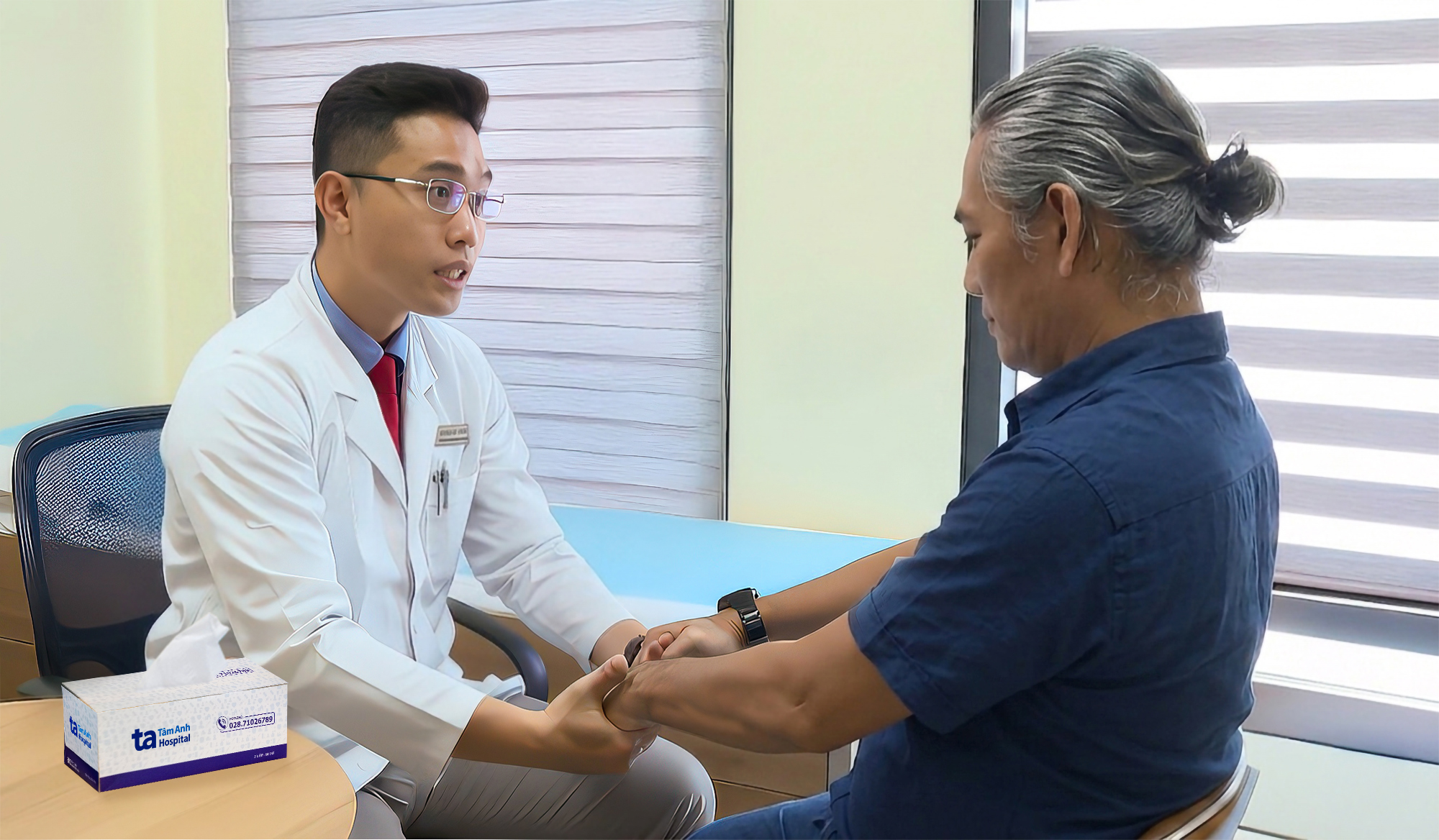 |
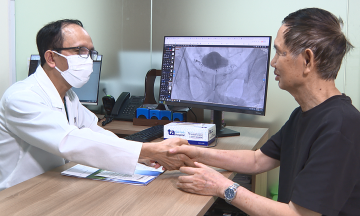
Doctor Duy assesses a patient's recovery after a rotator cuff tear. *Photo: Tam Anh General Hospital*
Treatment options, either conservative or surgical, are determined by a doctor based on the injury's extent, the patient's activity level, and other factors.
For minor tears, cases without a clear history of trauma, or those with low activity demands, patients may receive oral or injectable medication and physical therapy to alleviate pain and improve shoulder function. To accelerate recovery, patients should combine this with proper home care, including cold compresses, adequate rest, and limiting strenuous shoulder movements such as overhead arm raises or heavy lifting. If necessary, a doctor may advise the patient to wear a shoulder brace or use a sling to allow the injury time to heal.
Surgery is indicated for rotator cuff tears caused by trauma in individuals with previously normal shoulder function, tears 3 cm or larger, cases unresponsive to conservative treatment, and those significantly impacting quality of life.
Shoulder arthroscopy is the technique used for most rotator cuff injuries. Doctors access the surgical site through small incisions in the skin instead of open surgery, which helps limit blood loss, preserve healthy tissue, and reduce infection risk. This method can address deep-seated injuries and overcome the deltoid muscle atrophy (the muscle covering the outside of the rotator cuff) associated with traditional open surgery.
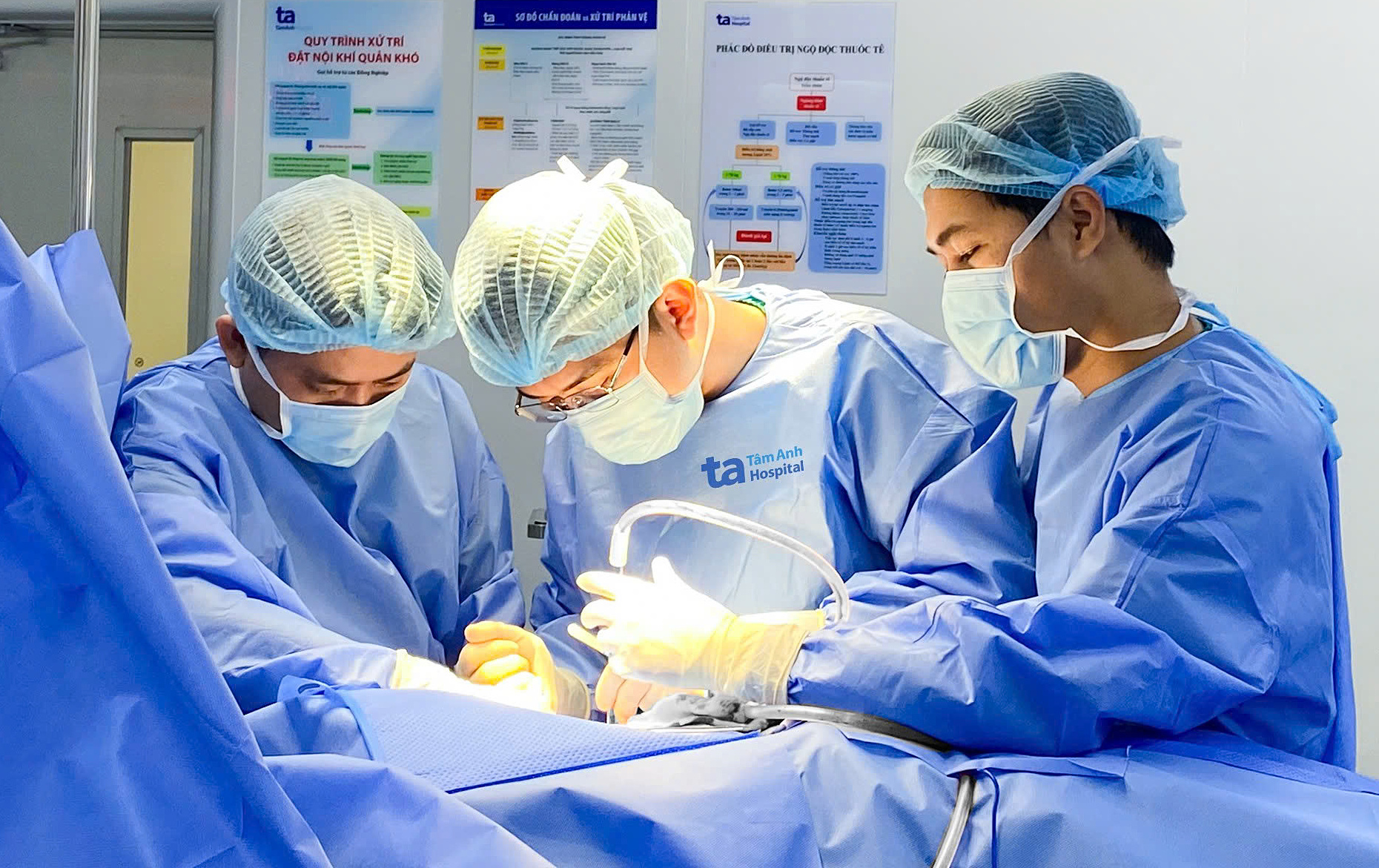 |
Doctor Duy (center) during a shoulder surgery. *Photo: Tam Anh General Hospital*
Rotator cuff tears often progress silently, with many cases exhibiting no symptoms in the initial stages. This is because the muscles and tendons remain strong enough to compensate for minor injuries, thus not significantly affecting mobility. However, as damage accumulates over time, symptoms begin to appear, including pain and a grinding sound beneath the acromion when moving the humeral head. Shoulder and arm movement become restricted, and the shoulder area may feel noticeably weak.
Doctor Duy advises that upon noticing these signs, patients should seek early medical examination for an accurate diagnosis and timely treatment to prevent dangerous complications.
Phi Hong