Answer:
Pulmonary tuberculosis (TB) is an infectious disease transmitted through the air. Infected individuals spread Mycobacterium tuberculosis bacteria via airborne particles when coughing, sneezing, or even talking. These bacteria-laden aerosols can remain suspended in the air for a period, particularly in enclosed environments.
Within a family setting, members frequently have close and prolonged contact, sharing living spaces that are often relatively confined. If someone has TB but remains undiagnosed or untreated, they can become a source of infection for relatives without exhibiting any clear signs. The risk of transmission increases in cramped, crowded, or poorly ventilated homes.
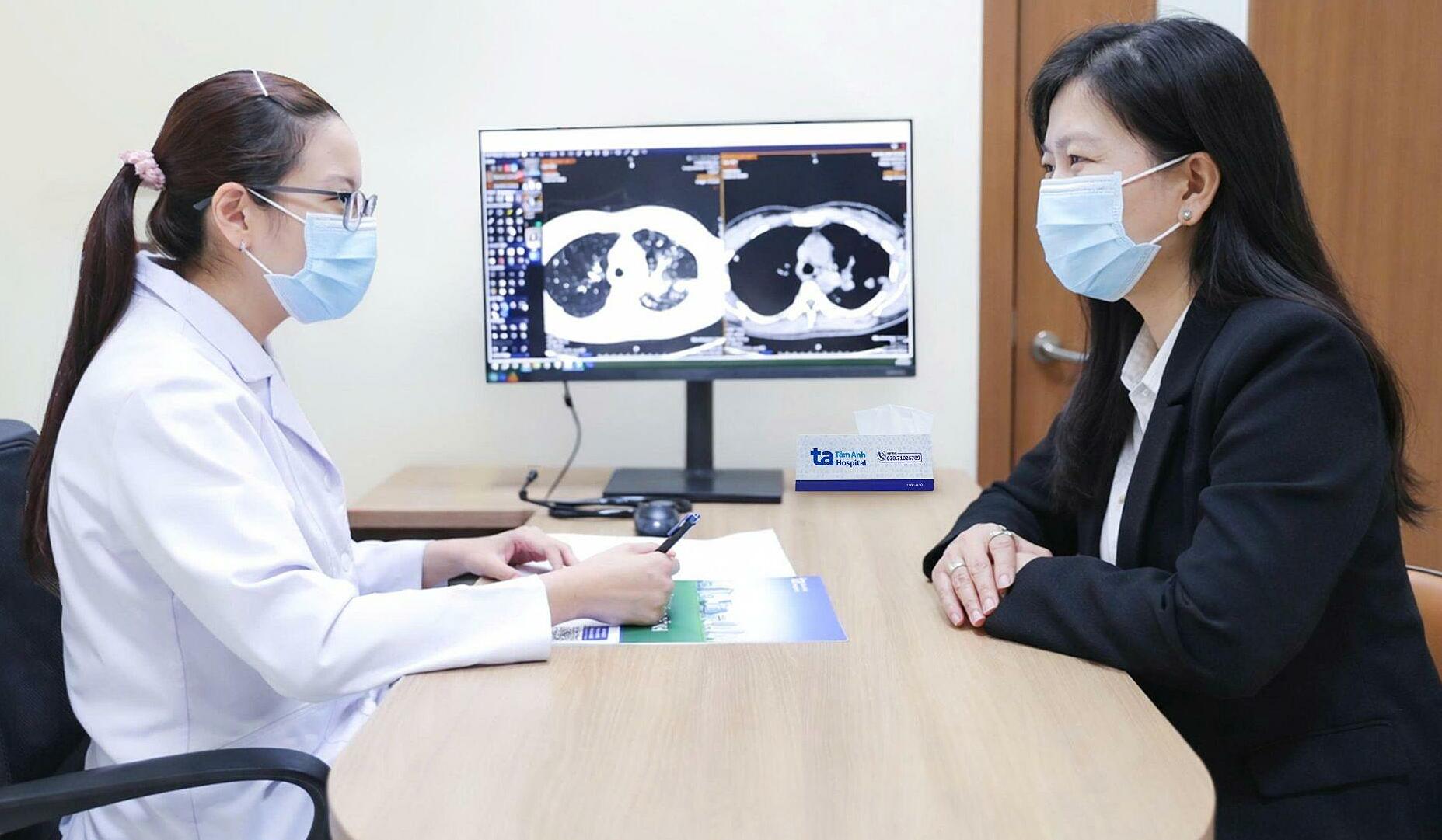 |
Doctor Thuy advises a woman undergoing a general health check-up. Illustration: Tam Anh General Hospital |
One significant factor contributing to TB's spread within families is the often subtle nature of its early symptoms. Patients may experience only a mild cough, fatigue, loss of appetite, or minor weight loss, none severe enough to prompt a medical visit. These symptoms are easily mistaken for bronchitis or general weakness. Consequently, silent transmission can occur for many weeks, even months, before detection.
A second important factor allowing TB to emerge and spread within families is a weakened immune system. Groups vulnerable to infection include young children, older adults, and individuals with underlying conditions such as diabetes, chronic lung disease, cardiovascular disease, or kidney failure.
Under normal circumstances, the immune system controls the bacteria, preventing the disease. Latent TB is not an active illness; therefore, it presents no clinical symptoms and cannot be detected by routine diagnostic methods like chest X-rays. Diagnosis primarily relies on immunological tests such as the Mantoux test or IGRA, typically ordered only when an individual has been exposed to an infection source or has a high risk of progressing to active TB.
When the body's immunity is compromised, such as in individuals with HIV, diabetes, malnutrition, chronic lung disease, or those using immunosuppressants, the bacteria can reactivate, leading to active TB. At this stage, the patient begins to show symptoms and can transmit the infection to others. If this process occurs within a family environment and goes undetected, it significantly increases the risk of transmission and active TB for individuals with weak immune systems.
Upon detecting a TB case in a family, individuals with underlying health conditions, malnutrition, weakened immunity, or young children require monitoring and screening, even if they show no symptoms. Some high-risk cases, as recommended, should undergo latent TB testing and be considered for preventive treatment if necessary.
Master of Science, Doctor, First Degree Specialist Nguyen Thanh Thuy
Department of General Internal Medicine
Tam Anh General Hospital, TP HCM
| Readers can submit questions about respiratory diseases here for a doctor's response. |