Doctor Le Manh Hung of the Hospital for Tropical Diseases in TP HCM notes that people often associate fatty liver disease with overweight individuals or men with beer bellies due to frequent alcohol consumption. In reality, many thin or normal-weight individuals silently develop fatty liver, only discovering it when the disease has progressed to hepatitis or cirrhosis.
Fatty liver disease is characterized by fat accumulation exceeding 5% of liver weight, which impairs liver function. The initial stage is often asymptomatic. However, if prolonged, it can progress from simple steatosis to hepatitis, and then to cirrhosis, where scar tissue replaces healthy cells, increasing the risk of cancer.
Common causes include alcohol consumption and metabolic dysfunction. Alcoholic fatty liver disease typically affects individuals who consume large amounts of alcoholic beverages for over five years. In contrast, metabolic dysfunction-associated fatty liver disease can occur even in non-drinkers. Since 2023, medical professionals have renamed "non-alcoholic fatty liver disease" to "metabolic dysfunction-associated fatty liver disease" to emphasize that obesity, diabetes, and high blood lipids are the main culprits.
The disease can also stem from hepatitis C, drug-induced hepatitis, endocrine disorders, rapid weight loss, or a diet high in sugar (such as milk tea, soft drinks, candy, sweet desserts, and sweet fruits like jackfruit and durian), fat, and refined carbohydrates, coupled with insufficient physical activity. The combination of these factors means even thin individuals are at risk of developing the disease.
Fatty liver disease is often referred to as a "silent killer" because it is difficult to detect early; most cases are only discovered through an abdominal ultrasound during routine health check-ups. When sufficient fat accumulation causes inflammation, patients may experience fatigue, a lack of energy, a feeling of fullness, or dull pain in the right hypochondrium, accompanied by bloating and indigestion. If the disease progresses to severe inflammation or cirrhosis, symptoms become pronounced, including jaundice (yellow skin and eyes), an aversion to fatty foods, unrelieved itchy skin, dark urine, abdominal distension due to fluid retention, and swelling in both legs.
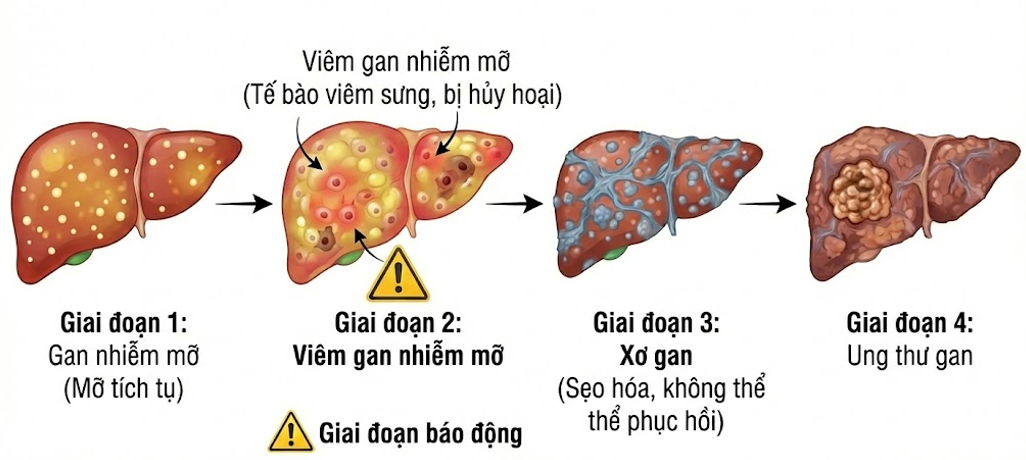 |
Stages of fatty liver disease. Photo: Doctor provided |
Diagnosis relies on ultrasound, blood tests, and assessing risk factors such as high blood sugar, hypertension, dyslipidemia, or being overweight. Treatment depends on the cause, with lifestyle changes forming the cornerstone. Reducing 5-10% of body weight helps improve liver fat. Even thin individuals should aim for a 3-5% weight reduction if they have visceral fat accumulation.
Patients should prioritize a diet rich in green vegetables, root vegetables, and fish, while reducing sugar and refined carbohydrates. They must consistently exercise for 30 minutes daily and completely abstain from alcohol and tobacco. Additionally, patients need to effectively manage underlying conditions like diabetes and hypertension with medication. For alcohol-related cases, complete abstinence from alcohol is a prerequisite for liver recovery. If patients are also co-infected with hepatitis B or C viruses, the rate of fibrosis will accelerate significantly, necessitating immediate intervention with a combined antiviral regimen.
Doctor Hung emphasizes that the liver has a good capacity for recovery if detected early. However, once the disease progresses to advanced fibrosis, all treatment efforts can only slow its progression but cannot restore the liver to its original state.
Le Phuong