Hot flashes, insomnia, night sweats, joint pain, and mood swings are common symptoms during perimenopause and menopause. However, the intensity and duration of these symptoms vary for each woman.
Pharmacist Do Xuan Hoa, from the Medical Information Center at Tam Anh General Hospital TP HCM, states that approximately 70-80% of women experience at least one symptom during this phase. While many find discomfort fleeting, lasting only a few months, others endure years of insomnia, anxiety, or joint pain, significantly impacting their quality of life.
Hormone change levels differ among individuals
Perimenopause and menopause occur as ovarian function declines with age, leading to fluctuating levels of female sex hormones. This process involves the activity of the brain-pituitary-ovary axis, a system that coordinates and controls the production of estrogen, progesterone, and testosterone in the body.
The rate of hormone decline is not uniform across all women. For many, hormones change gradually over years, allowing the body more time to adapt. Conversely, some women experience a rapid drop in hormones, leading to more pronounced symptoms.
Estrogen is the hormone that fluctuates most significantly during this stage. When estrogen levels decrease, the brain region regulating body temperature becomes sensitive, increasing the risk of hot flashes and night sweats. This decline in estrogen is also linked to joint pain, dry skin, vaginal dryness, and mood changes.
Changes in progesterone levels also affect sleep quality and emotional stability. Some women report difficulty falling asleep, restless sleep, anxiety, or increased irritability during this period.
Testosterone helps maintain energy, muscle mass, and sexual desire in women. The decline of this hormone over time can lead women to feel fatigued, experience reduced stamina, and have less interest in their intimate lives.
Since the extent of changes in the three hormones: estrogen, progesterone, and testosterone, is not the same for everyone, perimenopause and menopause symptoms also vary.
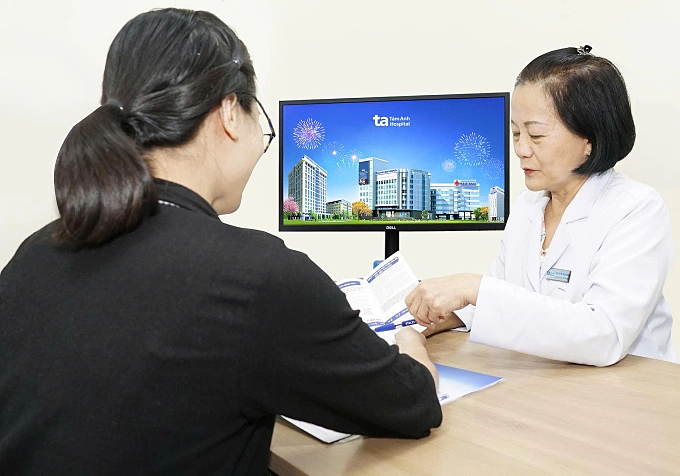 |
A doctor at Tam Anh General Hospital examines and consults with a middle-aged woman. Photo: Provided by the hospital |
A doctor at Tam Anh General Hospital examines and consults with a middle-aged woman. Photo: Provided by the hospital
Genetic factors
Genetics can also account for differences in the timing and specific symptoms of menopause. Studies show that the age of menopause and perimenopause and menopause symptoms tend to be similar among women within the same family.
Overall health
Women who maintain a healthy weight, get adequate sleep, exercise regularly, and manage stress well tend to adapt more easily to hormonal changes. In contrast, women experiencing chronic stress, prolonged sleep deprivation, lack of physical activity, or chronic illnesses may experience more severe and noticeable symptoms.
Perimenopause and menopause are natural processes that all women undergo. The main cause is the weakening activity of the brain-pituitary-ovary axis, coupled with the age-related decline of the three hormones: estrogen, progesterone, and testosterone.
Pharmacist Hoa advises women to learn about this transitional phase to prepare psychologically and adapt. Women can consider supplementing with natural essences like: Lepidium Meyenii and P. Leucotomos, which can support the harmonious function of the brain-pituitary-ovary axis and balance the three hormones. This approach can lead to a smoother perimenopause and menopause, helping maintain quality of life.
Dinh Dieu
| Readers can submit questions about obstetrics and gynecology here for a doctor's response. |