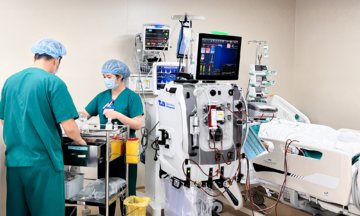
A deviated nasal septum occurs when the septum is significantly displaced to one side, making one nasal airway smaller than the other. While a minor deviation typically does not affect health, a severe one can cause breathing difficulties.
Symptoms include chronic nasal congestion, a runny nose, frequent rhinosinusitis, and headaches. Causes vary, from congenital factors or age-related structural changes to nasal trauma from accidents, impacts, or sports injuries. Chronic infections like allergic rhinitis or prolonged sinusitis, especially with frequent nose-picking during the septum's incomplete development, can also lead to this condition. Rhinoplasty involving the nasal septum may also cause deviation.
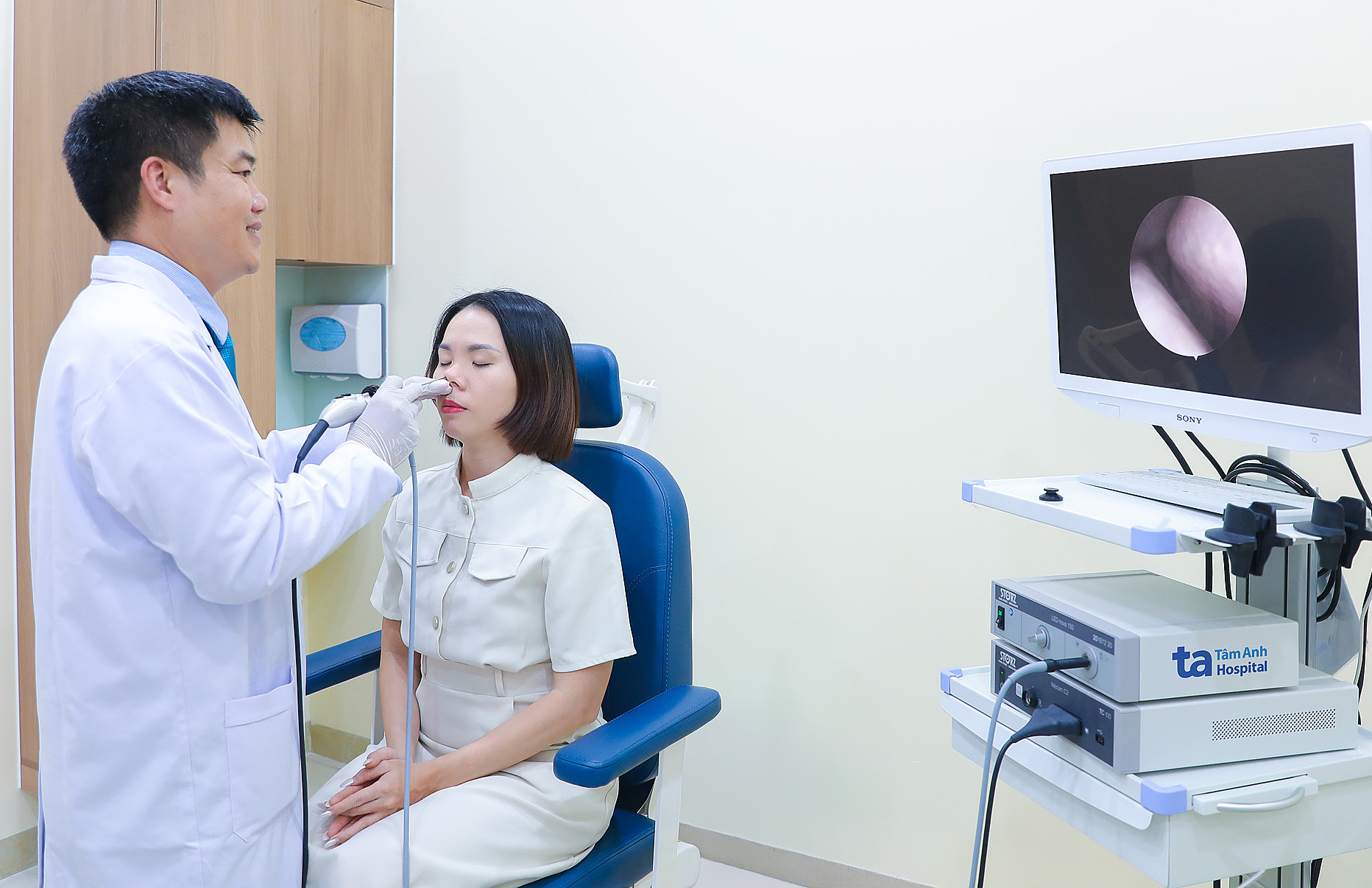 |
Doctor Tu performing nasal endoscopy on a patient. Illustration: Tam Anh District 7 General Clinic
Treatment depends on the degree of deviation and its impact on daily life. For mild deviations with minimal symptoms, doctors typically prescribe medical treatment with medication to reduce mucosal swelling and alleviate symptoms. If medical treatment is ineffective, doctors consider recommending septoplasty.
Septoplasty is indicated when severe septal deviation causes persistent nasal congestion, recurrent sinusitis, chronic headaches, nosebleeds, or significantly impacts quality of life. This surgery is relatively safe and provides long-term symptom relief.
If you experience chronic nasal congestion and a runny nose, you should revisit an ear, nose, and throat specialist for a nasal endoscopy. This allows the doctor to accurately assess the degree of septal deviation and recommend appropriate treatment.
Doctor Le Quoc Tu, First Degree Specialist
Ear, Nose, and Throat Department
Tam Anh District 7 General Clinic
| Readers can submit questions about ear, nose, and throat conditions here for doctors to answer. |