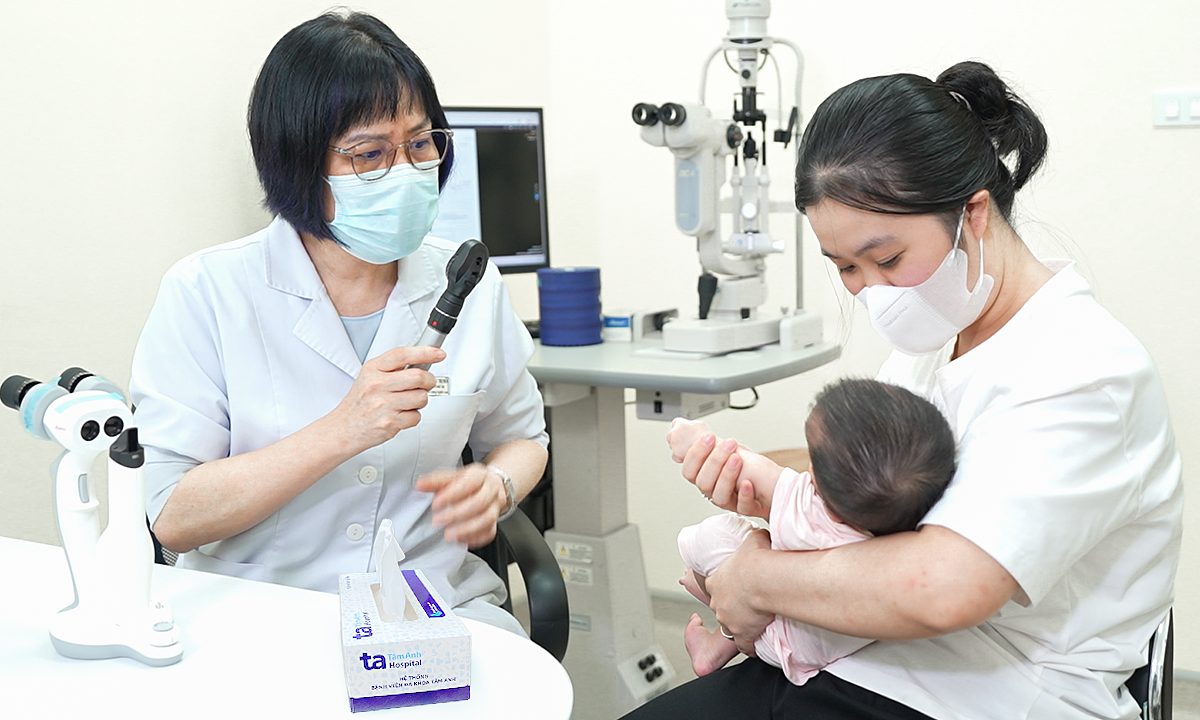
Doctor Dinh Thuy Linh, Deputy Director of Hanoi Obstetrics and Gynecology Hospital, highlights the core reason: "healthy carriers of disease genes." These individuals possess a recessive mutated gene but show no clinical symptoms, making this silent threat undetectable by regular health check-ups. Specialized genetic screening is essential for identification.
When two individuals who both carry a recessive mutated gene marry, there is a 25% chance with each pregnancy that their child will inherit the full disease gene from both parents and develop a severe illness. Additionally, for diseases linked to sex chromosomes, the mother alone carrying the mutated gene is sufficient to transmit the disease directly to her son.
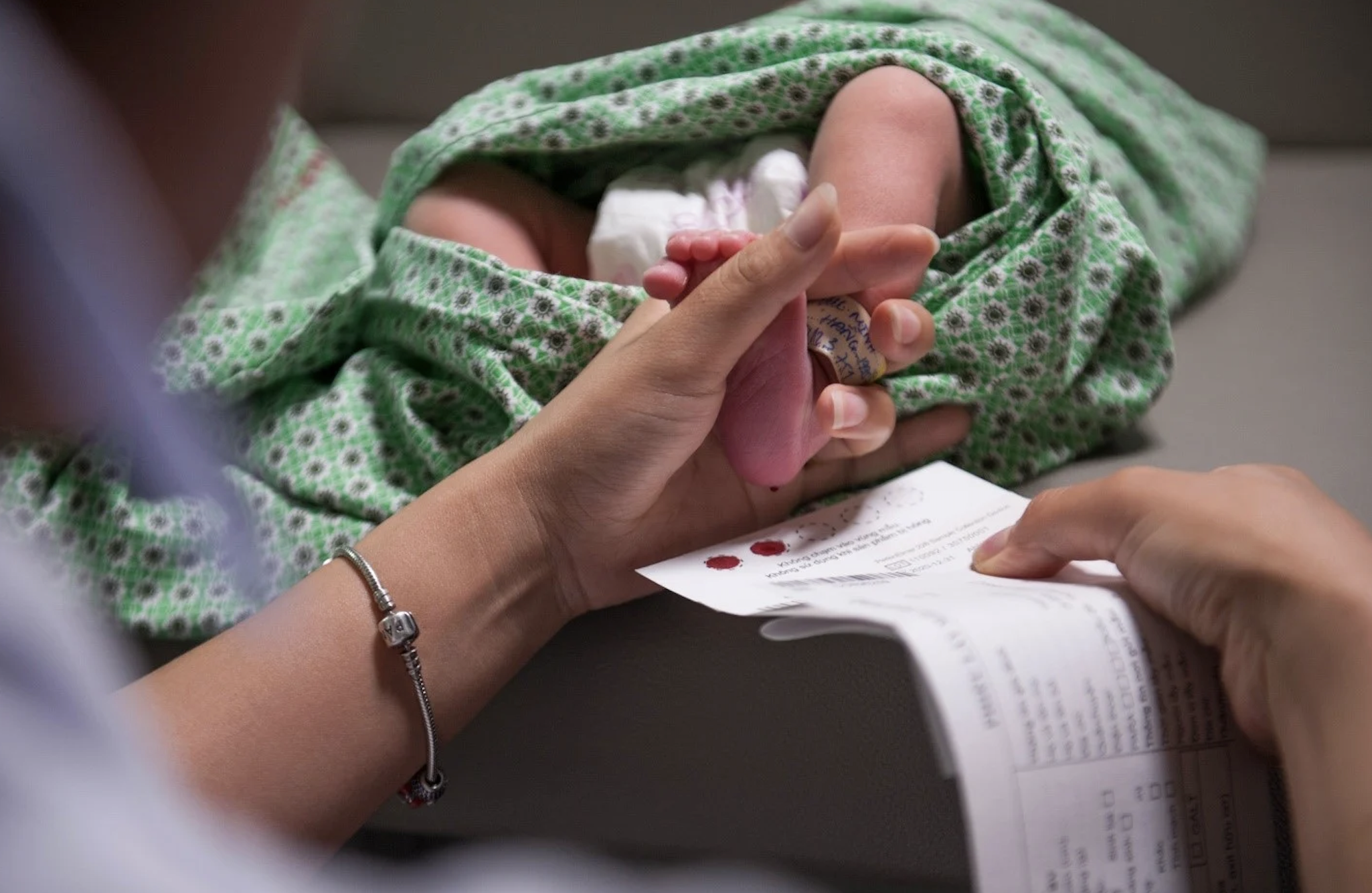 |
Heel prick screening at Hanoi Obstetrics and Gynecology Hospital. Photo: Hospital provided
Most genetic diseases currently lack a definitive cure, severely impacting a child's physical and intellectual development and shortening their lifespan. These conditions often lead to lifelong challenges and significant burdens for families.
Clinical practice reveals several common and dangerous diseases. Congenital hemolysis (Thalassemia), for instance, destroys blood cells, causes chronic anemia, and necessitates lifelong blood transfusions and iron chelation. Spinal muscular atrophy (SMA) and Duchenne muscular dystrophy cause progressive muscle weakening, leading to loss of mobility, spinal curvature, and an early risk of death due to respiratory failure or cardiovascular complications. Hemophilia causes prolonged bleeding in muscles and joints, and even life-threatening internal bleeding. Other genetic mutations can result in congenital deafness, hindering language development, or Fragile X syndrome, which leads to intellectual developmental delays.
Proactive genetic testing helps detect risks early, providing a basis for doctors to advise on timely medical interventions. This approach can prevent the risk of having a child with a disease, easing both the psychological and financial burden on families.
Doctor Linh recommends three priority groups for screening: couples preparing for marriage or planning to have children, women in their first three months of pregnancy, and families with a history of genetic diseases or who have previously had a child with birth defects. It is crucial not to wait until late pregnancy or until a child develops abnormal symptoms to begin testing.
Thuy An