Answer:
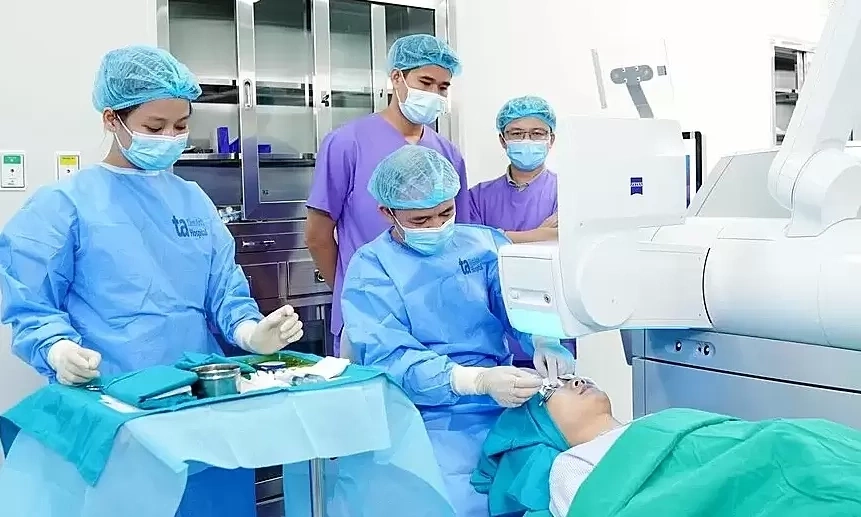
Currently, the definitive treatment for myopia is corrective surgery, which reshapes the cornea to improve vision and reduce reliance on glasses or contact lenses. Popular myopia correction methods include Lasik, Smile, and Phakic. These procedures offer advantages such as safety, minimal invasiveness, high success rates, and quick recovery times.
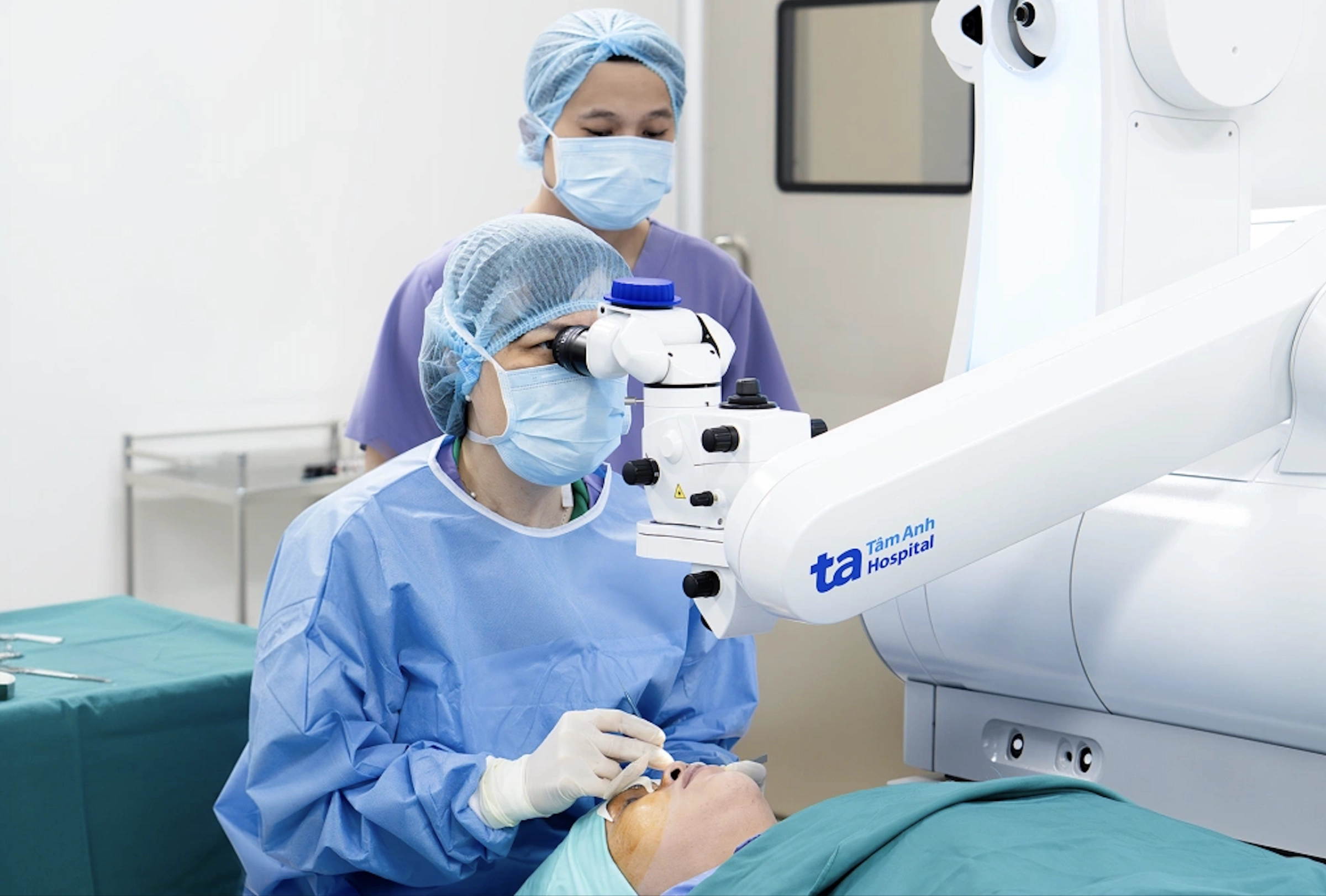 |
A doctor performs myopia correction surgery using Smile Pro technology. Illustration photo: Tam Anh General Hospital |
The appropriate age for myopia correction surgery ranges from 18 to under 40, as this is when the eyeball has fully developed. Additionally, the myopia prescription must be stable, meaning it should not have increased by more than 0,5 diopters over 6-12 months, which helps improve the success rate of the surgery. If performed before 18, the eye structure is not yet stable, and myopia may regress after the operation, making the long-term effectiveness uncertain.
The minimum and maximum diopter strengths that can be surgically corrected depend on the chosen method and the individual's eye condition. Cases of myopia under 7 diopters can be treated with Lasik, Smile, or Phakic. However, a comprehensive pre-operative examination is essential to assess corneal thickness, corneal structure, and the amount of residual tissue expected after surgery. The doctor will advise on the most suitable method, prioritizing minimally invasive techniques to preserve corneal tissue as much as possible.
Children and adolescents who are not yet eligible for myopia correction surgery can use Ortho-K rigid contact lenses. Given your child's myopia of 5-6 diopters at 14 years old, this method is suitable. The lenses are worn during sleep for 6-8 hours at night, allowing for clear vision during the day without glasses. This method also helps control myopia progression and reduces the risk of complications associated with high myopia.
Your child should limit prolonged use of electronic devices and increase outdoor activities to slow down the progression of myopia. Regular eye examinations every 6 months are necessary to monitor the myopia prescription, ensure correct glasses are worn, and screen for related eye diseases. If any eye pathologies are detected, early treatment is crucial to prevent the risk of complications.
MSc. Dr. Duong Minh Phuc
High-Tech Eye Center
Tam Anh General Hospital Ho Chi Minh City
| Readers can send ophthalmology questions here for doctors to answer |