Mr. Nhut initially took antibiotics and pain relievers, but his wound ulcerated and showed signs of necrosis. He sought treatment at Tam Anh General Hospital, TP HCM. Master, Doctor Nguyen Thi Kim Tuyen, from the Diabetic Foot Unit, Endocrinology - Diabetes Department, explained that improper care of the ankle scrape resulted in extensive necrotic tissue. This necessitated debridement to clean the wound and stimulate new tissue growth. A thorough examination revealed Mr. Nhut was suffering from achilles tendonitis, a complication of his diabetes.
Diabetic tendonitis involves the degeneration and inflammation of the fibrous bundles connecting muscles and bones. This condition arises when persistently high blood sugar levels alter collagen structure and reduce blood flow. Excess sugar generates advanced glycation end products (AGEs), which stiffen collagen fibers in the tendons and diminish their elasticity.
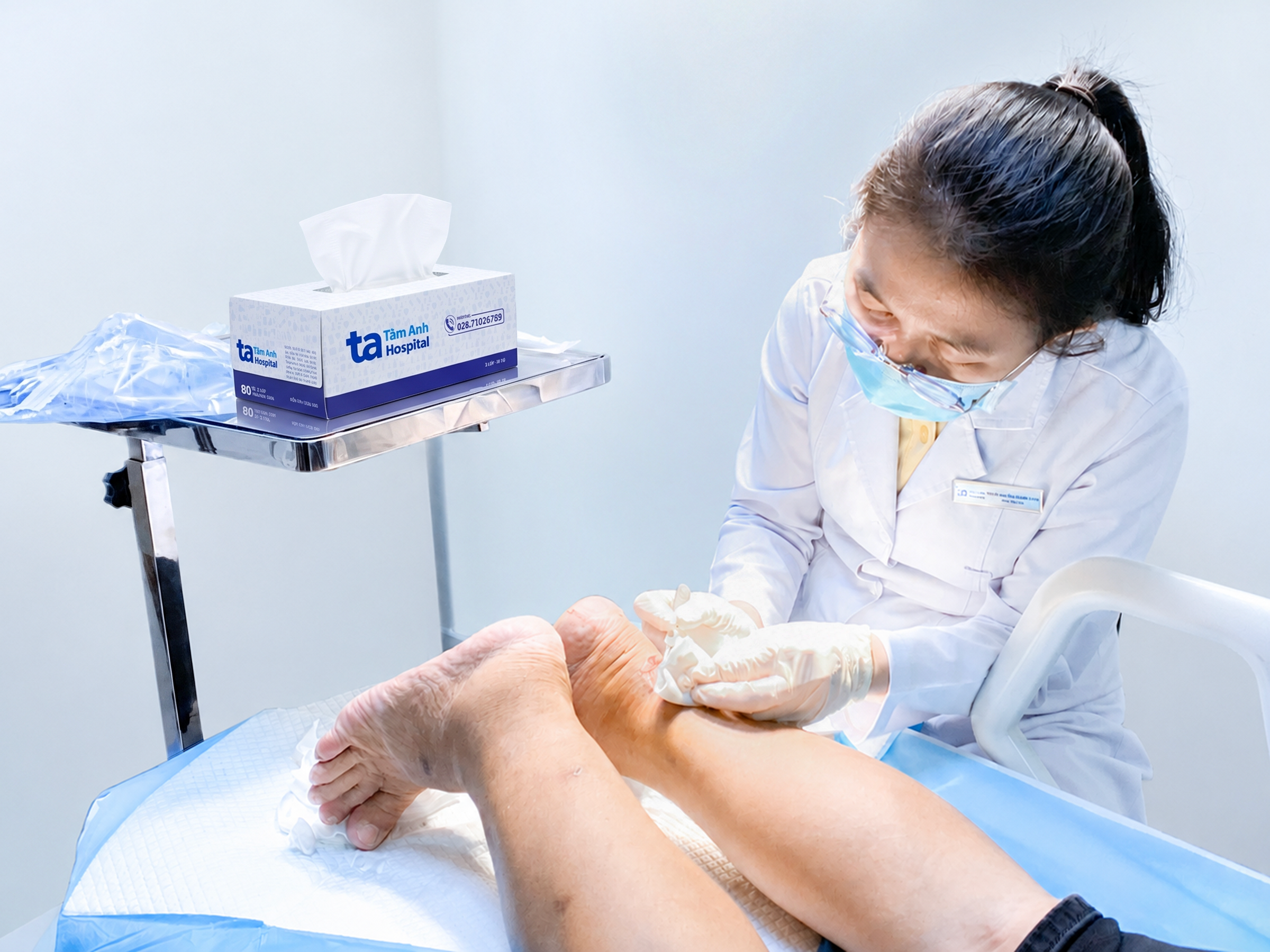 |
Doctor Tuyen caring for Mr. Nhut's wound. *Photo: Tam Anh General Hospital*
Patients often experience pain, joint stiffness, and swelling. Common manifestations include trigger finger, carpal tunnel syndrome, or achilles tendonitis. Damage to the achilles tendon, located at the back of the heel, significantly impairs a patient's mobility.
Mr. Nhut's treatment plan included wound cleaning, debridement of necrotic tissue, anti-inflammatory medication, and blood sugar control through a combination of diet, exercise, and prescribed medication.
Individuals with diabetes face a higher risk of musculoskeletal diseases than the general population, particularly tendon-related conditions, which are often challenging to treat. Tendonitis in diabetic patients typically has a gradual onset and lacks a history of trauma, making it easily overlooked.
Doctors advise that patients experiencing tendon pain, swelling, or pain during movement that persists for more than 6 weeks should consult an endocrinologist for timely diagnosis and treatment to prevent further complications.
Bach Duong
*Patient's name has been changed