Eng English
China 中国人

Eng English
China 中国人
  • News
  • World
  • Business
  • Entertainment
  • Sports
  • Law
  • Education
  • Health
  • Lifestyle
  • Travel
  • Science
  • Digital
  • Automobiles
  • Trở lại Thể thao
  • Health
Friday, 24/7/2026 | 08:31 GMT+7

Why you should not rub your eyes after refractive surgery

Rubbing your eyes after refractive surgery can damage the healing cornea, increasing the risk of corneal flap displacement, infection, and impacting treatment outcomes.

Laser refractive surgeries such as Lasik, Femto Lasik, and Smile correct myopia and reduce dependence on glasses. Dr. Le Thi Huong Giang, a Specialist Doctor I at Tam Anh High-Tech Eye Center, Tam Anh General Hospital Hanoi, states that treatment outcomes depend not only on the surgical technique but also on post-operative eye care, with avoiding eye rubbing being a strictly observed principle.

For Lasik and Femto Lasik procedures, doctors create a thin corneal flap, use a laser to reshape the cornea, and then reposition the flap. Although the corneal flap adheres naturally quite quickly, the healing process continues for many weeks, even months, afterward. The period immediately after surgery is when the corneal flap is most vulnerable. If you rub your eyes, especially vigorously, it can create mechanical pressure that displaces, wrinkles, or shifts the corneal flap from its position. This can affect vision quality and, in some cases, may require re-operation.

According to Dr. Giang, the corneal flap adheres more firmly after about one week and continues to stabilize over several months. However, even after the eyes have recovered, individuals who have undergone refractive surgery should still avoid rubbing their eyes, as it is a risk factor for various corneal conditions.
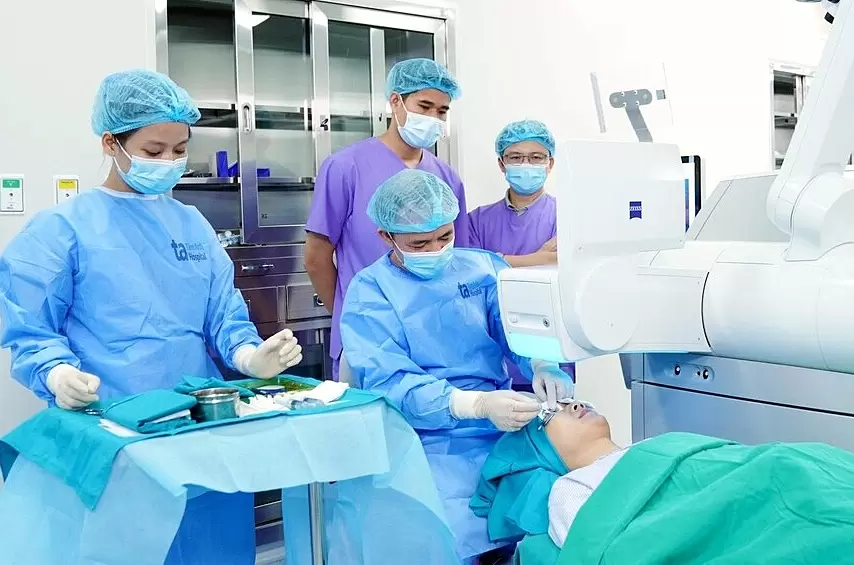
Doctors performing myopia surgery for a patient using Smile Pro technology. Photo: Tam Anh General Hospital

Even with the Smile procedure, which does not create a corneal flap but instead makes a very small incision to remove internal corneal tissue, patients should still not rub their eyes after surgery. The reason is that the cornea is in a healing process, and rubbing the eyes can distort the corneal structure, prolong healing time, cause pain and discomfort, and affect vision quality.

Rubbing your eyes not only increases the risk of corneal damage but also readily causes infection. Hands carry numerous bacteria and viruses, and touching the eyes while the cornea is still recovering can lead to post-operative keratitis. Thanks to strict sterile procedures and prophylactic medication, this complication is rare. However, if it occurs and is not treated promptly, patients may develop corneal scarring and long-term vision loss.

In the initial days after surgery, patients may experience grittiness, dry eyes, tearing, or light sensitivity as the cornea recovers. Instead of rubbing your eyes, you should use artificial tears and prescribed medication, wear protective glasses when outdoors, avoid dust, and limit foreign objects from contacting your eyes. If you experience increasing pain, significant eye redness, sudden vision loss, or excessive discharge, you should visit an eye specialist promptly for examination.

Hoang Duong

Readers can submit questions about ophthalmological conditions here for doctors to answer.
By VnExpress: https://vnexpress.net/vi-sao-khong-nen-dui-mat-sau-phau-thuat-xoa-can-5100975.html
Tags: eye rubbing refractive surgery eye surgery myopia surgery myopia

News in the same category

Three micronutrients support children's immunity

Three micronutrients support children's immunity

Vitamins A, D, and zinc are three micronutrients that help boost immunity and support children's comprehensive development.

Four daily habits that increase disease risk from dogs

Four daily habits that increase disease risk from dogs

Pet owners often unknowingly increase their risk of contracting diseases from their dogs through common habits like infrequent bathing, manually removing ticks and fleas, and sharing a bed.

Diabetic foot tendonitis

Diabetic foot tendonitis

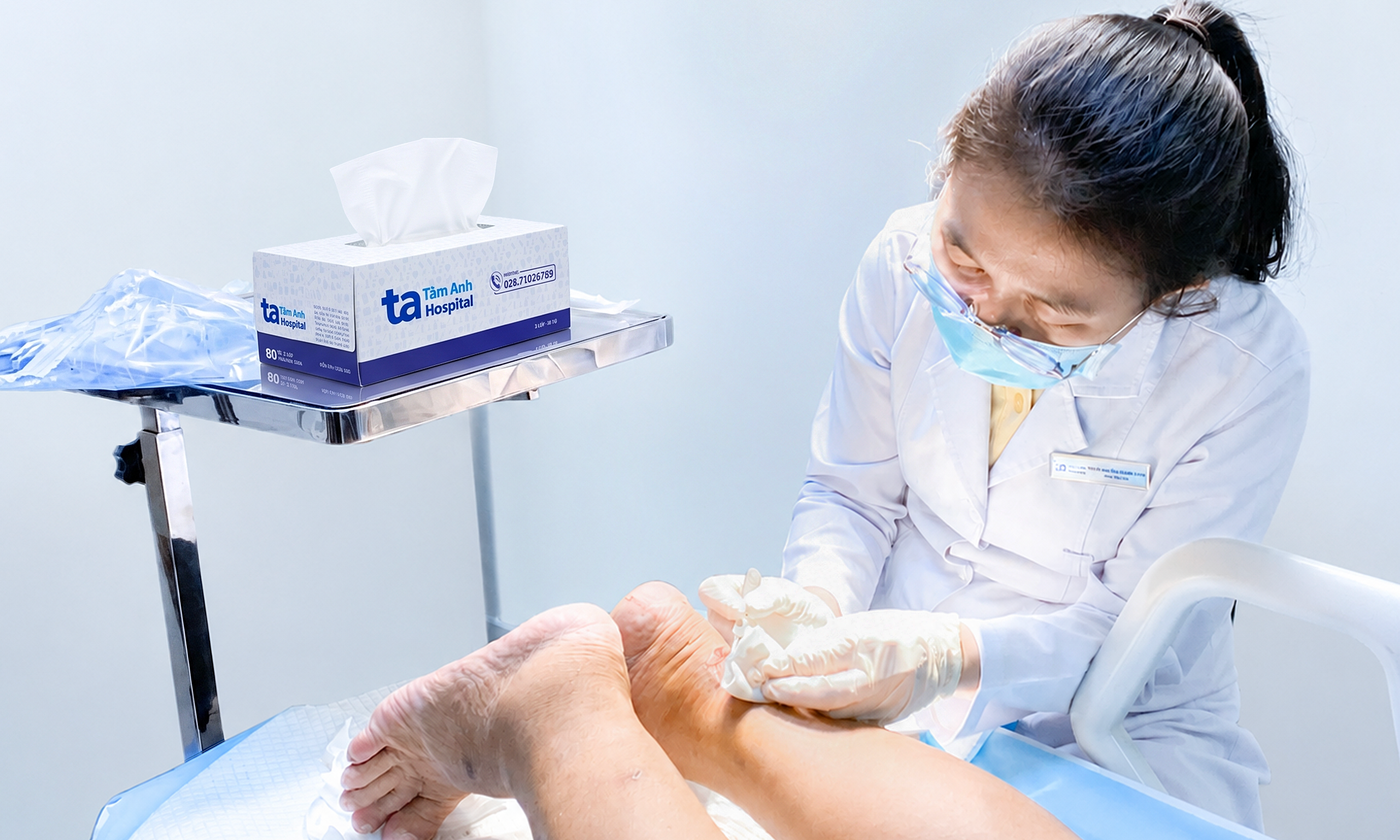
Mr. Nhut, 68, who has lived with diabetes for 20 years, recently developed a scrape on his left ankle, leading to tendonitis, pain, leg stiffness, and an inability to walk.

Does inhaling medicated oil cure nasal congestion?

Does inhaling medicated oil cure nasal congestion?

A 35-year-old patient from Dong Nai, Kim Ngo, often experiences nasal congestion. She found that inhaling medicated oil initially helped, but its effectiveness waned over time. She wonders why this occurs and if she should consult a doctor.

Elderly man suffers acute exacerbation of chronic obstructive pulmonary disease

Elderly man suffers acute exacerbation of chronic obstructive pulmonary disease

Mr. Su, 88, who has lived with chronic obstructive pulmonary disease (COPD) for seven years, was admitted to the emergency room due to an acute exacerbation, experiencing shortness of breath and weakness.

Intervention for two arterial aneurysms in a man

Intervention for two arterial aneurysms in a man

Mr. Khoa, 58, who had bilateral subclavian artery aneurysms with thrombi, underwent successful surgical intervention.

Vietnamese expatriate returns home for liver hemangioma surgery

Vietnamese expatriate returns home for liver hemangioma surgery

Ms. Diep, 42, discovered a 5 cm liver hemangioma during a health check in the United States and opted to return to Vietnam for treatment.

Harvard doctor suggests four habits for proper gut health care

Harvard doctor suggests four habits for proper gut health care

Doctor Saurabh Sethi states the body does not need detox drinks to cleanse the gut; instead, people only need to make four small changes in their daily diet and exercise to achieve a healthy gut microbiome.

Steaming with perilla and green tea after childbirth to heal wounds?

Steaming with perilla and green tea after childbirth to heal wounds?

Many women after childbirth seek out soapberry, green tea, and other herbs to boil water for daily steaming, believing it cleanses lochia and tightens the vagina. Is this practice effective and safe?

Five magnesium-rich foods for better sleep

Five magnesium-rich foods for better sleep

Edamame, black beans, chia seeds, dark chocolate, and cashews provide magnesium, helping to relax the nervous system and promote easier sleep.

Eng English
China 中国人
  • News
  • World
  • Business
  • Entertainment
  • Sports
  • Law
  • Education
  • Health
  • Lifestyle
  • Travel
  • Science
  • Digital
  • Automobiles
FPT Tower, 10 Pham Van Bach Street, Dich Vong Ward,
Cau Giay District, Hanoi, Vietnam
Email: contacts@vnportal.net
Tel: 028 7300 9999 - Ext 8556
Advertise with us: 090 293 9644
Register
© Copyright 2026 vnnow.net. All rights reserved.
Terms of use Privacy policy Cookies